
Do all the planets also orbit around that same barycenter, or does each planet have a different one?
Say hello to Bary
Submitted 8 months ago by fossilesque@mander.xyz to science_memes@mander.xyz
https://mander.xyz/pictrs/image/19bb073c-2be9-4762-8782-3a8e7b07283d.png
Comments
bennypr0fane@discuss.tchncs.de 8 months ago
CompassRed@discuss.tchncs.de 8 months ago
Technically speaking, no celestial body in our solar system orbits around a single point. The barycenter thing only works with two bodies. When there are more than two bodies, such as in our solar system, the orbits become chaotic. Granted, the influence between planets is small, so they all appear to orbit their barycenters with the sun, but there are small perturbations to the orbits caused by the locations and masses of all the other bodies in the solar system.
saimen@feddit.org 8 months ago
Isn’t that the 3-body-problem? That already with 3 bodies affecting each other a system is chaotic.
untorquer@lemmy.world 8 months ago
All the solar system matter contributes to an object’s orbital center but that’s constantly moving as the system moves.
I think (?) most planets have their barycenter inside the sun’s surface
The gravitational pull of system matter pales in comparison to the sun so you don’t need to consider it unless you’re navigating satellites.
You can try KSP (Vanilla) versus Kopernicus mod if you want to feel the difference.
Also called n-body
deltapi@lemmy.world 8 months ago
The barycenter is different for each planet-sun (or any two object) pairing.
The earth and moon have a barycenter which is beneath the surface of earth. Likewise, the barycenter of the sun-earth pair is below the surface of the sun
badcommandorfilename@lemmy.world 8 months ago
I guess the all orbit around the solar system’s center of mass (negligibly affected by the universal CoM), but that CoM probably moves around as the planets themselves move.
Relative to what, you might ask? That depends who you’re asking 😉
SCmSTR@lemmy.blahaj.zone 8 months ago
Jeeezzz…Gravity is relentless.
some_kind_of_guy@lemmy.world 8 months ago
Gravity always wins
MajorasTerribleFate@lemmy.zip 8 months ago
Dark energy would like a word
humanspiral@lemmy.ca 8 months ago
how much wobble does the earth add to sun? over 1m?
WraithGear@lemmy.world 8 months ago
i mean, with that logic, nothing orbits anything
Boddhisatva@lemmy.world 8 months ago
You’re not wrong. Everything orbits the center of mass of the system, meaning the mass of the star and the body in orbit. And that is handy for astronomers, many exoplanets have been found using the Doppler spectroscopy method. Doppler spectroscopy measures the Doppler shift in the star’s light as it is pulled towards and away from us by planets in orbit. The newest spectrographs are sensitive enough to detect a star’s wobble caused by an Earth sized body in orbit. The barycenter is still within the star, but not at the center of the star’s mass.
fedditter@feddit.org 8 months ago
Fun fact: You actually pull the Earth up with the same force it pulls you down… Newton’s Third Law.
vic_rattlehead@lemmy.world 8 months ago
I’ve been told that certain peoples mothers happen to pull the earth with a bit more force than others.
pixeltree@lemmy.blahaj.zone 8 months ago
For most bodies the barycenter, while not the same as the center of mass, is still inside the sun. This one isn’t, making it notable
JackbyDev@programming.dev 8 months ago
No, this is actually really relevant. This is part of the logic applied to labeling Pluto a dwarf planet. Pluto and it’s moon do this, Earth and our moon do not. Yes, obviously the center of mass of the two isn’t the exact center of the earth but it’s still within the earth.
deltapi@lemmy.world 8 months ago
And Pluto knows that Pluto’s Hot shit And you know Pluto knows it “I won’t ever be a planet It don’t matter 'cause I know that I’m still” Hot shit “And you’re hot shit too, so get out of your brain And just do what you’re supposed to do”WraithGear@lemmy.world 8 months ago
but the density of an object is variable. i mean you can define the diffrence between an orbit and a co-spiral to be based on the physical size of the denser planetary body containing the orbit center point, though that seems arbitrary.
captainlezbian@lemmy.world 8 months ago
Asking a physicist about the center of an object is like asking a Tumblr user about thr color of the sky. The only response will be “which one?” And a sigh of exhaustion
Droggelbecher@lemmy.world 8 months ago
The way this is phrased makes it sound like there’s a certain threshold where this starts happening. That’s not right. Even a grain of dust wouldn’t orbit the sun, they still orbit their common barycenter. A less misleading way of phrasing would be that Jupiter is massive enough that the barycenter of it and the sun actually lies outside the sun, which is still a cool fun fact.
technocrit@lemmy.dbzer0.com 8 months ago
I was going to complain about the use of “barycenter” instead of the more commonly known “center of mass”. But after some searching, I guess barycenter is more obscure because it’s more specific. I’m ok with that.
BillBurBaggins@lemmy.world 8 months ago
I mean that’s literally the point the image is trying to make. The last sentence says the point is outside the sun for Jupiter.
I don’t think nitpicking the title achieves anything and it’s not even misleading unless it’s only taken in isolation.
CheeseNoodle@lemmy.world 8 months ago
That’s still not entierly mass dependant, the point is at a distance based on a ratio between the two masses, if Jupiter were closer to the sun then the point would be inside the sun. Its still impressively massive to pull the point outside of the sun at any functional distance but so could a grain of dust with sufficient distance and a big empty universe to prevent anything else from interupting things.
Droggelbecher@lemmy.world 8 months ago
It says it’s so massive they orbit a common point. That directly implies this only happens over a certain mass.
bitjunkie@lemmy.world 8 months ago
Orbiting a point within the sun is still orbiting the sun.
sus@programming.dev 8 months ago
But orbiting a point 1 meter outside the sun is not orbiting the sun?
Gladaed@feddit.org 8 months ago
No one objects orbits another. There are no stable orbits since there are no examples of two perfect point masses in an isolated space.
gandalf_der_12te@discuss.tchncs.de 8 months ago
just assume a spherical cow, dude
ABetterTomorrow@sh.itjust.works 8 months ago
That’s why I lose my balance!
Thorry@feddit.org 8 months ago
Your mom’s so fat, she pushes the barycenter of the solar system outside of the diameter of the Sun
The_Che_Banana@beehaw.org 8 months ago
Top tier comment right here!
ProbablyBaysean@lemmy.ca 8 months ago
I really want a space station in the barycenter of Pluto or something. It would be as close to true neutral of gravity instead of the gravity negated by acceleration of mass that may or may not screw up gravity experiments
Allero@lemmy.today 8 months ago
Except there are all the other planets swinging in the way, with their own gravitational influence.
LarsIsCool@lemmy.world 8 months ago
Related: xkcd.com/2898/ Image
mEEGal@lemmy.world 8 months ago
Jokes aside : being right for the wrong reasons is being wrong
unwarlikeExtortion@lemmy.ml 8 months ago
It’s not wrong. The “common center” lies inside the Sun.
Therefore, the Sun orbits itself and the Earth orbits the Sun.
Natanael@infosec.pub 8 months ago
en.wikipedia.org/wiki/Gettier_problem
Unjustified true belief
ODuffer@lemmy.world 8 months ago
Your mom…
Evilsandwichman@hexbear.net 8 months ago
I was curious about if Jupiter could be ignited and got (it’s an AI answer btw):
Why Jupiter can’t ignite: Lack of Mass: Jupiter is a failed star because it doesn’t have enough mass for its core to reach the extreme temperatures and pressures needed to start nuclear fusion.
So Jupiter is the inferior brother to the sun that has to live in its shadow. Jupiter’s such a loser, lol; get rekt Jupiter.
huf@hexbear.net 8 months ago
The friends of Wigner will turn it into a black hole eventually
ItemWrongStory@midwest.social 8 months ago
(not popping off at you just clarifying the AI answer)
Jupiter is NOT a failed star, the lowest bounds for a brown dwarf are 13x Jupiter’s mass, and even brown dwarfs are classified as “substellar objects” (actual failed stars?). Wikipedia says Jupiter would need to be 75x more massive to fuse hydrogen.
vestigeofgreen@lemmy.dbzer0.com 8 months ago
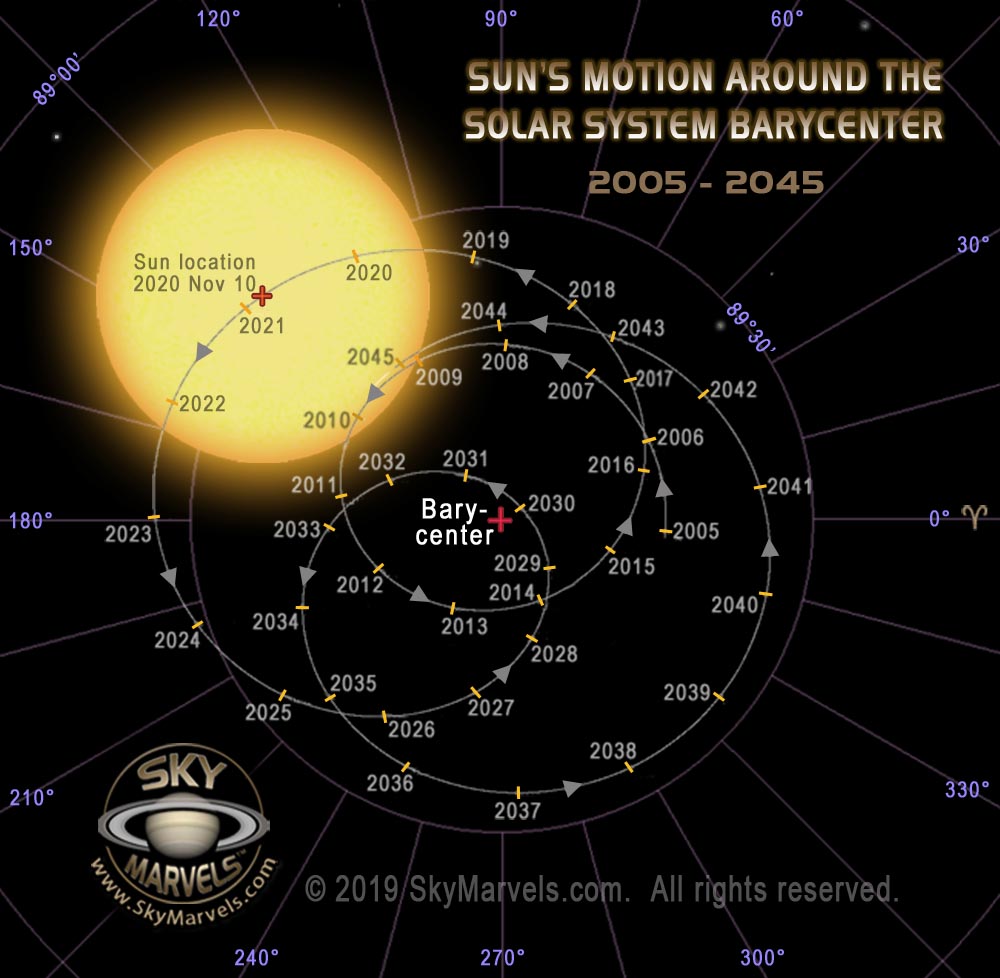
I found it super helpful to have the Sun’s center of mass labeled!
I only wish Jupiter’s center of mass was also labeled in this graphic. I’ve been trying to puzzle it out myself, but I’m stumped!
davidagain@lemmy.world 8 months ago
I think if it’s to scale, Jupiter is way offscreen, like in another room in your building far away.
nuko147@lemmy.world 8 months ago
So the Sun is wobbling arround, because of the 3 giants. Fascinating.
davidgro@lemmy.world 8 months ago
I wish that was updated for the current year (and beyond) It’s important to know when giving OP’s statement whether it’s outside the sun at the moment
SimpleMachine@sh.itjust.works 8 months ago
yogurtwrong@lemmy.world 8 months ago
Like a brick in a washing machine
bleistift2@sopuli.xyz 8 months ago
nuko147@lemmy.world 8 months ago
3D makes it 100 times better!
ItemWrongStory@midwest.social 8 months ago
bleistift2@sopuli.xyz 8 months ago
The link in your post links to a different image. Was that on purpose?
nuko147@lemmy.world 8 months ago
Oopsy, fixed.
altphoto@lemmy.today 8 months ago
Simeon’s cousin is definitely going to say that their dad owns the Gary Center.
Sidhean@piefed.social 8 months ago
Fun fact: if I threw a rock hard enough, it and the sun would orbit around their "barycenter" which would happen to be just about the center of the sun (probably, i dont work here).
Alcoholicorn@mander.xyz 8 months ago
Jupiter is so massive, if you give it more hydrogen, it gets smaller.
pulsewidth@lemmy.world 8 months ago
My dumb friend wants to know why adding more mass would make Jupiter smaller, can you help explain it to him?
Natanael@infosec.pub 8 months ago
The volume of Jupiter is mostly gas. If you increase the mass enough, at some point the higher gravity and thus higher pressure at the center causes a phase change of enough mass (from gas to liquid or liquid to solid) that the lost volume from the phase change exceeds the original volume of the added mass.
It’s like pushing a bunch of origami paper into a box until a bunch of them collapse and fall flat instead of filling the volume.
JackbyDev@programming.dev 8 months ago
Imagine a stack of glass cups. It gets tall enough that the bottom glasses break under the weight of the new glasses. Tada!
scrubbles@poptalk.scrubbles.tech 8 months ago
Is your friend the same crazy person I know who doesn’t eat meat? Are they crazy?
_i don’t know why your comment made me think of that reference _
bss03@infosec.pub 8 months ago
The increased mass increases the force of gravity on the outer particles which ends up reducing the radius more than the increase due to the layer of new hydrogen, IIRC.
Alcoholicorn@mander.xyz 8 months ago
I misrembered, it remains roughly the same volume, until 1.6 juipiters of mass, at which point the effect of gravity from each additional hydrogen is greater than the intermolecular forces and additional hydrogen would cause it to compress more than it would grow.
shalafi@lemmy.world 8 months ago
Aren’t we simply talking about LaGrange points? Or am I misunderstanding?
onslaught545@lemmy.zip 8 months ago
I think Lagrange points are where geosynchronous orbits are possible without constant corrections.
CookieOfFortune@lemmy.world 8 months ago
Geosynchronous means the orbital period is a day and relatively circular. Satellites with these orbits basically look down at the same part of the Earth.
Lagrange points are locations along an orbit where gravitational forces balance out with the centrifugal force of the orbit. This does allow less fuel expenditure to maintain.
For the Earth-Sun or Earth-Moon systems, the Lagrange points do not occur at the altitude of the geosynchronous orbit. The Lagrange points are either significantly further away or at a different orbital phase.
Eranziel@lemmy.world 8 months ago
The barycenter is sometimes outside the diameter of the sun. Not always, and I believe not even usually.
Yes, today I’m being that guy. Still a cool factoid.
GraniteM@lemmy.world 8 months ago
Well, now I want to know if there’s a regular schedule to the Jupiter-Sun barycenter being in or outside of the Sun, and how we can schedule holidays around it.
setInner234@lemmy.ml 8 months ago
Well, while we are being ‘that guy’, factoid is one of those words which has changed its meaning by being used wrongly for so long that the original meaning has all but vanished.
A factoid is technically supposed to be something resembling fact, but not actual fact. (The Greek suffix ‘-oid’ normally being used for that purpose, like in paranoid, “like knowledge” or asteroid, “like a star”).
The best thing about factoid, is that factoid is now a factoid. Because it resembles what it is not lol…
Anyway, nowadays, you are allowed to use it the way you did, at least in the descriptivist world view. The prescriptivists may disagree, however. And those people are often ‘that guy’ ;)
davidgro@lemmy.world 8 months ago
I’d say that the original statement not including “sometimes” does in fact make it the ‘not a fact’ type of factoid!
bdonvr@thelemmy.club 8 months ago
I’m kinda stunned that it’s EVER outside the sun.
Zuriz@sh.itjust.works 8 months ago
Outside the sun? Typical Visiblist. The Alfvén surface would like to have a word. en.m.wikipedia.org/wiki/Alfvén_surface
Evil_Shrubbery@thelemmy.club 8 months ago
Yeah, that’s the first thing I checked reading the og post before I was about to write ‘there is no was it’s outside the sun!’ … its such a tiny supergassy mass.
FuglyDuck@lemmy.world 8 months ago
In a field of study where it’s not just acceptable, but prudent to round pi to “1” because the numbers are that big….
I gotta say, it’s close enough to say Jupiter orbits Sol. Just saying.
magnetosphere@fedia.io 8 months ago
I’m no astronomical guru, but I’m surprised I didn’t know this.
s@piefed.world 8 months ago
Is it more true to say that Jupiter (and the other planets and asteroid belts and dust clouds in our solar system) orbits the Sun, and the Sun orbits the barycenter? The barycenter that the sun revolves around is influenced (marginally) by the other bodies in the solar system and not just Jupiter. If the definition of a barycenter is to be interpreted as this image suggests, that would mean that no material object orbits another material object and they instead orbit their collective center of mass somewhere in space.
essell@lemmy.world 8 months ago
I believe that’s the same for every planet. And every moon. For every orbit.
Its just that the barycenter is inside the more massive object when one is much more massive than the other. Not that this makes much of a difference to anything.


ProgrammingSocks@pawb.social 8 months ago
This is true about any 2 objects with mass.
jsomae@lemmy.ml 8 months ago
No, it is not true in general that the barycenter lies outside both objects.
ProgrammingSocks@pawb.social 8 months ago
I mean, sure, but you can reasonably glean that I’m just talking about the fact that any 2 objects with mass exert gravity on each other. This post is facebook-tier
kerrigan778@lemmy.blahaj.zone 8 months ago
“outside the objects”
ProgrammingSocks@pawb.social 8 months ago
Barycenters are not necessarily outside the objects, either.
SippyCup@feddit.nl 8 months ago
It was outside the environment.