Desalinating water might be the best part. Usually, solar power has the downside of needing storage and desalination has the downside of big energy requirements. If you can do both at the same time, it’s a big win for dry climates with lots of sun
New sodium ion battery stores twice the energy and desalinates seawater
Submitted 2 months ago by Gsus4@mander.xyz to technology@lemmy.world
https://www.sciencedaily.com/releases/2026/02/260218031603.htm
Comments
iopq@lemmy.world 2 months ago
FlyForABeeGuy@lemmy.dbzer0.com 2 months ago
There is also the issue with the salt by itself in desalinisation. If it’s removed with water, you have to deal with that stuff. Table salt is really cheap and there is plenty of offer, so you can’t really economically clean it enough and package it for human consumption or industrial use. So what usually happens is that they dump it back at one moment or another. And that is a hard pollution, and can lead to dead zones around the desalinisation plants if not managed well enough. Being able to add it in a high demand product such as batteries takes all those hurdles away
Regrettable_incident@lemmy.world 2 months ago
Make it into bricks and build a pyramid somewhere really dry?
yabbadabaddon@lemmy.zip 2 months ago
I need a shit ton of salt in winter for my road. But for how long?
Sausagecat@lemmy.world 2 months ago
Could the excess sodium used for carbon sequestration? Sodium bicarbonate is baking soda but I don’t know what it could be used for aside from baking or if the energy to capture that carbon would even be a net positive.
obviouspornalt@fedinsfw.app 2 months ago
and boats.
realitista@lemmus.org 2 months ago
I can’t imagine it’s doing this at a rate that will make a big impact on water supply, I suspect this is one of those things they throw in just to have a good headline.
iopq@lemmy.world 2 months ago
Water supply where? In Saudi Arabia it could be revolutionary tech when combined with solar
SaveTheTuaHawk@lemmy.ca 2 months ago
They are not going to get the sodium from desalination, they will mine it because it’s cheaper.
iopq@lemmy.world 2 months ago
Desalination sodium is free if you want the water
defaultusername@lemmy.dbzer0.com 2 months ago
I can only hope these can actually hit commercialization, unlike most new battery technologies that never leave the lab.
ExLisper@lemmy.curiana.net 2 months ago
Frozentea725@feddit.uk 2 months ago
Great response, people just love to parrot easy dismissals without looking and the sheer magnitude on innovation and commercialisation going on in this sector
henfredemars@infosec.pub 2 months ago
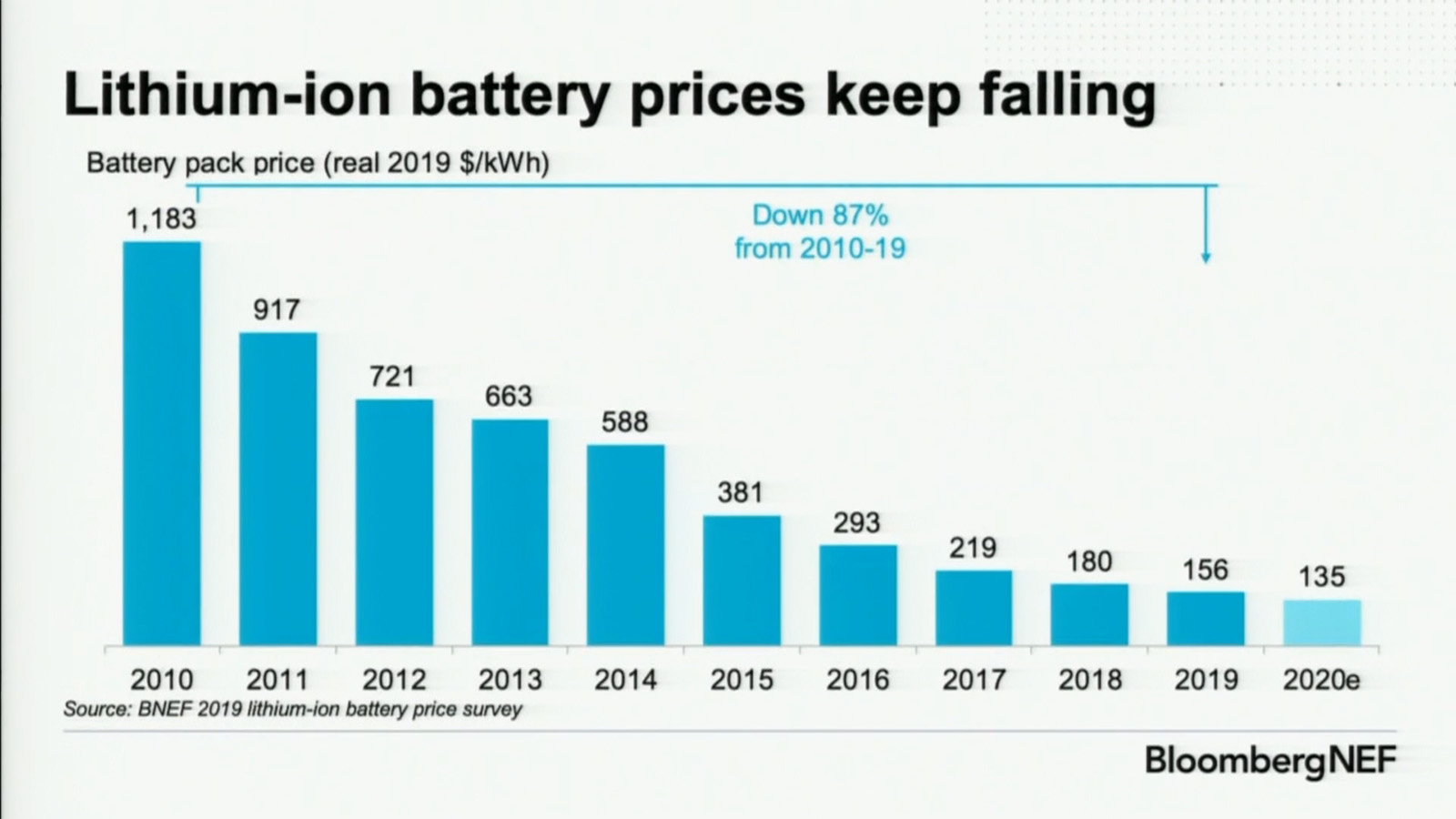
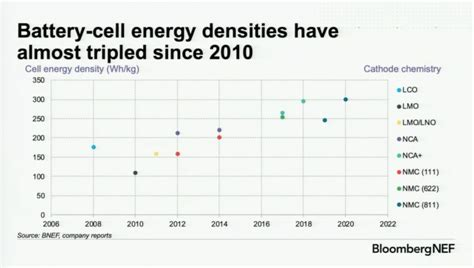
Wow! Thanks for sharing that data. I had no idea.
Diplomjodler3@lemmy.world 2 months ago
TBF, there are a lot of “battery breakthroughs” that turn out to just be hot air. Battery technology had made tremendous progress though and there is still a lot of room for improvement.
CaptPretentious@lemmy.world 2 months ago
Weird, I didn’t know Lithium-Ion batteries were still in the lab. I thought for sure we were using those already. I thought the batteries in the labs were various solid-state batteries like graphene or like this sodium-ion battery, where there’s been a rise in patents around it but not a lot delivered
SaveTheTuaHawk@lemmy.ca 2 months ago
All that data says is batteries got cheaper so they are putting more of them into cars. Also 100 to 300 wh/kg is in labs. No explanation why it went from 175 to 100 Wh/kg 08-10.
Appoxo@lemmy.dbzer0.com 2 months ago
I mean the first diagram is effectively useless without knowledge of battery density. They as well could compare the 2010 compacts with 2025s SUVs which have probably 2x the amount of total capacity.
For the other charts: Agreed.
Damage@feddit.it 2 months ago
I can only hope one day people will stop repeating reddit clichés
Reygle@lemmy.world 2 months ago
Every week with the “miracle battery!” headlines. This has been going on for ages and I’m sick of it.
RaoulDook@lemmy.world 2 months ago
Sodium-ion batteries are not hype though, they are in production use in multiple industries already. They are generally superior to Lithium based batteries in all regards, with the exception of having a bit lower energy density. An equivalent LiFePO4 battery might be 70-80% of the size for the same storage. It’s not a big deal for large applications like cars and solar storage.
J92@lemmy.world 2 months ago
Yeah, the advantages of all these sodium batteries, in my mind, is that they are stable and rugged enough to build up a backbone of a energy storage system for a grid. I’m seriously thinking about them for my house, in the UK.
Reygle@lemmy.world 2 months ago
Cool.
Honytawk@discuss.tchncs.de 2 months ago
If they have a bit lower energy density than Lithium batteries, then where does the claim that they store twice the energy come from?
SocialMediaRefugee@lemmy.world 2 months ago
Right up there with “cause/cure for dementia found”
kent_eh@lemmy.ca 2 months ago
cure for dementia found"
The US government could use some of that these days.
HugeNerd@lemmy.ca 2 months ago
Charged with fusion power! From space! Made from privately mined asteroids!
Regrettable_incident@lemmy.world 2 months ago
And it’s got electrolytes!
froh42@lemmy.world 2 months ago
TWICE AS MUCH COMPARED TO WHAT???
My left ball?
freepizza4life@lemmy.world 2 months ago
Compared to a non-hydrous sodium vanadium oxide system.
nek0d3r@lemmy.dbzer0.com 2 months ago
SaveTheTuaHawk@lemmy.ca 2 months ago
UnderpantsWeevil@lemmy.world 2 months ago
vaultdweller013@sh.itjust.works 2 months ago
You can throw any battery in the ocean. The better question is should you?
Zwuzelmaus@feddit.org 2 months ago
Finally a new one!
It was too quiet during the whole last year. But before, we had about 2 revolutionary new battery technologies every week.
dukemirage@lemmy.world 2 months ago
Would you prefer researchers to not publish results?
Ilovethebomb@sh.itjust.works 2 months ago
Yeah I’ll take this seriously when it enters commercial service.
SirMaple__@lemmy.ca 2 months ago
SpaceCowboy@lemmy.ca 2 months ago
Sodium Ion is a real game changer. But I doubt it will compete with Lithium Ion on energy density anytime soon.
But that’s not necessary to make major changes in the power grid. Solar and wind is already cheapest form of energy generation even considering the expense of Lithium to store the energy when renewables aren’t generating. If you’re just installing stationary battery banks, you don’t care that much about the energy density as you would for a battery in a car or phone. Set up banks of cheap sodium ion batteries strategically and not only do you have plenty of power stored for when it’s not sunny or windy, you may avoid widespread power outages when power lines are downed.
ThomasWilliams@lemmy.world 2 months ago
It has the same “energy density”, but lower density because of its honeycomb structure.
humanspiral@lemmy.ca 2 months ago
Sodium Ion already does 5000+ cycles. Adding Vanadium is not a scalable material. It is very expensive. 400 cycles steady is not useful information because it needs to do much more. They didn’t state a wh/kg density. This is probably not a viable research vector, but “big Vanadium” has proposed a rental model to make Vanadium more scarce for other applications. Flow batteries (a fuel cell with tanks of electrolytes) provides an ultra easy way of recycling/selling the vanadium for traditional uses. Battery rental that forces returning it could be viable.
SocialMediaRefugee@lemmy.world 2 months ago
Right up there with the batteries that would contain about 1 kg of silver in them. Even if they didn’t become insanely expensive you’d have tweakers foaming at the mouth to steal your batteries.
captain_aggravated@sh.itjust.works 2 months ago
New tit ion battery generates fifteen times the power and shits butter pecan ice cream. And, like every other battery chemistry there’s ever been a news article for, isn’t real and will never enter production.
Obi@sopuli.xyz 2 months ago
I see that sentiment on every battery news, but it sure seems to me like battery tech is advancing quite drastically. Are there over-hyped headlines and articles pumping up tech that isn’t anywhere near completion? Sure, but meanwhile EVs have become a thing, house batteries, etc.
Hotzilla@sopuli.xyz 2 months ago
TNT has 1162 Wh/kg ratio.
These new lithium-ion batteries get to 300-400Wh/kg range.
We are hitting the limit what is doable with energy density. Do you really want to carry 100g of TNT in your pocket vs few kilotons of TNT in vehicle going 100km/h.
Of course things are not directly comparable, but ball parks.
GamingChairModel@lemmy.world 2 months ago
Yeah but firewood is like 5 kwh/kg, or 4 times the energy density of TNT. We drive around with wood in our cars all the time.
UnderpantsWeevil@lemmy.world 2 months ago
TNT has 1162 Wh/kg ratio.
How do you recharge TNT?
We are hitting the limit what is doable with energy density.
I mean, we’re definitely running into a problem of how you build a battery without also building a bomb. But the entire point of TNT is rapid thermal expansion. The point of a battery is very low voltage steady release of electrical charge.
I might also note that C4 has around 6 Mwh/kg. A bit of applied chemistry can go a long way to improving energy efficiency. And that’s before you take advantage of geometry to focus pressure, via a shaped charge.
Point being, there’s a lot of clever ways to juice a lemon. We’re a long way from the end of the road on battery efficiency.
explodicle@sh.itjust.works 2 months ago
Kinda, yes? Phones already do so much, why not one additional feature to deter theft.
We’ve got a lot of that going around in the USA right now.
turdburglar@piefed.social 2 months ago
i’ll take 10 please.
BlackLaZoR@lemmy.world 2 months ago
Bullshit headline. It neither desalinates water nor it’s better than Li-ion, because you know physics is pretty hard to cheat
Gsus4@mander.xyz 2 months ago
you use grid power, not a miracle
dhruv3006@lemmy.world 2 months ago
I think the real breakthrough will come when we will be able to make powerful microbatteries.
Gsus4@mander.xyz 2 months ago
I think there were some nuclear button 1W decade-long batteries, from China if I recall
WorldsDumbestMan@lemmy.today 2 months ago
What is the catch?
Appoxo@lemmy.dbzer0.com 2 months ago
Low capacity is my guess.
Dunno if the article is the same I have read a few days ago but the, mentioned “everything” except the comparable capacity to sodium or lithium batteries.
And I can’t imagine that the capacity for salty water with tofu remnants is much higher than a sodium battery which is atm serialized for mass production runs (isnt it even available in some capacity as a commercial product?)
GaMEChld@lemmy.world 2 months ago
Man this title reminded me of an old animation involving iPhone and some Android phone, lemme go find…
The part about transforming into a jet and flying you to an island reminded me of the title.
Hodor@sh.itjust.works 2 months ago
What are you gonna do with your 400 charge cycles?
Appoxo@lemmy.dbzer0.com 2 months ago
Doesnt matter if the capacity is even less than sodium batteries.
We’ll see.
trongod_requiem0432@lemmy.world 2 months ago
What do they do with the Chlorine though?



thericofactor@sh.itjust.works 2 months ago
Sodium ion batteries have less energy density as opposed to Lithium ion (100-150 WH per Kg instead of 150-250). I’m curious how much these “wet” batteries improve that. The article doesn’t say.
Nonetheless, even if it’s not the new battery for your car, it could be useful as energy storage for the grid, storing green (solar) energy for the night, and desalinating seawater at the same time.
chocrates@piefed.world 2 months ago
We hear about a new battery chemistry like every week. Do most never get to commercialization?
apftwb@lemmy.world 2 months ago
They mostly these articles are showing new avenues for research. Most are deadends usually due to issues with production/scalability.
Sodium Ions batteries are coming to market, however the issue is that Lithium Ion are just improving faster and making it harder for Sodium Ion batteries to compete.
meco03211@lemmy.world 2 months ago
R&d on these I’m guessing takes a little while. And it greatly depends on what niche they fill. Like the poster above said these might have lower density. For applications that move, that’s not usually good. How sensitive are they to hot and cold? That could necessitate thermal management.
WanderingThoughts@europe.pub 2 months ago
One in ten of chemistries in the lab work in real world conductions. One in ten of those are cheap enough to consider production. One in ten of those can scale up to mass manufacturing. Most research works like that. You have to keep going until you hit jackpot.
SapphironZA@sh.itjust.works 2 months ago
Its that way with many technologies. The lead time on such research is long enough that market factors alter the viability by the time it is ready to get commercialized.
Quite often innovations from prototype technology can be transplanted into existing tech for part of the benefit, without having to build new production capacity. So the new technology does not commercialised, but the learnings from it does.
GreyEyedGhost@piefed.ca 2 months ago
No, that’s why we use the same batteries Voltaire did on his frogs.
Tollana1234567@lemmy.today 2 months ago
probably too expensive and inefficient. LI-ion is pretty efficient compared to NA-ION.
apftwb@lemmy.world 2 months ago
BTW its worth noting how far this is from market. Currently these batteries are basically just jars with chemicals.
pubs.rsc.org/en/Content/…/D5TA05128B
www.rsc.org/suppdata/d5/ta/…/d5ta05128b2.mp4
UniversalBasicJustice@quokk.au 2 months ago
Fairly sure those units are milliamp•hour per gram which makes sense for energy density.
finalarbiter@lemmy.dbzer0.com 2 months ago
mAh/g (milliamp-hours per gram) is a similar unit, but it’s missing the voltage term. We can do a little dimensional analysis here to translate between them. Power = Current * Voltage, so you’d multiply this (CurrentTime)/(Weight) value by the nominal voltage of the cell to get to (PowerTime)/(Weight). So it is essentially still a measurement of capacity, but in terms of current instead of power.
Phone batteries are often specified in units of Current*Time (e.g. milliamp-hours), but I’m not sure why.
fartographer@lemmy.world 2 months ago
And instead of charging them, you can drink them! Unlike Lithium Ion batteries, which you have to chew.
Honytawk@discuss.tchncs.de 2 months ago
But can you drink them after they were charged?
And how does that affect the taste?
My dream is to taste lightning.
apftwb@lemmy.world 2 months ago
Its got electrolytes! It’s what plants crave!
thericofactor@sh.itjust.works 2 months ago
Sounds like a win/win!
Croquette@sh.itjust.works 2 months ago
My very uneducated understanding is that sodium batteries can be produced virtually anywhere.
Not every battery application needs to maximize energy density, so sodium batteries are good where that is the case.
I also did not read about sodium ion batteries characteristics versus lithium ion, so there might also be other use cases where sodium ion batteries are better.
Appoxo@lemmy.dbzer0.com 2 months ago
No thermal runaway if I remember correct as those are not prone to exploding (unlike li-ion)
blackbeans@lemmy.zip 2 months ago
Exactly this, there’s a huge market for energy storage, where cost, power and cycle life matter way more than size and weight. And Na-ion can be produced in countries that do not have access to lithium mines, making transport less of an issue and countries more self-sustaining.
SaveTheTuaHawk@lemmy.ca 2 months ago
Hilarious…all of these batteries are coming out of one country because only one country is doing serious R&D.
Clent@lemmy.dbzer0.com 2 months ago
There is a branch of battery research that is only focused on grid storage. It’s the last piece to make solar and to a less extent wind unbeatably affordable.
In a home solar setup, batteries are the other half of the cost and have not fallen as fast as the cost of the panels themselves, the other half of the cost. For fully off grid setups, they quickly become the main cost.