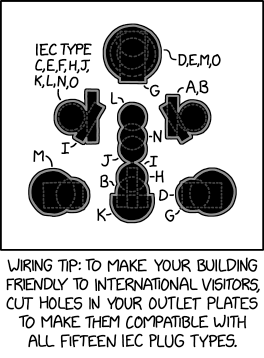
xkcd #3186: Truly Universal Outlet
Title text:
Building Inspectors HATE This One Weird Trick
Transcript:
Transcript will show once it’s been added to explainxkcd.com
Source: xkcd.com/3186/
Submitted 4 months ago by xkcdbot@lemmy.world [bot] to xkcd@lemmy.world
https://imgs.xkcd.com/comics/truly_universal_outlet.png
xkcd #3186: Truly Universal Outlet
Title text:
Building Inspectors HATE This One Weird Trick
Transcript:
Transcript will show once it’s been added to explainxkcd.com
Source: xkcd.com/3186/
Ugh, what a shameless plug
You try spending your whole life getting penetrated by various foreign objects and not feeling shame
This also makes me wonder why the xkcd one was laid out like that. Is the xkcd one better/safer, or was it done that way to look more insane.
On yours, the Canada/US and UK layouts overlap, while in the xkcd one they’re opposite to each other.
or was it done that way to look more insane.
Yeah I think that's it lol
I think it’s because mine doesn’t have Schuko (type f) support … probably because it’s real? And maybe because his adaptation uses “Euro”/A combination, wheras mine uses vertical axes for the “euro” plug.
N/L are “reversed” on the UK BS1363 standard vs US/EU Earthed plugs. By having two sets of N/L you can ensure that they are always correctly wired.
This is often why some adaptors seem to be “upside down”
Most devices can handle N/L being swapped, though.
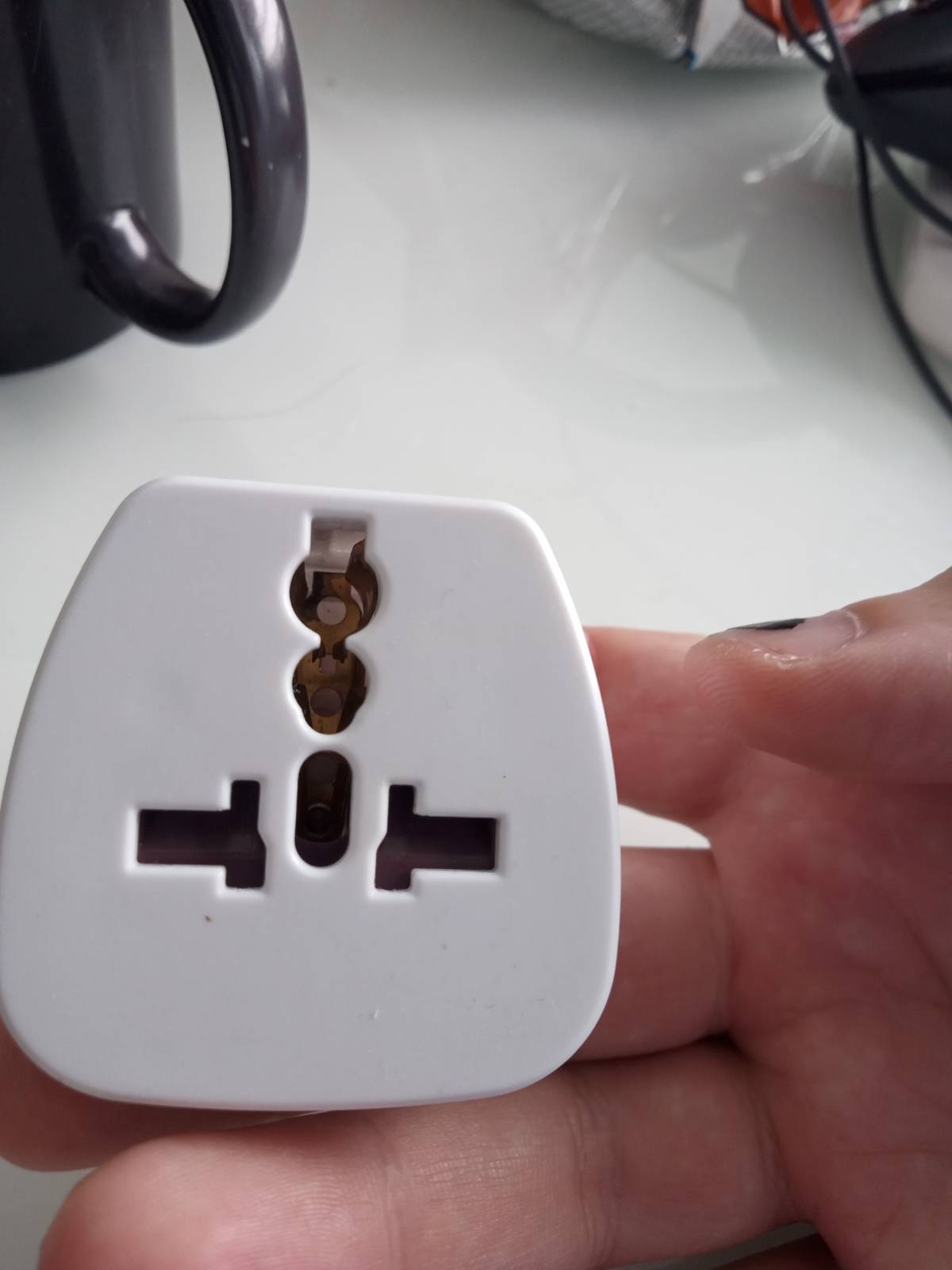
I’m not sure I fully get the joke, considering the literal existence of outlets like this.
Randall isn’t suggesting a universal wall plug, he’s suggesting you cut holes in your existing plates to make them “compatible”. (At least that’s how it reads to me)
Typical wall outlet in china. Any plug will hang loosely in there and work. Dangerously
Only if the socket is worn out and you are using a plug without inherent safety mechanisms.
Plenty don’t fit that. Type i for instance.
Can’t speak for all of them, but type I does fit
I’m guessing seeing one of these was the starting point for this cartoon.
Also wouldn’t surprise me if he threw in 1-2 types that don’t exist.
As an engineer, thinking of designing the metal connectors needed for this, this gives me nightmares.
Simple, just use a metal mesh in each hole. Make sure it’s a really thin mesh too, like practically steel wool. Pushing 15 amps through steel wool has never caused anyone any problems ever.
thisisfine.gif
Good news, you can just buy them from China at pennies :D
Im not an electrician in any way shape or form, so I dont know if my slightly panicky sweaty-behind-the-knees reaction to this is appropriate, but it scares me
They might also enjoy your electrical adapter.
Ok bro. You had already posted this.
Seems to be incompatible with some plugs, after all:
For some reason the image doesn’t seem to work for me, so here’s the link to it, too
The embed looks fine for me using Voyager through sh.itjust.works with a ‘muricuh IP.
Thunder user, works fine
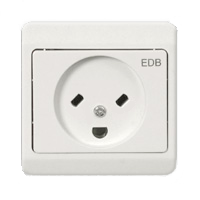
There are more in this series… They are used in Denmark FYI. This one is for hospitals so the cleaning lady does not plug the vacume cleaner into the same power lines as the life saving critical equipment but its compatible in the other direction if needed. The one you pasted is the same idea buy for IT equipment.
😏
There’s no preview, not even a hint of the image being there… But clicking on the text show the image in Boost
On thunder there was no picture in post preview, but there is a picture in the post. Maybe it’s because of png format, or maybe Wikimedia does something weird when you embed links to it, dunno
biblicaly accurate outlet
I actually have a really annoying problem in that I cannot find any universal adapter that has a real ground pin.
All of them only have prongs for the hot and neutral wires, and sometimes a dummy plastic ground to grip the socket better.
I understand that 99% of the time, modern electronics don’t need a ground cable and its only there for safety, but it would still be a lot more comforting knowing the ground is actually connected.
I even considered modifying an adapter with a ground cable I can manually insert into the socket.
Ground is always there just for safety. It is supposed to be connected to any metal bits on the outside of any device, so that if a live wire touches the outside it just shorts and some fuse blows or circuit breaker trips, rather than providing an unpleasant surprise to anyone who touches it.
Most modern electronics is “double-insulated”, meaning there are at least two layers of reinforced insulating material between any mains-carrying conductors and the user. This is deemed to be safe enough so that those devices don’t need to be grounded, and if the case is plastic then they will almost never be. So if you’re only connecting plastic-cased electronics to the socket, a ground would be superfluous in almost all cases. There might be some exceptions, like power supplies connecting one of the low-voltage pins to ground, but it is quite rare to see.
/stares in unibrow
Psh tp-p-p Psh tp-p-p Psh-Psh
Psh tp-p-p Psh tp-p-p Psh-Psh
That lowkey looks like christmas tree
What about the voltages and the hz?
Yes.
Put the plug in upside down to get 220V.
I have faith that we will eventually standardize plugs internationally. Assuming we avert the apocalypse, that is.
We can’t agree which one is best. When Tom Scott proclaimed his home plug to be the best I scoffed. I thought my own home plug is better. But in reality I think they all suck in their own way, every single one of them.
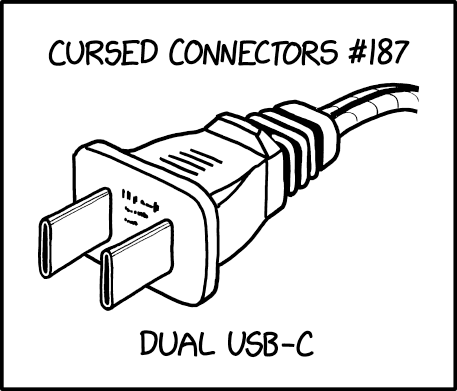
I think a new more research driven approach like the USB-C design would be better, something that protects your fingers, is easier to locate when behind furniture or in the dark, works in more than a single position, is not going to stab you if you leave it on the floor, does not get stuck in the socket, I think it might even be possible to add a fuse without making it larger than a typical phone charger, but to be honest, the smaller the better. One can only dream.
The trouble is of course the huge legacy of all the existing sockets you’d have to replace, never mind the pure unpopularity with the public of switching standards.
Possibly the most successful attempt at convergence so far has been the Europlug, but only because it’s a weird compromise. Did you know the europlug prongs aren’t actually parallel? They angle slightly and have a little flex, so they can be accepted in multiple European countries’ sockets that actually have slightly different dimensions! It’s a cool design, but you wouldn’t intentionally design it that way if you had the opportunity to standardise the world from scratch.
We can’t agree which one is best. When Tom Scott proclaimed his home plug to be the best I scoffed. I thought my own home plug is better.
The UK G type is the only one which is insulated, fused, grounded and polarized by default:
en.wikipedia.org/wiki/AC_power_plugs_and_sockets#…
This is great for electrical safety, though it’s a very bulky plug.
That’s generally the thing with decisions that don’t matter much. If one option is much better, there is no discussion.
But if the benefits of either option are marginal at best, you get tons of discussion and no decision.
For example, the EU decided almost a decade ago that they would get rid of daylight saving time, and everyone quickly agreed that DST sucks, mostly because changing the clocks sucks.
Since then, the whole EU has been arguing about whether to keep summer time or winter time, even though that matters so little that we have been using both of them for decades. A week after switching DST, nobody even notices the time shift.
Don’t know where all that research driven approach led us… USB-A worked perfectly, nobody ever had a problem with it; except having to turn it around a couple times to figure out how to plug it (which could be solved with a coloured dot on plug and cable). USB-C had the advantage of being a little bit smaller, but it sucks in any other aspect. While I might have broken a couple USB-A cables and plugs in my life, I do not expect an USB-C cable to last much longer than one year.
There really is an xkcd for everything.
Electricians hate this one weird trick
Wooo! IEC type I! Shoutout to the greatest!



pelya@lemmy.world 4 months ago
The only truly universal solution
Image
InFerNo@lemmy.ml 4 months ago
From schuko to shocko
kamen@lemmy.world 4 months ago
It might be a final solution too if you’re not careful…