Please not these posts again This thread is pinned for a reason: lemmy.world/post/60585
What are some self hosted services that you think are essential?
Submitted 1 year ago by bpt11@sh.itjust.works to selfhosted@lemmy.world
Comments
vegetaaaaaaa@lemmy.world 1 year ago
shertson@lemmy.world 1 year ago
For me:
- Card/CalDAV baikal : so that I can sync my calendar and address book across phone, tablet, workstation, and laptop
- Messaging prosody/synapse : private chatting with family.
- File sync Nextcloud : for access to various files. This is the only one that has worked consistently for me. Syncthing et al would constantly lose connection and the file I needed wouldn’t be there. Works fantastic for syncing Joplin notes.
- VPN wireguard : to access things remotely and securely
- Audiobooks audiobooksheld : I have a ridiculously large audio book library and enjoy listening to them when driving. This way I don’t have to preload my phone.
- Ebooks calibreweb : another large library. I have separate instances for different types: Magazines, regular books, RPG/gamebooks.
- Version control forgejo : for coding and creative writing projects.
- bookmarks shaarli : I find myself using this less and less. I use Firefox’s built-in sync, so I’m thinking about switching to separating selfhosting that instead of shaarli.
- Photos Synology : looking forward to immich getting stable. Once they get past regular breathing changes I’ll move over to that.
I have stopped using most of the services that got me into selfhosting. Things like rss and wikis. I try new things from time to time but kill them if I don’t find myself using them regularly or if the maintenance cost is more than the value add.
fcuks@lemmy.world 1 year ago
where do you source your magazines from out of interest? Are the epubs etc?
DieserTypMatthias@lemmy.ml 1 year ago
Arr stack, Jellyfin, and Nextcloud + some dashboard.
josefo@leminal.space 1 year ago
- Pihole (if that service goes down, everyone in my house gets mad at me)
- Jellyfin
Everything else is a nice to have, not essential
The arr family with a torrent client is great for feeding Jellyfin. If you are a developer, you can host your own shit there too. Game servers for playing with family and friends (so far Minecraft, Terraria, Project Zomboid, V Rising). I like to host a bunch of different telegram bots I wrote for fun. Discord bots are another interesting side. I also run some automation runners for helping out with testing, building and deploying my projects.
Focus on your needs and what you want to improve of your online life, there is probably a project you can self host for it.
GhiLA@sh.itjust.works 1 year ago
-
Samba (I can move files now, sweet!)
-
Jellyfin (I can watch stuff, sweet!)
-
Qbittorrent-wireguard (for pirating copyrighted material from the internet illegally)
-
Somesuch Wireguard solution (for accessing the backend and doin stuff)
-
A proxy somewhere else
The rest is extra.
possiblylinux127@lemmy.zip 1 year ago
for pirating copyrighted material from the internet illegally
I’m pretty sure that’s not the phase we use now
rtxn@lemmy.world 1 year ago
“Archiving legally purchased content as an insurance against corporate-sanctioned theft”?
-
lambalicious@lemmy.sdf.org 1 year ago
Essentials? Difficult to decide, it depends on why you are even selfhosting in the first place.
At a first glance and looking at my attempt at a homelab:
- some sort of basic web service (eg.: nginx + PHP setup)
- some sort of repo manager service (I do Fossil, but I hear most people use eg.: Gitea)
- XMPP server
- Jellyfin server
- Minetest server
ClusterBomb@lemmy.blahaj.zone 1 year ago
My three essential selfhosted services are :
- an XMPP server\
- a CalDAV server
- a bookmark manager (Linkding)
pinkystew@reddthat.com 1 year ago
XBev 4thud EE
jagged_circle@feddit.nl 1 year ago
Zim + syncthing + mega
Sebastrion@leminal.space 1 year ago
Gamevault: To share Games with my friend’s especially modded games. Jellyfin: Sharring Movies/Series/Music Immich: Saving my Pictures Pi-Hole + Unbound: Ad-blocking
CrackedLinuxISO@lemmy.dbzer0.com 1 year ago
Gamevault is cool, but I wish they weren’t windows-only on the client side. Lutris integration would be excellent.
sugar_in_your_tea@sh.itjust.works 1 year ago
WireGuard on my VPS, because otherwise I’m stuck behind CGNAT and can’t access anything in my network from elsewhere. Or Tailscale, but that’s not really self-hosted.
Blisterexe@lemmy.zip 1 year ago
do you have a good guide on how it works/ho to set it up? I tried a little while ago but couldnt figure it out.
sugar_in_your_tea@sh.itjust.works 1 year ago
I used the Arch Wiki entry about WireGuard. The trickiest part was some MTU nonsense.
Tailscale is a bit simpler and I think I just figured it out with some docs on their website.
antlion@lemmy.dbzer0.com 1 year ago
Omada software controller handles my wireless access points. HomeBridge lets me control various things from my iPhone, without having to use 5 poorly-made apps.
dwindling7373@feddit.it 1 year ago
Tailscale
utopiah@lemmy.world 1 year ago
So headscale?
dwindling7373@feddit.it 1 year ago
Headscale is not essential. Of course in this context the “self-hosted service” would be the Tailscale client…
GhiLA@sh.itjust.works 1 year ago
Pepsi or Coke?
Yes.
Honestly, I’ve used both. Tailscale edges out headscale by a tiny bit just because of the admin console’s GUI but other than that, yeah.
Atherel@lemmy.dbzer0.com 1 year ago
Paperless-ngx
The rest is already in the other comments
node815@lemmy.world 1 year ago
In no particular order, the most essential ones are those I constantly use throughout my day and also weekly.
Proxmox holds all of these in different LXC’s and VM’s
- Home Assistant
- Pocket-ID - github.com/stonith404/pocket-id (Exclusive Passkey login system as in -no un/pw just your Passkey which - doubles as an OIDC provider)
- Homepage (By Ben Phelps of gethomepage.dev)
- Vaultwarden
- TechnitiumDNS which handles all of my DHCP and Adblocking in a one system, extremely capable software especially useful for SOHO too.
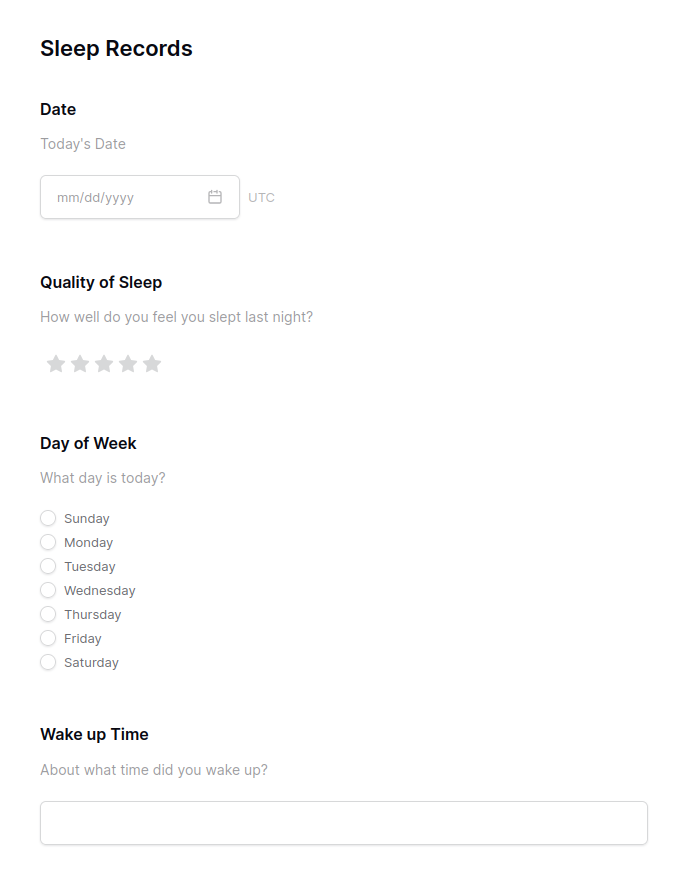
- Baserow - Airtable alternative. It holds certain items of importance like what MAC address each device in my home network holds and what IP It uses in an intelligent view. I also was using it for a while to log issues with my sleep where I deal with insomnia, so I logged how well I slept, how many times I woke up, how long it took me to fall asleep etc. That was a simple form I created using drag/drop in Baserow and called by a URL.
- OpenVSCode server - makes editing my Homepage (above) yaml and my docker-compose files a breeze! It’s especially nice when you edit it something and it auto saves almost instantly. Makes some of my services change in real-time!
- UptimeKuma - Simply one of the best out there for me
- Gotify - I get alerted to my Tuya based dehumidifer tank being full via Home Assistant, Downtime alerts from UptimeKuma and a variety of other services which I deem higher priority alerts over “fix when you can” ones.
Aside from that, i do have other services I use every so often like Memos, Joplin Server (holds most of my notes), Pingvin and a few others.
spookedintownsville@lemmy.world 1 year ago
+1 for UptimeKuma. Works great.
Father_Redbeard@lemmy.ml 1 year ago
Does Technitium support DNS rewrites like Adguard Home?
node815@lemmy.world 1 year ago
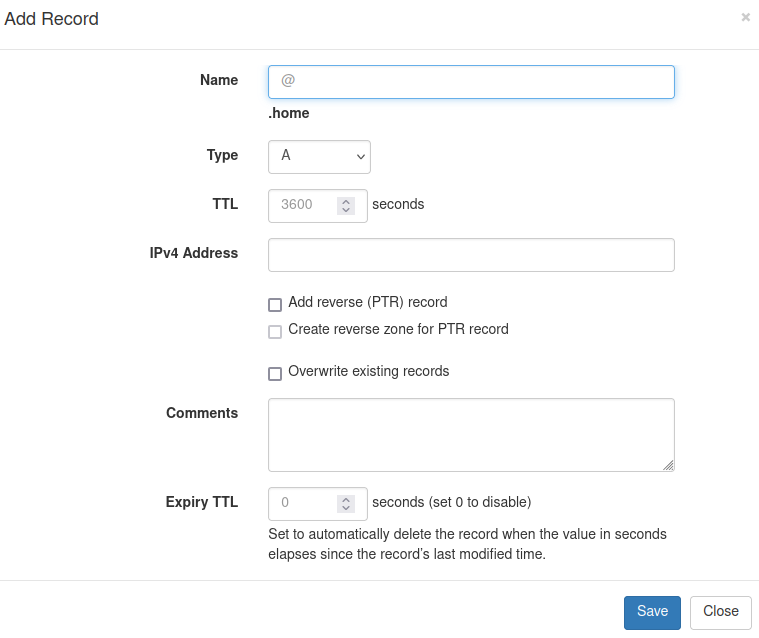
I’m about 99% sure it does, I don’t use it that way but It does allow DNS zones. For example:
It’s a lot more technical then Adguard Home for sure. Both work just fine though, I came from Adguard Home as I use a PXE server to provision some of my devices and Technitium is super easy to configure that.
qaz@lemmy.world 1 year ago
I tried Baserow a while ago but decided not to use it because it started downloading the application after running the container and required an online account (that could also be NocoDB). How has your experience been after using it for longer?
node815@lemmy.world 1 year ago
I had to create an account as per the usual process for these types of apps, but it was all local. I never had to do one to connect to their servers. I know it generates a unique instance ID which I believe phones home to their servers but I don’t mind personally.
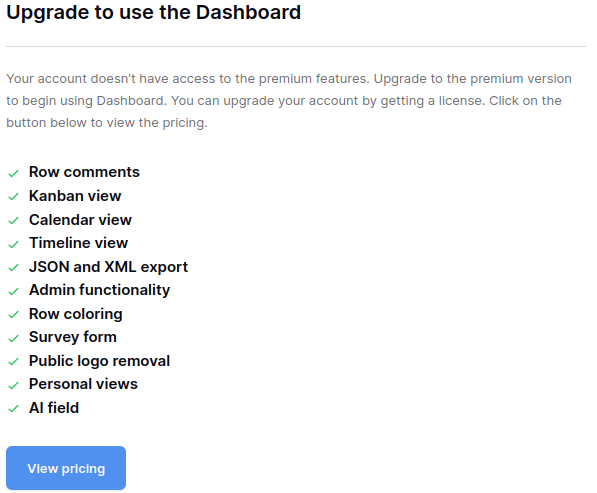
As for my experience, a lot of it is locked behind their paid plans, so I just keep it limited to what I use which is fine. I do like it as it does better than NocoDB for my needs (the input forms is what I needed) and it does better there. I don’t recall the other reasons for not using NocoDB otherwise, but it’s a long while.
Their pricing is here: baserow.io/pricing
So, that’s mostly what is locked behind. My sleep form I built which feeds the database: Image
Overall, it does meet my needs so that’s all I ask. :)
nichtburningturtle@feddit.org 1 year ago
Nextcloud, vaultwarden.
poVoq@slrpnk.net 1 year ago
Some WebDAV server, can be Nextcloud but actually something more lightweight is better.
Also a XMPP server is very nice to have. Even if you don’t have many contacts on it (yet), it works very well has a notification service and can even be extended to act as a Unified Push distributor.
lambalicious@lemmy.sdf.org 1 year ago
and can even be extended to act as a Unified Push distributor.
wait wait wait wait.
That works? Teach me how!
Bakkoda@sh.itjust.works 1 year ago
Radicale is next on my list
thirdBreakfast@lemmy.world 1 year ago
JustEnoughDucks@feddit.nl 1 year ago
Depends on what your usecase is for what is “essential.”
I think keeping household documents, taxes, medical bills, etc… In a local only paperless-ngx instance is quite essential to the organization of a household where everything is searchable and able to be organized on multiple levels compared to a simple document folder on 1 computer.
kokesh@lemmy.world 1 year ago
- AdGuard home (usable also as private DNS on Android)
- JellyFin
- Homeassistant
kokesh@lemmy.world 1 year ago
Adguard home
howlingecko@sh.itjust.works 1 year ago
and Wireguard pointed at AdGuard for DNS
Set the mobile app to enable WireGuard connection when not on home network and then you have AdGuard everywhere
kokesh@lemmy.world 1 year ago
I’ve pointed my domain to my wireguard tunnel VPS IP, same result. I can just set my private DNS in settings pointing to my AdGuard domain
bdonvr@thelemmy.club 1 year ago
Immich (Photo backup), Vaultwarden (FOSS Biwarden server for passwords)
somenonewho@feddit.org 1 year ago
Nextcloud.
I was hosting nextcloud at home for years. Then when I worked in a Datacenter I got to host some servers there from free so I set up a two-node proxmox with nextcloud and some other stuff. Now I don’t work there anymore and I really felt the hole nextcloud left, no more notes syncing for notes, tasks, calendar, podcasts no more place to upload my photos from my phone … So now I’m hosting nextcloud at home again.
I also host jellyfin which is nice but if I don’t have it doesn’t actively hamper my workflow.
Damage@feddit.it 1 year ago
I used to have a Nextcloud instance on a shared webhost… It ran like shit but you can’t beat the storage space… VPS storage is expensive.
Now I use syncthing on my home server
Saltarello@lemmy.world 1 year ago
For me it’s the first thing i learned how to self host: Nextcloud …which in turn allows me to sync Joplin notes, which I use constantly
farcaller@fstab.sh 1 year ago
I have a dedicated vm for things that are crucial to the home network, either latency-critical or network related.
That’d be my dns resolver (I enforce it over VLANs by hijacking anyone trying to do DNS to other resolvers, like random IoT devices), homebridge for less important home automaton and my own matter controller for most important home automaton (controlling the lights).
My router of choice is RouterOS in another VM. I tried opnsense, pfsense, vyatta, and a bunch of others (even a containerized Cisco route), and I settled on ROS, because it was the only one who could do IPv6 properly (apart from Cisco, but that has other issues).
For the less important things I run them on k8s and really, there are only two bits worth mentioning as essential: ArgoCD and nixhelm. Together, they provide effortless and mostly automated software updates with very easy rollbacks. I don’t have to go and manually update every single bit of software and that saves huge amounts of time.
rimu@piefed.social 1 year ago
I use my searxng instance several times a day.
DNS server/cache/pihole. If that goes down I can't browse anything.
I also selfhost a moderately successful SaaS that I built. It's essential to me that it's available to my customers although I don't use it personally.
Jolteon@lemmy.zip 1 year ago
In terms of most used for me, it would be:
- Nextcloud: contains my contacts and calendar synced with my phone, as well as access to files on my server from any web browser.
- Home assistant: both automated and remote control of your lights, thermostat, etc.
- Audiobookshelf: only really useful if you have an audiobook collection
- Vault Warden: self-hosted bitwarden. Not really all that important to self-host, since a bit warden’s clients are open source.
- Frigate: only useful if you have security cameras.
- Navidrome: only useful if you have a music collection.
- Jellyfin: only useful if you have a movie / TV collection.
cyberwolfie@lemmy.ml 1 year ago
Jellyfin is also useful for music collection. I tried both it and Navidrome to start with, and ended up only using Jellyfin.
shiiiiiiiiiiiiiiiiiiiiiiiiiiiiiit@sh.itjust.works 1 year ago
Audiobookshelf also finds, manages, streams podcasts. After Google killed off Google Podcasts, ABS has been an even better replacement in my experience.
MonkeMischief@lemmy.today 1 year ago
Gonna also throw in: Nextcloud Memories.
It makes the photo organizing part of NextCloud AMAZING. I’m so happy I got to dump Google Photos for good.
spookedintownsville@lemmy.world 1 year ago
Did not know about this, but it’s exactly the extension I was looking for! Thank you!
vividspecter@lemm.ee 1 year ago
Audiobookshelf also supports podcasts (and ebooks, but I haven’t tested that).
DrDystopia@lemy.lol 1 year ago
Cool, I didn’t know. Going to try it out.
Passerby6497@lemmy.world 1 year ago
Podcasts are my primary use case (my partner uses audiobooks exclusively), and while it works rather well, I want to put in the caveat that there’s no working playlist functionality in the app, and IME headset controls don’t work from FF for Android.
That’s not a deal breaker for me, but it was a massive disappointment when I switched over. But the lack of playlist functionality in the app only annoys me when I want to follow one of the shorter news feeds, since I have to stop and select the next track every 5 min as the episode ends. No issue with that feed from the browser, so meh.
Works great through my reverse proxy/cloudflare tunnel setup, so not too many actual complaints.
B0rax@feddit.org 1 year ago
Pi-hole. Get rid of at least some ads on the network level. Maybe add unbound for a faster DNS response.
Shimitar@feddit.it 1 year ago
Using unbound on opnSense with blacklists. Works wonders and do not require an additional device.
downhomechunk@midwest.social 1 year ago
I use unbound with pi-hole inside an Ubuntu lxc container. No additional device needed.
CarbonatedPastaSauce@lemmy.world 1 year ago
The only one I haven’t seen mentioned here that is a requirement for me is OPNsense. I’ve been using it for a couple years, and pfSense before that for a very long time. Never going back to commercial routers and their shitty / buggy / backdoored software. I highly recommend OPNsense over pfSense for the UI improvements alone, but there are other reasons to use/support OPNsense over pfSense.
On my network it handles internet firewall, internal firewall, and all routing across 5 VLANs and between two internet gateways. It does 1-1 NAT for my public IPs, inbound VPN, outbound VPN for my *arr stack, and RDNS blocklists with the data source being a script I wrote that merges from several sources and deduplicates the list. It is my internal certificate authority (I don’t miss you at all, Windows CA), DHCP for the guest wifi, and does pihole-like ad blocking via DNS for my entire network. And it does all that running in a VM with 2GB of RAM, of which it only uses about 60% on my install.
It is an incredibly powerful tool, not terribly difficult to learn, has a pretty damn good UI for FOSS, and in my opinion is a fantastic foundation for a complex home network / homelab. Unlike pfSense, which corrupted itself twice over the years I ran it, it has never let me down. And every update has been painless over the years.
Shimitar@feddit.it 1 year ago
Went to try pfSense. Need to register to their shop to buy a free download link.
Then during installation it won’t install unless it can phone home and report.
OpnSense all the way.
CarbonatedPastaSauce@lemmy.world 1 year ago
That’s new, it didn’t used to do that back in the days when I used it but that was a couple years ago. Sounds like it’s just getting worse.
militaryintelligence@lemmy.world 1 year ago
I understood some of those words. It make network go?
CarbonatedPastaSauce@lemmy.world 1 year ago
It make network go very good.
mike_wooskey@lemmy.thewooskeys.com 1 year ago
I highly recommend OPNsense over pfSense for the UI improvements alone, but there are other reasons to use/support OPNsense over pfSense.
Can you list or summarize some of the other reasons?
CarbonatedPastaSauce@lemmy.world 1 year ago
Eh, I’ve forgotten a lot of the details and it’s drama that I don’t care to relearn about. Easy to find online with some basic searching if you want to read about it.
witx@lemmy.sdf.org 1 year ago
[deleted]CarbonatedPastaSauce@lemmy.world 1 year ago
It’s a VM so technically none I guess, but my hypervisor hosts have a 4 port gigabit card and a 10 gig fiber card, plus another gigabit port on the motherboard.
OPNsense is using 6 interfaces, 2 WAN and 4 LAN, but it’s all virtualized.
coronach@lemmy.sdf.org 1 year ago
Second OPNsense. pfSense also is maintained by some pretty shitty individuals.
CarbonatedPastaSauce@lemmy.world 1 year ago
Yeah I hinted at it but didn’t feel like going into it. It’s why I switched though, and happily I found OPNsense to just be better anyway.
1nan@lemmy.world 1 year ago
No one metioned hoarder.app - bookmark app featuring offline archive, full text search and AI auto tagging