Wow! Thanks for sharing that data. I had no idea.
Comment on New sodium ion battery stores twice the energy and desalinates seawater
ExLisper@lemmy.curiana.net 2 months agohenfredemars@infosec.pub 2 months ago
Diplomjodler3@lemmy.world 2 months ago
TBF, there are a lot of “battery breakthroughs” that turn out to just be hot air. Battery technology had made tremendous progress though and there is still a lot of room for improvement.
MonkderVierte@lemmy.zip 2 months ago
hot air.
No, that’s a different type of battery.
Diplomjodler3@lemmy.world 2 months ago
No, this is Patrick.
MonkderVierte@lemmy.zip 2 months ago
Patrick who?
SaveTheTuaHawk@lemmy.ca 2 months ago
There actually is not a lot of room for improvement. Highest energy will still be limited to lithium chemistry because of the periodic table.
Diplomjodler3@lemmy.world 2 months ago
That’s a limit on gravimetric energy density. There are plenty of other parameters that can be improved.
SaveTheTuaHawk@lemmy.ca 2 months ago
There are plenty of other parameters that can be improved.
You don’t know that. This is chemistry, not Moore’s stupid law.
CaptPretentious@lemmy.world 2 months ago
Weird, I didn’t know Lithium-Ion batteries were still in the lab. I thought for sure we were using those already. I thought the batteries in the labs were various solid-state batteries like graphene or like this sodium-ion battery, where there’s been a rise in patents around it but not a lot delivered
GamingChairModel@lemmy.world 2 months ago
There are a bunch of lithium ion chemistries that have come to market more recently.
LFP sits in the low cost marker while NCA is the highest performing of the mass market batteries, and NMC is somewhere in between.
Sodium might be coming for LFP’s low cost position, and is already beginning mass production (some Chinese manufacturers expect those models to hit the road in a few months).
If you think rechargeable battery R&D from 10 years ago isn’t making it into mass produced products today, you’re just not paying attention.
CaptPretentious@lemmy.world 2 months ago
There are a bunch of lithium ion chemistries that have come to market more recently
Like what? [Citation required]
If you think rechargeable battery R&D from 10 years ago isn’t making it into mass produced products today, you’re just not paying attention.
Please provide examples.
I mean, as much as a person who doesn’t work in research and development of energy storage, or work in industries directly related to it, I personally feel I’ve kept up. The day Donut Labs announced their battery I was watching review videos about it, and I want to believe, but until I see it for purchase, I’m not going to call it a win.
GamingChairModel@lemmy.world 2 months ago
Like what?
Wasn’t LFP commercialized at EV scale like a decade ago? It went from like 0% market share to majority market share in about a decade.
SaveTheTuaHawk@lemmy.ca 2 months ago
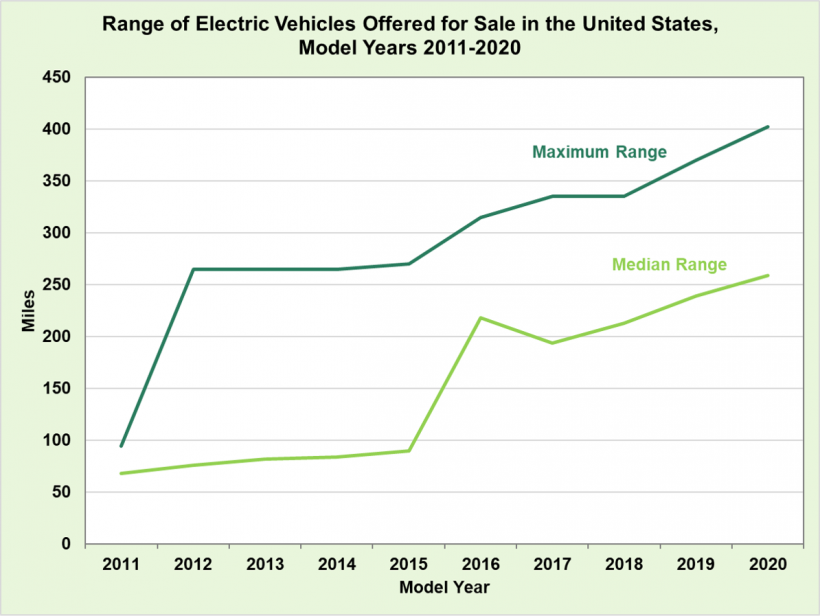
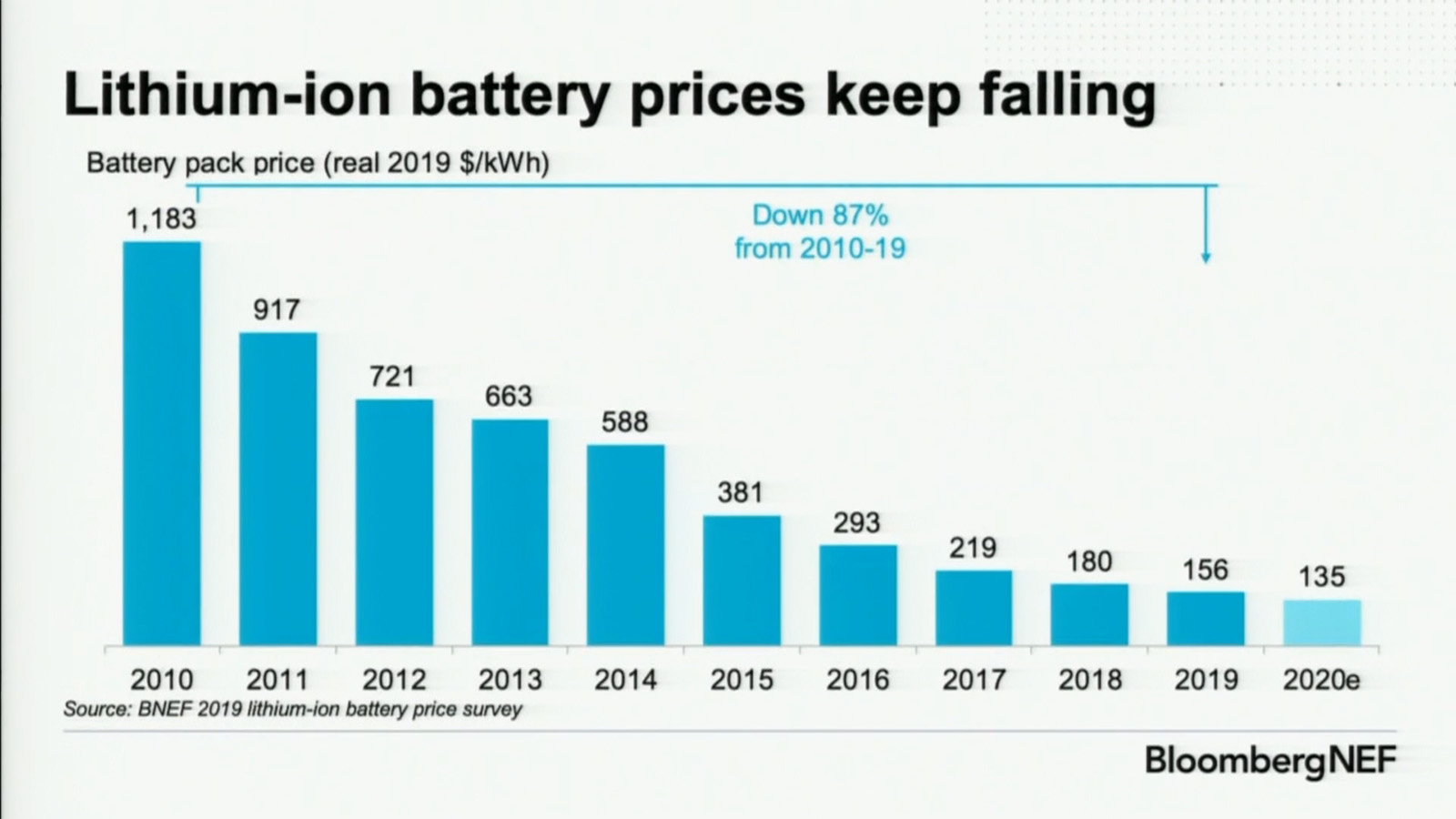
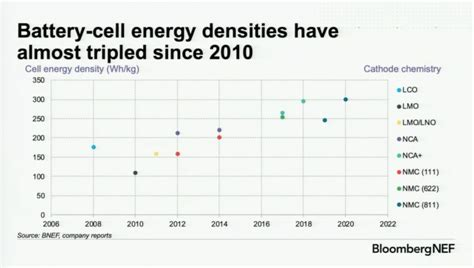
All that data says is batteries got cheaper so they are putting more of them into cars. Also 100 to 300 wh/kg is in labs. No explanation why it went from 175 to 100 Wh/kg 08-10.
GreyEyedGhost@piefed.ca 2 months ago
We’ve had 3 major changes in battery chemistry in the last 45 years. Energy density, lifespan, cost, and dangerous materials have all generally improved. We also have 2 new battery technologies in the process of becoming generally commercially available. Also, batteries went from 500 mAh batteries about the size of your smartphone to 3000 mAh as a minor component of that same smartphone, about an order of magnitude in energy density.
floquant@lemmy.dbzer0.com 2 months ago
No explanation? You might want to get checked for daltonism
Appoxo@lemmy.dbzer0.com 2 months ago
I mean the first diagram is effectively useless without knowledge of battery density. They as well could compare the 2010 compacts with 2025s SUVs which have probably 2x the amount of total capacity.
For the other charts: Agreed.

Frozentea725@feddit.uk 2 months ago
Great response, people just love to parrot easy dismissals without looking and the sheer magnitude on innovation and commercialisation going on in this sector
tb_@lemmy.world 2 months ago
It doesn’t really dispute it, though. Lithium-ion has seen a lot of improvement, yes, because it’s already a giant industry; other battery chemistries have a hard time breaking through because they require entirely different processes to manufacture.
I’m still rooting for it, but it’s not really the same thing.
Buffalox@lemmy.world 2 months ago
This too is false, great progress has been made on for instance solid state batteries.
tb_@lemmy.world 2 months ago
Some progress is being made, but it hasn’t seen large-scale adoption yet. Which is the point, as I read it.
SaveTheTuaHawk@lemmy.ca 2 months ago
You can’t buy anything with solid state batteries yet, and when you can, they will cost a fortune.
echodot@feddit.uk 2 months ago
Well all those graphs show is that the cost of batteries has gone down and that as a result electric cars contain more batteries and therefore more range. It doesn’t actually show that the individual battery capacity has increased.
WorldsDumbestMan@lemmy.today 2 months ago
@Warl0k3@lemmy.world The hero we need!
Warl0k3@lemmy.world 2 months ago
Did you mean to tag me?
SaveTheTuaHawk@lemmy.ca 2 months ago
Shhhh…we’re having a bullshit feel good moment…
Image