livligkinkajou
@livligkinkajou@slrpnk.net
- Comment on Rainwater collection and reuse - IBC totes and irrigation pumps 2 weeks ago:
Usually they are there to make sure the (storm water or mixed) sewerage systems get properly flushed
I think that might be mostly from inherited old regulations/infrastructure, as most modern policies revolve around having separate storm water and sewage system for the opposite reason, as they don’t want all the extra rain water overflowing the sewage treatment systems
- Comment on Lookout post with ladder for my cat 2 weeks ago:
I quite like the neighbours colourful homes. Is your a different shade of yellow? Or is it the sun that makes it look more yellow?
Did you also paint the tile(?) pieces at the bottom of the ladder?
- Comment on Rainwater collection and reuse - IBC totes and irrigation pumps 3 weeks ago:
Which controller are you using for your setup? Any reason in particular?
I’m wondering if I should set up a misting nozzle for mine and if I’d need a pump for it.
- Comment on How I Installed DIY Solar Power and Started Running My House on Batteries 4 weeks ago:
I’ve seen some saddle mounts for solar panels that don’t require any destructive anchoring, so you could just throw it on the windowsill and let it go. You can always plug the gaps on the window if needed
- Comment on How I Installed DIY Solar Power and Started Running My House on Batteries 4 weeks ago:
Is it illegal or is it not legalized? I think there might be a big difference between those two. Rules and codes can and do change all the time. Just look at UL 3700, which carries the ANSI/CAN/UL designation, signaling Canadian applicability.
It might be even easier now that Canada is getting closer to the EU for it to follow some of their standards as well, like their plug in solar regulatory framework, specially seen that Canada is also a member of IEC (International Electrotechnical Commission), which also covers solar energy
Plus any situation where they make balcony solar accessible will inherently mean rooftop solar becomes availabe and is clearly the more cost effective option.
Keep in mind there are different situations that would greatly benefit from it, like those living in apartments, renters, or where replacing their roof structure for solar panels is more expensive than upgrading a circuit for plug in solar. The market is there, we just need to give it a push by making it legal
- Comment on How I Installed DIY Solar Power and Started Running My House on Batteries 4 weeks ago:
So to do an accurate property value assesment (what you’re doing) you’d need to provide at least 5 examples from each of those regions, only including comparable properties. In other words you need to isolate that it was the solar panels and not a litany of other potential factors.
Exactly, and all studies take that into account and use the same hedonic price models which most appraisals rely on.
Apologies for not providing links to some of those locked papers, as Anna’s Archive is down right now, otherwise you could also dive further into their methodologies
I’m saying you cannot take one example and apply it to an entire market. Which you just did x6.
Which is not the case with these studies, as explained above, so once again, perhaps you are the one trying to generalize your local market to everywhere else?
- Comment on How I Installed DIY Solar Power and Started Running My House on Batteries 4 weeks ago:
the challenge with balcony solar is that they’re not legal in many places
That’s indeed a good point, which is why we should keep the pressure on it. We can already see some campaigns forming around its legalization in some states, as seen here
There are some great resources there, so I’ll just copy some relevant information in case someone is interested:
So why can’t you buy one in Canada?
It isn’t dangerous and it isn’t banned. There just isn’t a Canadian rulebook for it yet. Canada’s own safety body has said these little plug-in systems fall outside its current rules, and the good news is that rulebook is finally being written. In January 2026 the country’s standards council started the process of adopting a national plug-in-solar safety standard
Here’s how we change it.
Canada needs two simple things. A safety stamp that says these systems are good to go, ideally a Canadian one rather than a borrowed one. And a plain rule that lets people plug a certified one in without a permit or a pile of utility paperwork. Both are already moving. Germany has plugged in more than a million of them, and Utah made it legal on a vote with nobody against. What gets it over the line here is enough of us asking.
It’s safe, it’s proven, and it works everywhere it’s allowed.
- Comment on How I Installed DIY Solar Power and Started Running My House on Batteries 4 weeks ago:
Regarding 1, perhaps you are the one trying to generalize your local market to everywhere else?
See:
Arizona, USA:
Soak up the sun: Impact of solar energy systems on residential home values in ArizonaIn particular, properties with electricity-generating solar panels enjoy an average premium of approximately $45,000 (15% of medium home value) and transaction price premium of $28,000 (17% of medium home sales price).
California, Connecticut, Massachusetts, and Oregon - USA:
Solar at High Noon: Solar Home Premiums in a Rapidly Maturing Market:We find clear evidence that solar systems are correlated with higher selling prices if those systems are owned by the homeowner (HO). Alternatively, we find no value or slightly lower values associated with non-owned panels
Southport, Australia:
House price premium associated with residential solar photovoltaics and the effect from feed-in tariffs: A case study of Southport in Queensland, AustraliaUsing the hedonic approach, the study found that the gross premium was 4.3% of the average house price; the average net premium (exclusive of the PV installation cost) was 21,403 AUD when the FiT was at 44 cents/kWh; when the FiT dropped to 8 cents/kWh, the gross premium fell to 2.4%, and the average net premium dropped to 5600 AUD. The study shows that a solar PV house does enjoy a premium in terms of property value and indicates that a higher solar rebate and subsidy leads to a higher premium
If energy efficiency increases by 100 kWh/m2a, prices increase by 6.9% on average […] there is evidence that about 98% of future energy cost savings are already reflected in a higher housing value under myopic expectations regarding future energy prices.
Italy:
The Market Price Premium for Residential PV PlantsOur results show that individuals are willing to pay an additional price for a solar home, and the average market price premium is equal to 2.69% for monocrystalline PV plants and equal to 3.08% for polycrystalline PV plants respectively.
UK:
Returns to solar panels in the housing market: A meta learner approachOur results point to a selling price premium above 6% (range between 6.1% to 7.1% depending on the meta-learner) associated with solar panels. Considering that the average selling price is £230,536 in our sample, this corresponds to an additional £14,062 to £16,368 selling price premium for houses with solar panels.
- Comment on Minimal fold-away nightstand 5 weeks ago:
Perhaps you could try a farrimond friction hitch on both ends? It fits a+b and it has a quick release
- Comment on Mouseboard - DIY arthritis and carpal tunnel help for the tired typist 1 month ago:
I quite like it, simple and gets the job done. What combinations do you have there? righ, middle, left and a side button click from the mouse? If you were to do it again, would you change anything?
- Comment on searching for solar food dehydrator resources 1 month ago:
stackable wooden frames
Keep in mind that, at least in my experience, if you are in a high humidity area, only stacking them might not be enough to prevent mold on high water content fruit like tomato, so it needs to look more like the one pictured by OP to have enough air flow in the system
- Comment on ‘UK first’ sees decommissioning of ScottishPower wind farm demonstrate turbine circularity 1 month ago:
The analysis found a total 99.9% material recovery – calculating that 79.5% of the wind farm’s components were recycled and 20.4% were reused or retained as spare parts, keeping nearly all material out of landfills.
It also confirmed that 100% of the recycling and component retention took place within the UK, supporting domestic green jobs and at least 10 supply chain companies.
That’s a lot better than I would have expected
- Comment on Solar Has Crossed a Critical Economic Tipping Point | Solar now requires no more upfront capital than coal or gas to produce the same annual electricity 1 month ago:
Remember that you can still use the land for a more useful agricultural crop with higher¹ or similar² yield³ with agrivoltaics
You can also put panels over parking lots. USA alone has more parking lot land area than some countries:
- Comment on Emerging economies are skipping the fossil fuel detour 1 month ago:
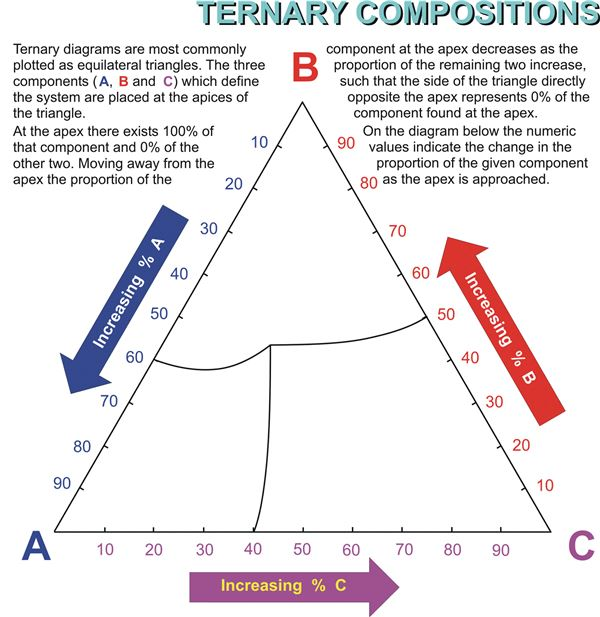
At each tip of the triangle you see a label, it means there is 100% of that component. It could certainly have used better labeling/colouring to make it easier to understand, as shown in the example below:
- Submitted 2 months ago to energy@slrpnk.net | 16 comments
- Comment on Prusa releases upgrades for Core One+, Core One L, and XL 2 months ago:
Oops, my bad. Apologies, as I forgot we were talking about A1 Minis specifically when I mentioned “multiple reports” in my last comment.
- Comment on Prusa releases upgrades for Core One+, Core One L, and XL 2 months ago:
I’m not a fanboi of any brand too, but just a FYI, it has been multiple reports, instead of an isolated case.
Glad to hear you are well aware of overall risks, as that might not be the case for newcomers that might read these posts, so I prefer to at least let them know of it. And as always, letś have fun at it
- Comment on Even at 100 meters, PV makes neighbours more likely to go green 2 months ago:
I can confirm. Solar skeptic neighbour kept saying it wasn’t worth it, but he decided to install his own system half a year later after another 4 neighbours got theirs as well
- Comment on Prusa releases upgrades for Core One+, Core One L, and XL 2 months ago:
In case you aren’t aware, A1 Mini can also catch on fire, see:
Bambu Lab A1 NTC thermistor fire and meltdown hazard
Please keep that in mind and take necessary precautions if needed.
- Comment on ribbed plastic anchor in brick not holding -- what screw diameter do I need? 2 months ago:
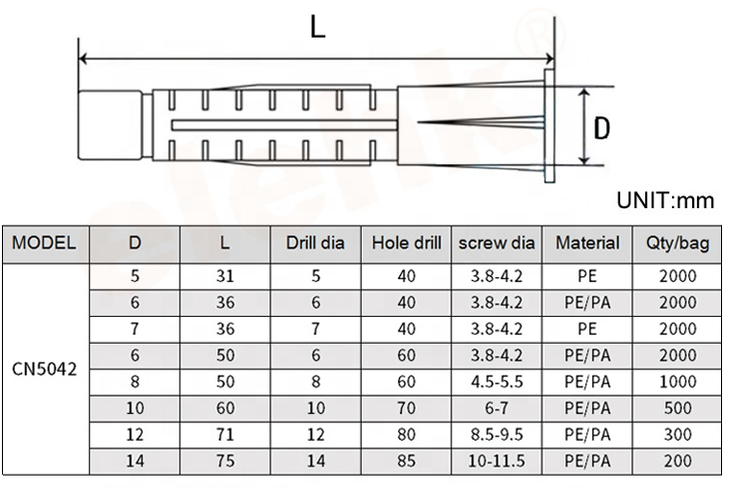
Don’t worry too much about the specific model, as almost all of them have quite similar specs
- Comment on What to do with a surplus of fresh veggies? 2 months ago:
Potatoes and onions have really long shelf life and can last for months if kept in cool, dry and dark places. However you should not store them together as potatoes go bad really fast if stored near high ethylene producing food like onion, and onions get leaky quite fast from the humidity they absorb(?) from potatoes. Let them breath, and don’t keep them in locked containers, I usually just hang them with mesh bags
For carrots, bell peppers and cucumbers, I usually add little bit of water into a sealed container and it is enough to last another 3-4 weeks in the fridge
Pickling is also an option for all of them if you like it
Frozen cucumbers and bell peppers won’t have a great texture, but it’s fine for me to chuck them into soups, pourées, etc
- Comment on DIY Universal Power Tools? 2 months ago:
Right now grabcad isn’t working for me too , but when I accessed it a few days ago, it worked fine on my VPN. Hopefully itś not down for too long. Let us know how your project goes
- Comment on Do you toss food once the date on the label has passed? Experts say that's often a waste 2 months ago:
Even badly expired milk, like when it starts to sour and get clumps, can still useful, as you can still use them in recipes, like baking cookies and cakes
- Comment on DIY Universal Power Tools? 2 months ago:
As you mentioned, we can already see USB-C charged batteries for power tools out on the market without all the proprietary charging crap from other platforms. As an example, see Greenworks Pro 24v, 4 or 8 Ah and/or Hyper Tough brand
I also haven’t looked at all the specific bells and whistles, but Torque Test Channel on YT has a couple of videos opening them up and testing them, and they do have a circuit board inside the bidirectional charging batteries (either 21700 or 18650 cells), which charges at 65w, and the port also has a little silicone(?) flap to cover it when unused. Perhaps it might be useful as a reference for your trials
See below video “Even More Problems for Big Brands from Walmart”, around 30s mark as an example:
non YT link
YT linkFor the adapter, perhaps you could use this open source terminal_v2 as a reference on the battery side? This one is for Ridgid batteries specifically, so you will need to fiddle with part A to adapt it to your brand battery connector. They used a Molex 44262 series connector on the contacts with the battery for reference.
On the other end, it has anderson connectors, but you could adapt it to xt## depending on your preferences/availability
If you don’t want to open/cut the tool itself, perhaps a dummy + xt/anderson connector on the tool side to connect into terminal_v2 on the batteries side?
Ridgid dummy example from the same author.
Disadvantage of dummies is that you would need one dummy for every brand you have to use
Above dummy also has a dangling cable. I’m not a designer, otherwise I would look into having the dummy with an xt## built into it, than have part B from terminal_v2 have the other xt## built into it, which slides/locks/connect into the dummy. I’m not sure if that was clear, sorry
The author also made a video showcasing the terminal_v2, dummies, and other features that might be useful, see “Build a battery adapter to power the whole Lab”, as it might help:
non YT link
YT linkIf you want to go the OpenBox route shown in the video, this bushing might also be useful, discussed around 22m10s on the video above