Explanation: Fire is actually a common tool in pre-modern naval warfare - while water is plentiful at sea, wood is flammable enough that you can burn a good deal of a ship’s structure before the waterline becomes a problem, leaving nothing but a sinking husk! On top of that, pine tar, and like flammable materials, were often used for caulking.
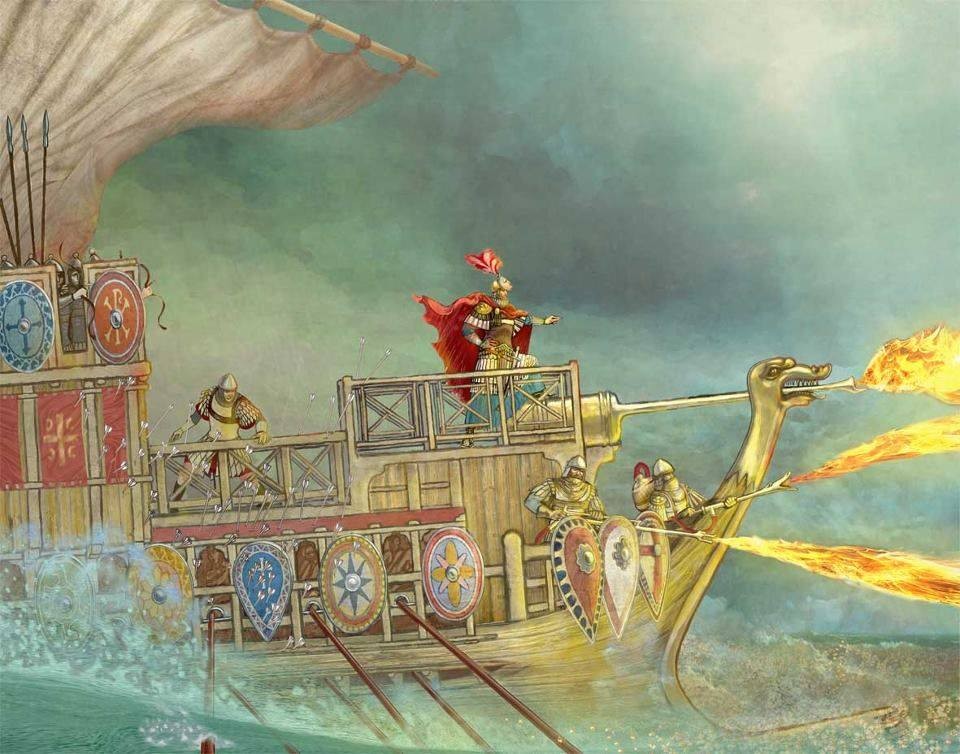
But the Byzantine Empire, centered in what-is-now Greece and Turkiye, had a particularly nasty inciendiary they employed in naval combat: a concoction called ‘Greek Fire’. The exact composition remains uncertain, but the recipe is generally accepted to be something close to napalm, likely being made of crude oil and resin. And the behavior, likewise, was similar to napalm - it stuck to anything it was launched at, was difficult to put out, and continues burning on water, which is terribly inconvenient for those trying to put it out - or avoid a near-miss shot!
The Byzantines used hand-pumped siphons to spew this mixture as a kind of crude naval flamethrower. It saved their asses at sea numerous times. No one else discovered the exact means of producing Greek Fire for some ~600 years - after which the Byzantines (suffering several successive and brutal invasions) themselves apparently lost the knowledge or capacity to produce it.
 kamenlady@lemmy.world

nailingjello@piefed.zip 2 months ago
This was a fun thing to learn about, thx pug.