You’re making it sound trickier than it is. Nutrition data on all foods will already discount fiber from the calorie counts.
But in a sense you’re also not wrong, that while calories are king when it comes to weight loss/gain, there are complications for that. For example if you give two different people the exact same food in the exact same amount of calories, they will gain or lose weight at different rates - highlighting the role of genetics. Another genetic factor related to calories only indirectly is how some people have much higher impulses to eat than others, making calories only a part of the story for their challenges with weight loss. I’ve also seen a headline for a study claiming that an amount of dairy caused more weight gain than the same amount of calories of peanut butter, though you may want to take that one with a grain of salt unless you actually see the study.
Personally I’m not a fan of measuring calories. Instead I use base knowledge to have ways to intuit calories more naturally. For example, I know that carbs and protein are 4 calories per gram, and fat is 9 calories per gram, making fat almost always the quickest way to make foods significantly more calorie dense. Other things can be very calorie dense too though, like sugary or other caloric beverages. Replacing those with water, coffee, or teas can be enough on its own for some people to start losing weight.
Some foods are more dense than others. Being that leafy greens and many other vegetables are naturally some of the least caloric foods you can eat, loading all of your meals full of them is an elegant way to reduce calorie consumption without needing to starve yourself. It also has the double benefit that high fiber foods are more satiating - they calm food cravings.
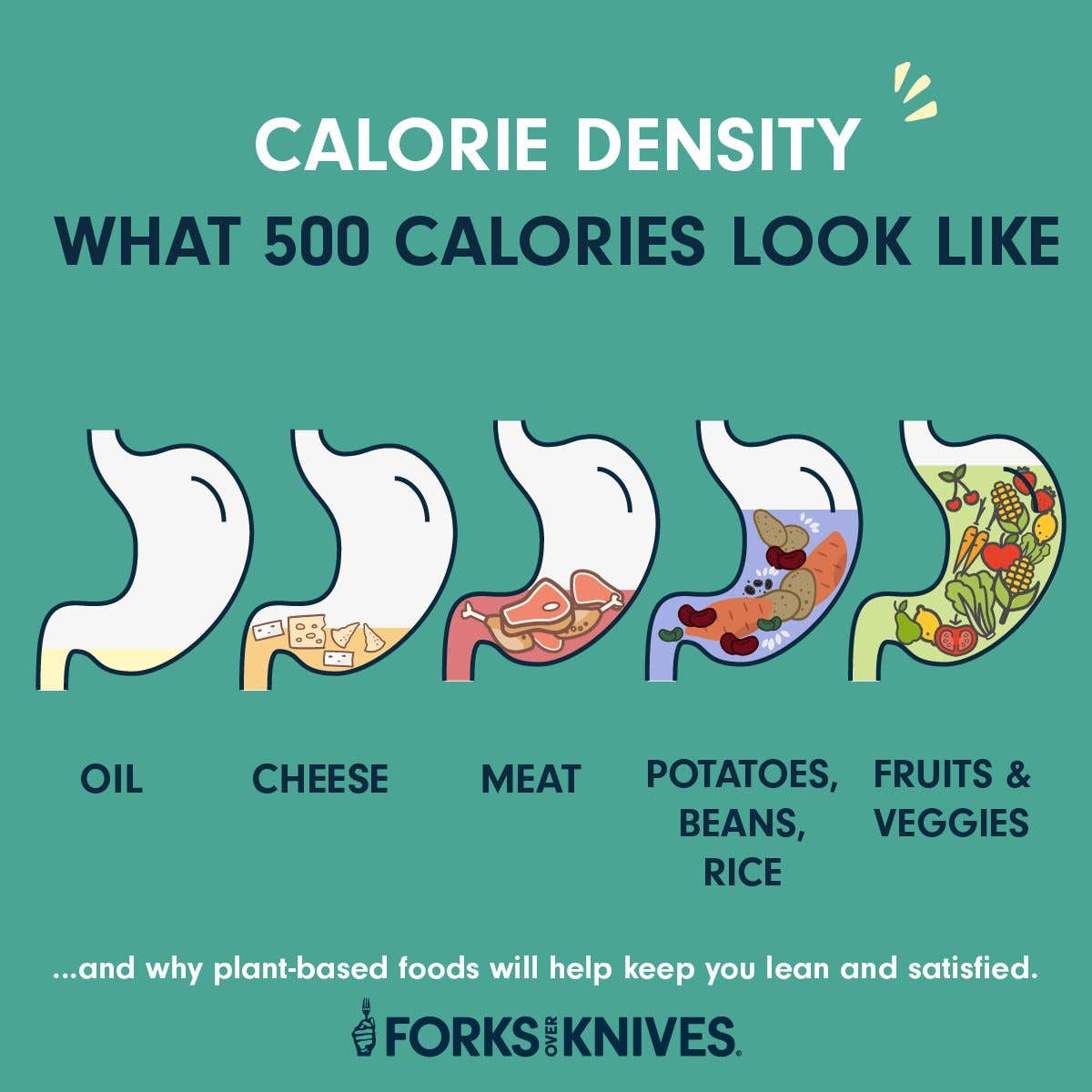
Point is, calorie management doesn’t have to be a headache, and it doesn’t mean a person has to starve themself.
howrar@lemmy.ca 7 months ago
None of that actually matters when it comes to weight control. What matters is that the linear relationship is retained in your proxy measure of Calories. Meaning that if you eat two pieces of cake, you’ve doubled your Calorie intake compared to eating one piece.
FinnFooted@lemmy.world 7 months ago
Ok but my point is you’re not just eating cake so its hard to keep track of the linear relationship sometimes. Calorie reporting can be incorrect and bodies are weird. That’s all I’m saying.
Realistically, being on most any diet is equally effective. From simple calorie counting to the keto diet. It turns out that, if you find a diet you can stick to, then just kind of paying attention to what you’re eating in a general sense works.
pubmed.ncbi.nlm.nih.gov/32238384/
howrar@lemmy.ca 7 months ago
An example with an oversimplified diet to illustrate the point I think you’re trying to make: You have a diet that’s exclusively cake and you’ve determined that you need 2000 Calories of cake to maintain your weight. That 2000 Calories figure is an estimate and we don’t know exactly how much of it we’re actually absorbing. In reality, it’s actually more like 1800 Calories. Now all of a sudden, you switch your diet to eating exclusively cookies. You measure out exactly 2000 Calories of cookies and eat the same thing every day. But your Calorie estimate is wrong and you’re actually eating 2100 Calories of cookies per day. Now you gain weight on this supposed 2000 Calorie diet.
I argue that this doesn’t matter either. If you see that you’re gaining weight, then it means you’re eating too much. Reduce your Calorie target and you’ll be back on track. In a real world scenario, you’re going to have a much more varied diet than only cake or only cookies, and each item will come with their own measurement errors. But for most people, their diets are varied in a fairly consistent way, so these errors are also consistent on average. If you ever make changes in your diet (e.g. completely cut out McDonald’s), you’ll change both your estimated Calorie intake and target like in the example above. Adjust your numbers accordingly based on how your bodyweight moves and you’re good.
Of course, other ways of dieting are also effective. It depends mostly on what you can adhere to and your goals.