organicpu
@organicpu@lemmy.organic-server.org
- Comment on Finally happish with my all-in-one homelab (20+ services and way too much tinkering) 2 months ago:
Yess I do.
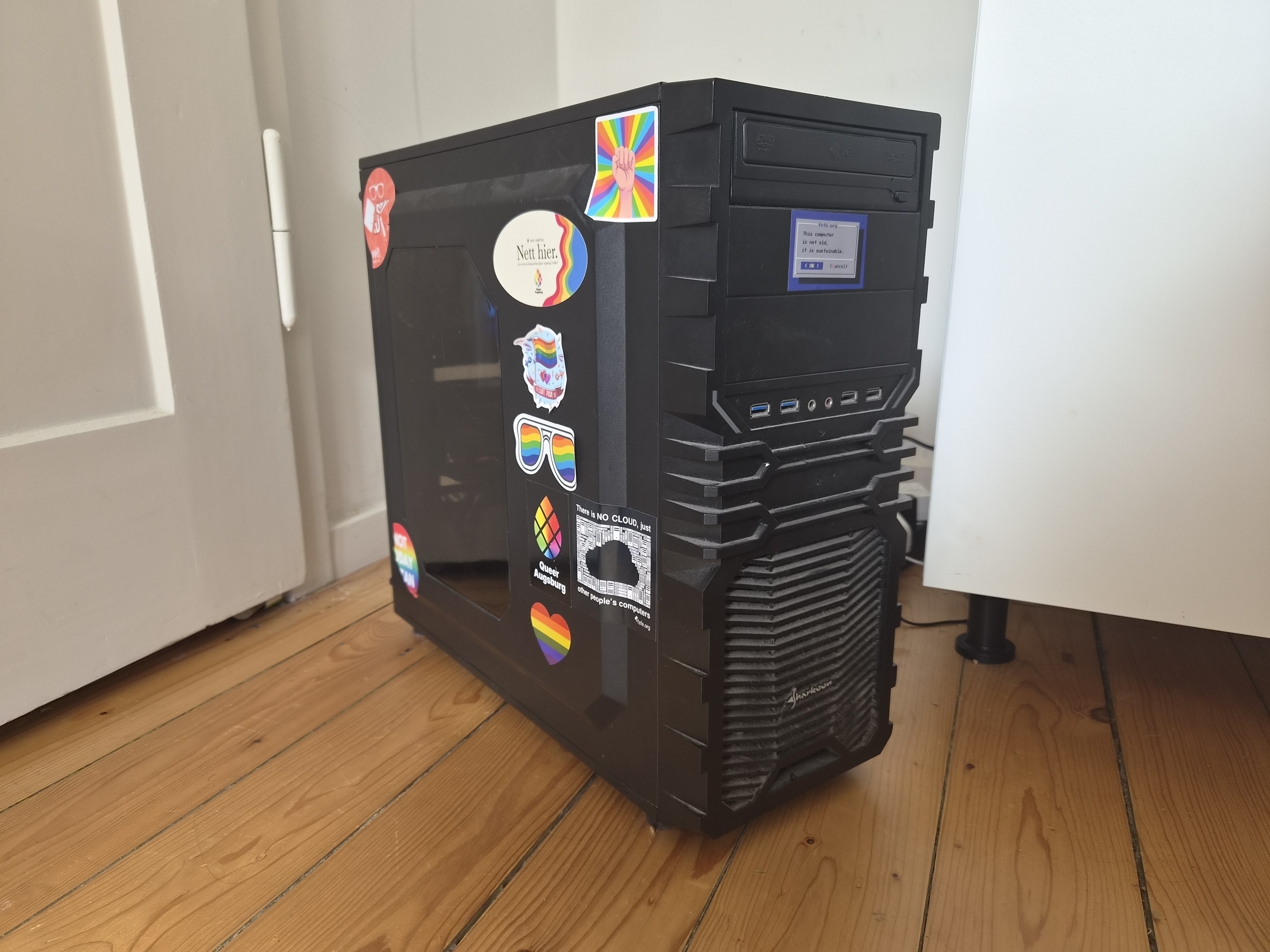
At some point, the old power supply started making strange noises, so I replaced it with a new one. I went from 500W to 1000W, mainly for the extra headroom. I know it’s overkill.
- Comment on Finally happish with my all-in-one homelab (20+ services and way too much tinkering) 2 months ago:
No, it only uses around 5–10 W at idle. It only ramps up power consumption when it’s under load, so it’s not pulling hundreds of watts constantly.
- Comment on Finally happish with my all-in-one homelab (20+ services and way too much tinkering) 2 months ago:
I mean, I somewhat understand where you’re coming from. I’ve always written in this kind of style, and I think the reason the post ended up sounding this way is simply because it’s meant to share information I personally find interesting or useful. There isn’t really much of a way to explain a setup like this without having sections, lists, and explanations.
And honestly it’s bit difficult to write something like this and have it not sound “AI-generated”.
Doesn’t help, a lot of people seem to associate the dashes (“-”) with AI writing nowadays, but I’ve been using them for years, so unfortunately that probably doesn’t help my case- rip haha.
Regarding the:
“Dive into the Details. If you’re curious about the configs, the philosophy, or just want to see the messy reality behind the setup, head over to organic-server.org. You’ll find some more of my ramblings there. Or, if you have a specific question, I’m always happy to chat here.”
That part was mainly there because I’ve seen a lot of homelab posts where someone shares a cool setup, but then never responds to questions or expands on anything. I wanted to make it clear that I’m happy to discuss the details if anyone is interested.
- Comment on Finally happish with my all-in-one homelab (20+ services and way too much tinkering) 2 months ago:
this is Snapottter snapotter.com
- Comment on Finally happish with my all-in-one homelab (20+ services and way too much tinkering) 2 months ago:
Nah, I haven’t. I guess I’m just very verbose- I just want to make sure I’m clearly understood.
- Comment on Finally happish with my all-in-one homelab (20+ services and way too much tinkering) 2 months ago:
Ollama, Immich, Snapotter and cause degoog can use ollama.
- Comment on Finally happish with my all-in-one homelab (20+ services and way too much tinkering) 2 months ago:
I mean, i kinda do- for public services on my website. but I don’t why I would do a dedicated one- when almost all need services authentication.
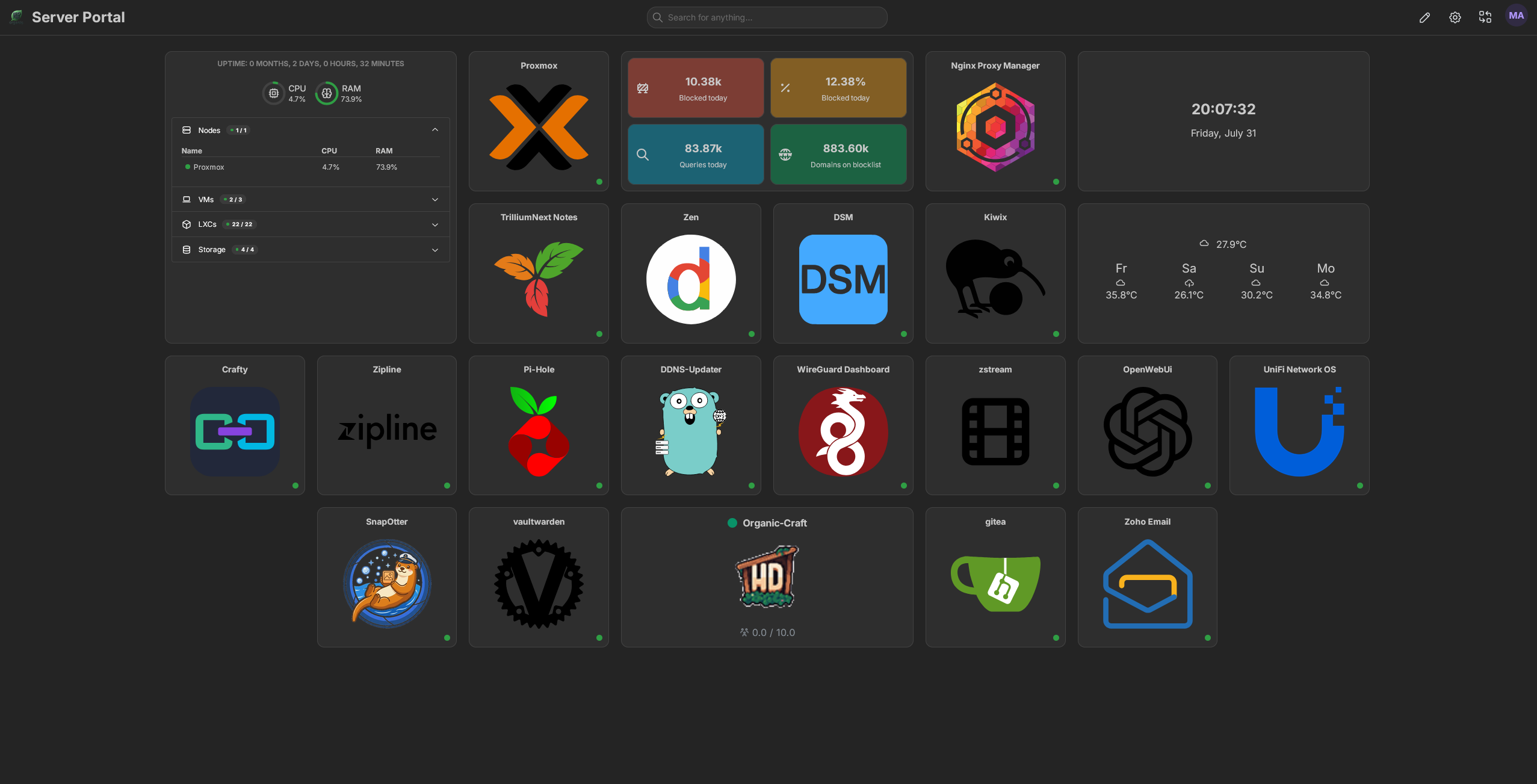
but I do use homarr for as an internal “homepage”/dashboard. Image
- Comment on Finally happish with my all-in-one homelab (20+ services and way too much tinkering) 2 months ago:
Yea! It really doesn’t break a sweat. Most of the time it sits around 5-20W (legit jumps between 5W and 20W) while hosting everything, with around 5-15% CPU utilization. Though I do share it with other people, so it may not be as “idle” as I think it is. With all services stopped and nothing running, it obviously uses way less power.
I also have a Windows VM for someone else, which basically acts as a terminal server for development. They run Linux and need Windows for developing something, but they said “I don’t want Windows anywhere on my physical system”, so I gave them a VM to use instead.
I also like using my server as a playground to test things. It saves me having to install VM software on my PCs and keeps experiments separate.
Originally, I used GPU passthrough to a VM, but I stopped doing that because I wanted multiple services to be able to use the GPU while still keeping everything isolated. Unfortunately, my GPU isn’t nice enough for NVIDIA vGPU support.
So passing it directly into containers was the next best option - although definitely the more tedious route to set up. The efficiency gains are pretty nice though.
It also only pulls around 300W at max load (CPU + GPU), but the load is very variable and heavy usage isn’t that dramatic. Normal “heavy” use is closer to around 120W (CPU + GPU).
In the future, I’d love to move to an ARM-based server for even better efficiency, once the hardware becomes more readily available and practical for server use. The efficiency gains are really interesting, but the ecosystem and availability still need some time to catch up.
- Comment on Finally happish with my all-in-one homelab (20+ services and way too much tinkering) 2 months ago:
Thanks!!!
- Comment on Finally happish with my all-in-one homelab (20+ services and way too much tinkering) 2 months ago:
I think the misunderstanding is that I’m running every single service as Docker inside its own LXC. That’s not actually what I’m doing.
I split things by service boundary. For example, Pi-hole + Unbound has its own LXC, Lemmy has its own LXC, Immich has its own LXC, etc. Most of those run natively in LXC without Docker at all.
Docker is only there where the application actually expects/benefits from it. I’m not adding a Docker layer everywhere just for the sake of it.
The reason I prefer this over one giant LXC with everything docker- inside is the management side.
Yes, there is some overhead. But LXC containers are much lighter than VMs. They share the host kernel and use Linux namespaces/cgroups for isolation, so you’re not paying the cost of a full virtualized OS. The extra memory/CPU overhead is minimal compared to the management benefits I get from separating services.
The Docker overhead only exists on the services that actually need Docker. A lot of my services run directly in their own LXC without Docker at all.
Could I put everything into one LXC and run Docker Compose? Sure. It would probably work fine. But for a homelab, ease of maintenance and recovery is just as important as raw resource efficiency.
- Finally happish with my all-in-one homelab (20+ services and way too much tinkering)lemmy.organic-server.org ↗Submitted 2 months ago to selfhosted@lemmy.world | 72 comments