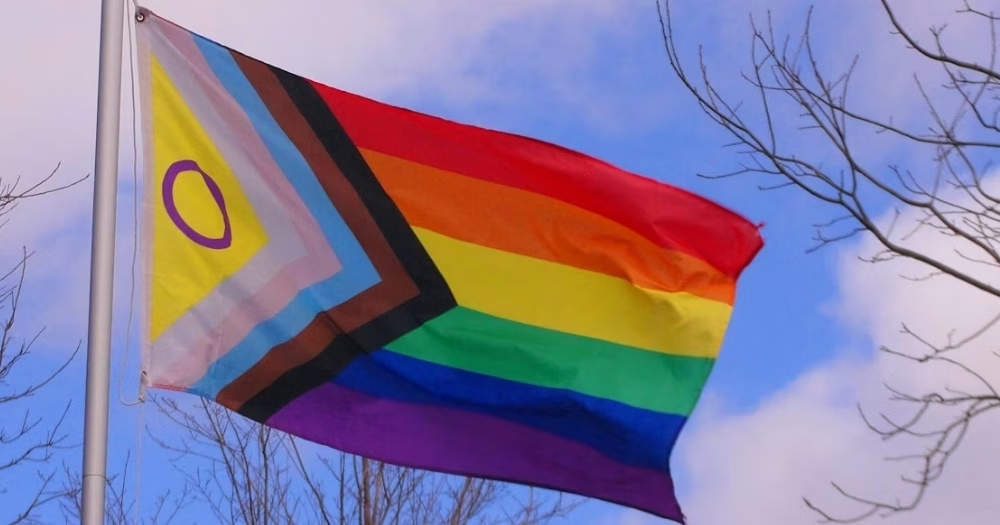
Eleven years ago, Ireland passed the Gender Recognition Act. It was a historic piece of legislation, won through decades of activism and through the extraordinary determination of people like Dr Lydia Foy, who forced the Irish State to confront its treatment of transgender people. It was also incomplete. Like many achievements of this nature, it left many people behind.
Last year, marking the tenth anniversary of the Act, we wrote that the Gender Recognition Act was both a victory and a compromise. It delivered legal recognition for many transgender people while deliberately excluding others. Non-binary people were left invisible. Intersex people were left out entirely. Young people were subjected to layers of gatekeeping that exposed the limits of Ireland’s commitment to bodily autonomy and self-determination.
Eleven years later, Ireland may finally be taking steps to address some of those omissions. In June, Ruth Coppinger announced plans to introduce legislation for the recognition of non-binary and intersex people within Irish law.
New bill could introduce intersex and non-binary recognition in Ireland • GCN
Submitted 1 week ago by  makary@queer.irish to everything_gender@queer.irish
https://gcn.ie/bill-intersex-non-binary-recognition-ireland/