 rss@news.abolish.capital [bot]
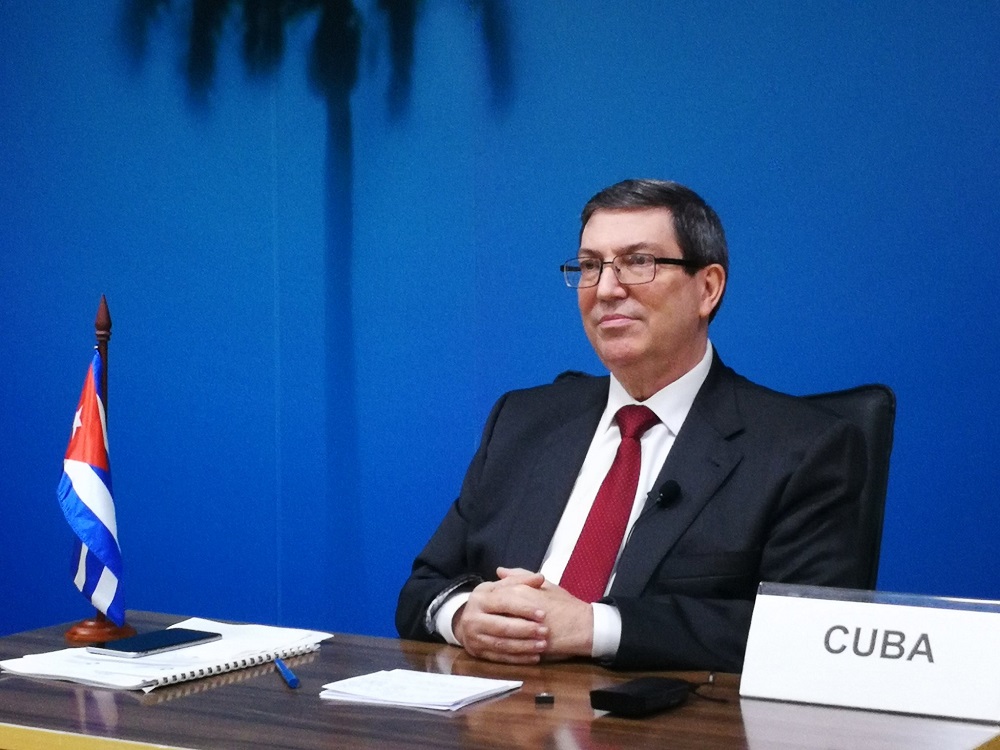
Cuban Foreign Minister Bruno Rodríguez Parrilla will arrive in China this week for an official visit as a special envoy of the Communist Party and the Government of Cuba. The visit aims to strengthen bilateral relations and consolidate political and economic ties between the two nations, reported Prensa Latina.
RELATED:
Cuba Denounces “Extraterritorial and Illegal” US Sanctions on Chinese Companies
The planned agenda will allow for a review of matters of mutual interest and the deepening of cooperation toward building a Cuba-China community with a shared future. The visit will take place from November 10 to 13.
Cuba’s Ministry of Foreign Affairs indicated that the meetings will bolster the high level of political trust between Havana and Beijing. The visit will also serve to advance the bilateral agenda and seek joint solutions in areas of common interest.
During a previous visit to Beijing in February, Rodríguez Parrilla emphasized that high-level consensus serves as the fundamental strategic pillar of the bilateral relationship. According to the Foreign Minister, these agreements have strengthened strategic communication, guided cooperation, and provided significant momentum to the ties between the two countries.
Cuba has repeatedly acknowledged China’s support and solidarity, particularly within multilateral forums and through collaboration across various sectors. The island has underscored that this backing is especially significant given the intensification of the economic, commercial, and financial blockade imposed by the United States against Cuba.
The US government, instead of listening to its citizens, is announcing new blockade measures against Cuba in its obdurate determination to asphyxiate the economy and cause the greatest possible harm to our people.
They will continue to fail in their attempt to submit us to their… pic.twitter.com/elm4k4XQXh
— Bruno Rodríguez P (@BrunoRguezP) November 5, 2026
The visit follows China’s rejection of the latest round of U.S. sanctions targeting individuals and entities involved in cooperation with Cuba, including two Chinese companies.
Guo Jiakun, a representative from China’s Ministry of Foreign Affairs, stated that cooperation between Beijing and Havana is open, transparent, and legitimate. Furthermore, he expressed China’s opposition to unilateral sanctions, noting that they lack any basis in international law and have not been authorized by the United Nations Security Council.
He rejected the so-called long-arm jurisdiction and Washington’s actions aimed at interfering with or hindering cooperation between the two countries. The spokesperson reiterated China’s support for Cuba’s efforts to safeguard its sovereignty and oppose external interference.
The Cuban Foreign Minister described the sanctions against two Chinese companies as part of a policy of economic strangulation directed at the Cuban people. In a public statement, Rodríguez Parrilla asserted that these measures serve as further proof of the extraterritorial and illegal nature of the U.S. blockade against the island.
Las sanciones aplicadas por el gobierno de EEUU contra dos empresas chinas, por sus supuestas relaciones con instituciones cubanas, forman parte de la política enfermiza de asfixia económica que ha diseñado y dirige el Secretario de Estado estadounidense contra nuestro pueblo.… pic.twitter.com/QJdzi4rSSx
— Bruno Rodríguez P (@BrunoRguezP) November 7, 2026
The text reads, “The sanctions imposed by the U.S. government against two Chinese companies, due to their alleged ties to Cuban institutions, are part of the pathological policy of economic strangulation designed and directed by the U.S. Secretary of State against our people. This serves as further proof of the extraterritorial and illegal nature of the blockade against our country—a policy that operates outside the laws governing international trade. Furthermore, these actions aim to hinder and sabotage the strategic, multifaceted, and legitimate cooperation that exists between #China and Cuba.”
“Furthermore, they seek to hinder and sabotage the strategic, multifaceted, and legitimate cooperation that exists between China and Cuba,” the head of Cuban diplomacy noted.
The U.S. sanctions targeted the Chinese companies CEIEC and Beijing H&C Technologies. Washington accuses them of supplying military components and equipment to Cuba via the Cuban firm Duna S.A.—information that has been circulated by international news agencies and cited in reports regarding the measures.
Rodríguez Parrilla has maintained that socialist China is establishing itself as a bastion of peace and multilateralism, as well as a source of stability, balance, and opportunity on a global scale. During his visit in February, the Foreign Minister described the Asian nation as a beacon of hope for the Global South, particularly for Latin America and the Caribbean.
The Cuban Foreign Minister also highlighted the historical significance of the ties between the two nations. Cuba was the first country in the Western Hemisphere to establish relations with China, and the first to forge a “community with a shared future” within their bilateral relationship.
This week’s visit comes at a time of heightened diplomatic coordination between Havana and Beijing, amid new coercive measures from the United States and China’s reaffirmation that it will protect the legitimate rights and interests of its companies.
From teleSUR English via This RSS Feed.