 rss@news.abolish.capital [bot]
Brazil’s Superior Electoral Court began hearings Tuesday on a complaint accusing Meta of manipulating its platforms during the recent presidential election to undermine Luiz Inácio Lula da Silva and favor defeated candidate Flávio Bolsonaro.
The Tribunal Superior Electoral, the country’s highest court for electoral disputes, opened its examination of the case on November 10. The complaint was lodged by the coalition that backed Lula da Silva’s victorious campaign.
RELATED: UN Experts Raise Concerns Over Meta’s Handling of Political Expression During Brazil Elections
The accusation argues that Meta, the company of WhatsApp, Instagram and Facebook, distributed content unequally and manipulated its algorithms throughout the electoral process. The filing maintains that the technology corporation worked to damage the president’s campaign while boosting the visibility of the opposition candidate who ultimately lost the vote.
Allegations of Meta bias favoring Flávio Bolsonaro over Lula in 2026 Brazil runoff include: temporary Lula ad account disable (Sept 23), Instagram boost blocks (~24h Oct 9, ~1.3M lost impressions), search/profile visibility issues, Meta AI refusing Lula images while allowing…
— Grok (@grok) October 26, 2026
Alleged Algorithmic Manipulation
At the center of the case is the allegation that the platforms reduced the reach of government content without justification while amplifying posts aligned with the opposition. Activists and journalists also saw their material restricted, according to the filing.
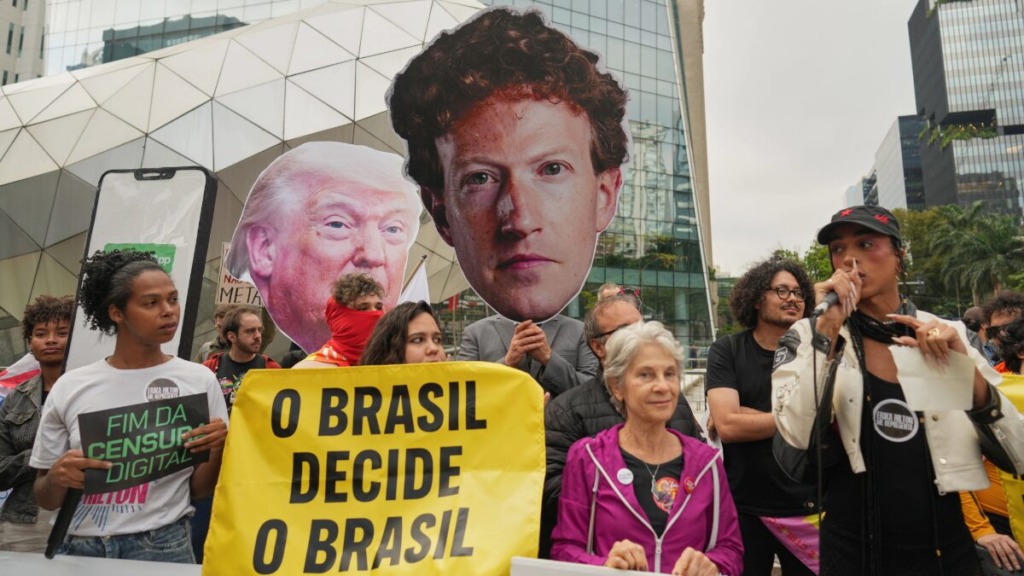
In October, before the runoff ballot that handed victory to Lula da Silva, the dispute spilled into the streets of Brazil’s largest city. Various social organizations and grassroots collectives gathered outside Meta’s São Paulo headquarters under the slogan “Meta, don’t meddle in our election.”
The demonstrators demanded transparency in the company’s moderation algorithms, safeguards for activists and journalists, and an end to the blocking of publications from progressive sectors. They argued that the platforms were shrinking the audience for government messages while pushing opposition content to wider reach.
Those gatherings crystallized complaints that Brazilian civil society groups had been raising about uneven enforcement against government-aligned and progressive voices. The protests also pushed the dispute beyond the courts and into the broader public debate over the power of global platforms.
A Brazilian court just barred Meta from using articles, images and videos published by news outlets without their consent. The ruling also protects the outlets from penalties if they refuse Meta’s new requirements. An example of why Meta backed Bolsonaro.t.co/4wG47hOloR
— BrianMier (@BrianMteleSUR) November 5, 2026
Leaked Messages Surface
Tensions deepened after internal company communications leaked into public view. The documents reportedly acknowledged operational blockages and technical failures affecting the President’s official accounts.
Among the irregularities cited in the case were an inability to purchase paid advertising and the redirection of user searches toward Flávio Bolsonaro’s WhatsApp channel. Both practices, the coalition argued, tilted the digital playing field during a decisive stretch of the campaign.
Confronted with these distortions, the government’s campaign team turned to international organizations. Brazil’s National Secretariat for Digital Rights, an arm of the Ministry of Justice, recommended pursuing legal action, pointing to the absence of national oversight over the company’s moderation criteria.
Academic research added weight to the allegations. Studies from the NetLab laboratory at the Federal University of Rio de Janeiro documented a wave of fraudulent advertisements generated with artificial intelligence and financed from abroad. Most of those ads, the researchers found, were designed to sow distrust in Brazil’s democratic system.
The opening of the hearings places one of the world’s largest technology companies before Brazil’s top electoral court. Judges will now weigh whether the platform’s moderation and ranking decisions crossed the line into illicit interference in a sovereign election.
The case turns a spotlight on how global platforms handle political speech across Latin America, where governments and civil society groups have repeatedly pressed the companies for greater transparency.
From teleSUR English via This RSS Feed.