 rss@news.abolish.capital [bot]
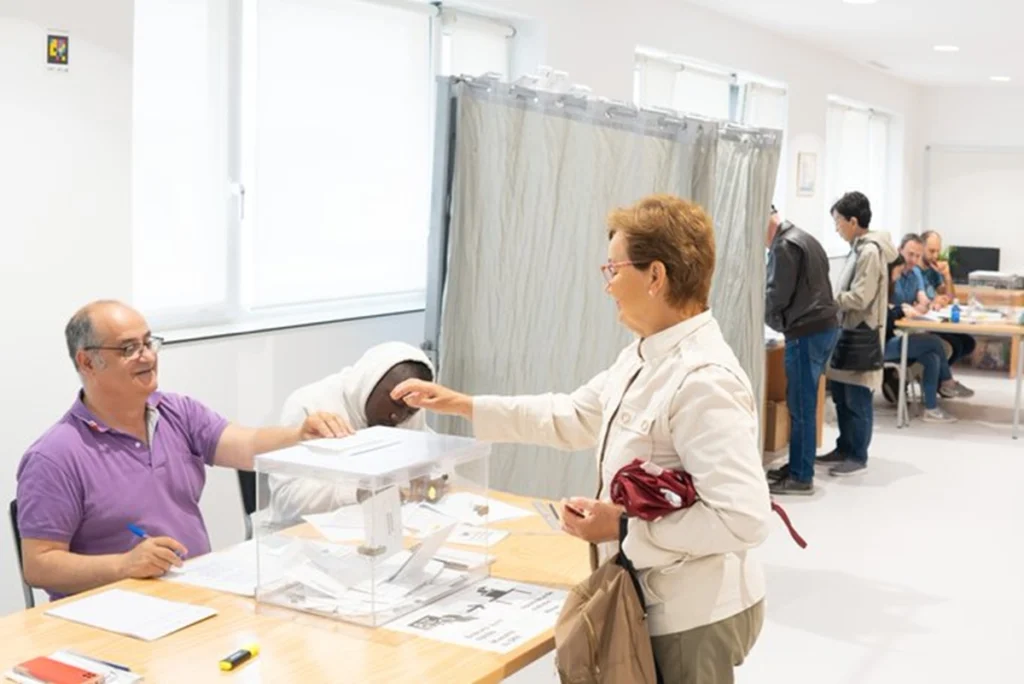
The decision affects 163,020 citizens residing abroad registered in the Electoral Census of Absent Residents (CERA).
Last Monday, the Spanish Supreme Court upheld the precautionary suspension of voting rights for some citizens who acquired Spanish nationality through the Democratic Memory Law, which generated concern among descendants of Spaniards residing in Cuba.
RELATED: TVBrics and Cuba’s Canal Habana Sign Content Cooperation Agreement
The measure maintains restrictions on registration in the CERA for individuals who obtained nationality under an instruction signed in October 2022 by Sofia Puente, then Director General of Legal Security and Public Faith.
The decision does not affect all beneficiaries of the Democratic Memory Law, but rather 163,020 citizens residing abroad registered in the CERA. It also does not restrict the right to vote for those who obtained nationality and subsequently established their residence in Spain.
The Democratic Memory Law allowed children, grandchildren, and other descendants of Spaniards who lost or renounced their citizenship as a consequence of exile for political, ideological, or other reasons stipulated in the legislation to obtain Spanish nationality.
The now-challenged instruction established a presumption of exile for Spaniards who left the country between July 1936 and December 1955, provided they could prove their departure from Spain during that period.
The strong expression of support for #Cuba at the @UN today sends an unmistakable message: no U.S. political maneuver can conceal the devastating humanitarian impact of the blockade and energy siege on our people.
While the U.S. staged an event aimed at discrediting Cuba,… pic.twitter.com/yY25kULBnl
— Ernesto Soberón (@SoberonGuzman) October 19, 2026
Estela Marina Perez, president of the Association of Descendants of Spaniards Around the World (ADEM), pointed out that around 90% of nationality applications were based on this instruction, especially in countries like Cuba.
ADEM filed an appeal against the precautionary measures and argues that the suspension of voting rights harms people who obtained nationality through procedures officially approved by the Spanish State.
However, Perez stated that among naturalized citizens residing in Cuba, the main concern is not the inability to vote, but rather the possibility that a future ruling could invalidate the instruction that facilitated thousands of applications.
The ADEM representative warned that if the Supreme Court were to conclude that this instruction was irregular, numerous naturalization processes already granted or still pending could be affected, generating uncertainty among thousands of descendants of Spaniards abroad.
#Cuba | British Lawmaker Jeremy Corbyn calls for an end to the US blockade following his participation in a humanitarian aid mission, stressing that lasting relief requires more than emergency assistance.#JeremyCorbyn #Blockade #teleSUREnglish pic.twitter.com/ZbRzDGqd76
— teleSUR English (@telesurenglish) October 17, 2026
teleSUR: JP
Source: Diario de Cuba
From teleSUR English via This RSS Feed.