Chapter 1: The Thoughts That Get Louder After Everyone Else Is Asleep
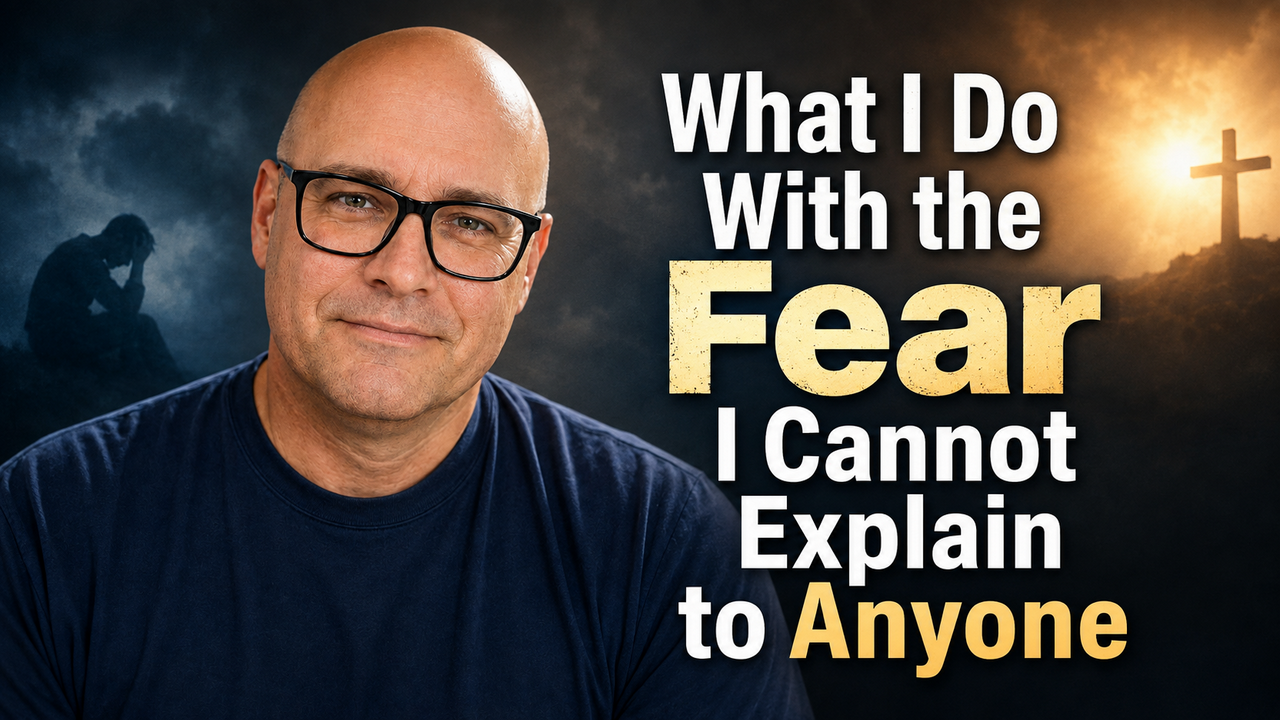
There are nights when nothing dramatic is happening in the room, yet your mind feels like it is standing in the middle of a storm. The lights are off. The house is quiet. Everyone else seems to be sleeping. But you are thinking about the world, your family, money, the future, and all the things you cannot control. You tell yourself to stop thinking, but your thoughts keep reaching for one more possibility. That is when a quiet 2 Thessalonians 2 message for people who feel shaken inside can meet you differently, not as a lesson to study, but as a place to put down what you have been carrying.
Sometimes the hardest fear is the kind you do not know how to explain. You are not in immediate danger. Nothing terrible happened today. You may even feel embarrassed that you are this unsettled. Still, your chest feels tight and your mind will not rest. You have read enough headlines, watched enough arguments, and heard enough warnings that the future has started to feel personal. You are not only thinking about what is happening in the world. You are wondering what it could eventually mean for your home, your job, the people you love, and the life you are trying to hold together. That is why Christian encouragement for the hidden fear that follows you into the night matters. Sometimes you need more than information. You need somewhere safe to be honest.
Paul’s words in 2 Thessalonians 2 speak directly into this kind of inner shaking. He tells believers not to be quickly shaken in mind or alarmed. I keep coming back to that phrase because it does not shame the person who feels unsettled. It recognizes that a mind can be moved. It can be pushed around by fear, confusion, rumors, and pressure. But it also tells us that being shaken does not have to become our permanent condition.
Maybe you know what this looks like when the day is finally over. You have answered everyone’s questions. You have handled what needed to be handled. You have been the dependable one at work, at home, or in your family. Then you lie down and realize you have been holding yourself together all day. The silence gives your fears room to speak. You wonder whether the economy will get worse, whether your children will be okay, whether someone you love is drifting away, whether your health will hold, or whether you are prepared for whatever comes next.
In those moments, I do not think the answer is to force yourself into a better mood. I do not think faith requires you to pretend you are not scared. Sometimes the most faithful thing you can do is tell God exactly where your mind has gone. Not the polished version you would say in front of other people, but the real version: you are afraid of what you cannot see, tired of feeling responsible for everything, and worn down from imagining the worst. There is relief in becoming honest enough to stop performing calmness.
2 Thessalonians 2 does not promise that believers will understand every confusing event around them. It does something more useful. It reminds them that they do not have to be ruled by confusion. Deception can exist without becoming your identity. Trouble can be real without becoming your master. You can admit that the world is unstable without deciding that God must be unstable too.
That distinction matters late at night because fear likes to erase proportion. A difficult possibility starts feeling inevitable. One frightening headline begins representing the entire future. A problem you cannot solve before morning suddenly feels like something you must solve before you are allowed to sleep. But you are still human, and you are allowed to reach the end of what you can carry today.
There is no spiritual failure in saying, “I cannot hold this tonight.” In fact, surrender often begins there. You stop trying to manage ten imaginary tomorrows and return to the one room you are actually sitting in. You notice the clock and your breathing. You notice that the people you love are still here. You remember that God is not waiting for you to predict the future correctly before He agrees to remain faithful.
This is where standing firm becomes deeply personal. It may mean turning the phone facedown even though part of you wants one more update. It may mean refusing to search for reassurance until two in the morning. It may mean opening your Bible without demanding that every question be answered. It may mean whispering one simple prayer because you do not have the energy for anything more. God is not measuring the beauty of your prayer; He is meeting you in the truth of it.
Paul later reminds these believers that they are loved by the Lord, and I think that belongs beside the warning not to be shaken. When your mind is tired, you can start believing that God must be disappointed in you for struggling. But tiredness does not cancel love. Fear does not erase belonging. An unsettled night does not move you outside the reach of grace.
You may not wake tomorrow with every concern resolved. The world may still be noisy, and your personal questions may still be waiting. But tonight does not have to become a courtroom where you put your faith on trial because you are afraid. You can simply be a tired person talking honestly to God, and sometimes that is where steadiness starts.
Chapter 2: The Morning After the Fear
Morning has a way of making some fears look different. You wake up, see a thin line of light around the curtains, and realize the world did not end while you were sleeping. The problem you were worried about may still be there. The headlines may still be difficult. The unanswered message may still be unanswered. But you are here, and the fear that felt enormous at 1:30 in the morning has lost some of its power in daylight.
That does not mean the fear was fake. It means fear changes shape when we stop feeding it.
Imagine walking into the kitchen and seeing the same unpaid bill you were thinking about the night before. The amount has not changed. Your bank account has not changed. But now you can make coffee, sit down, look at the numbers, and decide what the next step actually is. Maybe you need to move money, call someone, change a plan, or ask for help. Faith does not make the bill disappear. It helps you face the real problem instead of suffering every possible consequence before anything has happened.
That is one of the things I hear in Paul’s instruction to stand firm. Standing firm is not emotional numbness. It is refusing to let fear push you into a life of imagined emergencies. It is returning to what is true, what is in front of you, and what God is asking of you today.
There is also something deeply freeing in remembering that you are loved before you are steady. You do not have to calm yourself perfectly before you are welcome with God. You do not have to prove that your faith is strong enough by pretending you never get overwhelmed. You can come to Him tired, uncertain, and still asking the same question you asked last night.
Then you can take one faithful step.
Make the call. Eat breakfast. Go to work. Sit with the person who needs you. Pray for the part of the world that has been weighing on your heart. Turn off the noise when it stops helping. Tell the truth. Do what is yours to do and leave what is not yours with God.
The world may remain unstable. Your life may still contain uncertainty. But you do not have to become unstable with it.
Sometimes peace is not the feeling that nothing bad can happen. Sometimes it is the quieter confidence that whatever happens, you will not be alone in it.
Your friend, Douglas Vandergraph
Explore the complete Douglas Vandergraph Master Index: https://douglasvandergraph.com/douglas-vandergraph-master-index/
Watch Douglas Vandergraph’s faith-based videos on YouTube: https://www.youtube.com/@douglasvandergraph