Chapter 1: The Prayer You Barely Say Out Loud
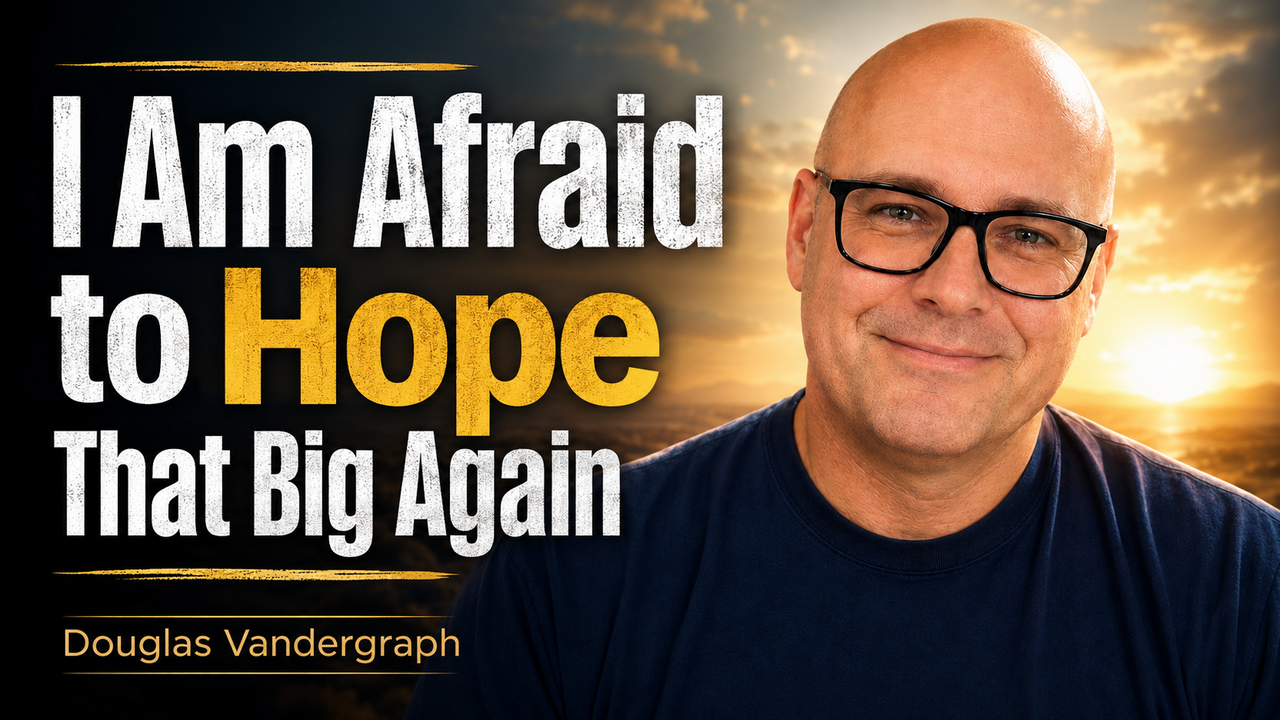
You sit on the edge of the bed with your shoes still on because taking them off somehow feels like one more task. The room is quiet except for the air conditioner, and tomorrow’s clothes are draped over a chair. You have heard people say that God is about to do something big, but tonight the words do not excite you. The feeling underneath this quiet video about what Matthew 16 reveals when God is building through you is the private fear that hoping again will only give disappointment another place to land.
You may not say that fear during prayer. You may use safer words and ask only for enough strength to get through the week. In this honest Christian reflection for anyone afraid to hope again, there is room to admit that a large promise can feel heavy when your heart is already carrying the memory of what did not happen.
Matthew 16 meets us in a surprisingly simple sentence from Peter: “You are the Christ, the Son of the living God.” Peter did not understand the road ahead. He did not know how badly he would fail or how much his life would change. He only knew who Jesus was in that moment, and Jesus treated that confession as something upon which real work could move forward.
That helps me because faith does not always feel like confidence about the future. Sometimes faith is only the refusal to walk away from Jesus when you cannot imagine what He might build. You do not need to create a bright picture of tomorrow. You can sit in the quiet room and tell Him, “I still believe You are who You said You are.”
A woman waiting for test results may not have the strength to pray for a dramatic outcome. She may only whisper the name of Jesus before answering the doctor’s call. That prayer is not inferior because it is small. It places her fear in the presence of Someone larger than what she knows.
Maybe the big thing begins there, before the plan, energy, or excitement returns. It begins with Jesus becoming more trustworthy than the future is predictable. You are not being asked to deny how tired you are. You are being invited to let one honest confession remain standing inside the weariness.
Chapter 2: The Work May Begin With the Apology
The kitchen is finally quiet after an argument, but one cabinet door is still open and a chipped mug lies in the sink. You replay what you said and keep finding ways to justify it. Part of you wants to pray about your future, your purpose, and the important work you hope God will give you. Another part knows that the next faithful thing may be walking down the hall and saying, “I was wrong.”
That can feel painfully small beside the thought of God building something big. We prefer a calling that lets us move forward without returning to the harm behind us. Yet Matthew 16 does not leave Peter inside his strongest moment. Soon after his confession, Peter resisted what Jesus said and was corrected. Jesus cared too much about Peter’s place in the work to protect him from the truth.
I think we sometimes imagine that God will use the gifted part of us while politely avoiding the wounded, defensive, or proud part. But Jesus does not build by separating our public ability from our private character. He brings the hidden room into the same light as the visible assignment.
The apology in the hallway may not repair everything immediately. The other person may still be hurt. You may need to listen to details you would rather explain away. Repentance is not a quick sentence used to clear your conscience. It is the willingness to stop defending what love requires you to change.
A father may dream about starting a ministry while his son has learned not to bring him difficult questions. The dream might be sincere, but the distance at home is also real. Before reaching strangers, he may need to sit beside his son, put the phone away, and remain present through an uncomfortable silence.
None of this means God’s larger work has vanished. It may mean He is beginning closer than you expected. The thing He builds with you must also be allowed to change you. Sometimes the first stone set in place is not a public opportunity. It is the honest sentence spoken in a quiet hallway when no one else is there to admire it.
Chapter 3: The Quiet Work Beyond the Screen
A writer closes the statistics page after seeing that few people read the words he spent all weekend preparing. The house is dark, and the refrigerator hums. He wonders whether continuing is faithfulness or an unwillingness to admit the work is going nowhere.
Then a message arrives from a reader who had been close to giving up on prayer. It does not make the numbers impressive. It reveals a life behind one of them.
Matthew 16 does not teach us to call every dream successful. It shows us where confidence belongs. Jesus is the Christ and the Builder. We can examine our work honestly, change direction when needed, and refuse to measure obedience by immediate attention.
You may never see the complete reach of what Jesus does with your surrendered life. An apology can change a home. A confession of faith can steady someone facing fear. A few honest words can meet a reader when they need them.
Something big does not always arrive making noise. Sometimes it begins when you keep your heart open after disappointment, accept correction, and offer Jesus what remains. The result is not yours to inflate or control.
For tonight, that can be enough. Close the statistics, turn off the light, and rest without calling the day wasted. Jesus knows what reached another life. He also knows what He is still building in yours.
Your friend, Douglas Vandergraph
Explore the complete Douglas Vandergraph Master Index: https://douglasvandergraph.com/douglas-vandergraph-master-index/
Watch Douglas Vandergraph’s faith-based videos on YouTube: https://www.youtube.com/@douglasvandergraph