It was my birthday recently. A lot happened this past year. I became a father, I converted to Islam, and I worked on season two of Beast Games. Overall, I would say this is the year that revealed new identities. I say “revealed,” because the notion of revealing identities should feel like a revelation and not a proclamation. It should feel like taking something off, revealing what was underneath. It should not be putting on a new hat, but rather taking off a hat to reveal the one you’ve worn underneath all along. Discovering your identity is a process of subtraction, not addition.
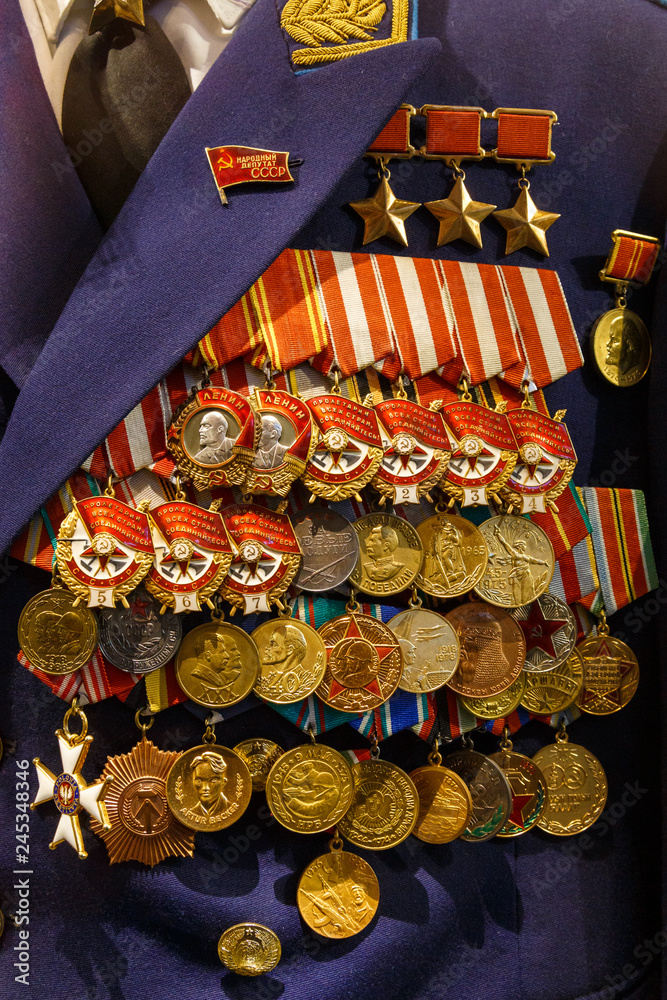
And yet, too often the conversation around identity today feels so additive. Identity often feels like medals worn on a general’s chest. Worn with pride, they signal to everyone else many things: authority, distinction, virtue, battles won and lost. Social media has accelerated this emphasis on identity by allowing individuals to instantly find communities for their specific identity, with racial, gender, and sexual identities being major subgroups. Once there, people can share amongst themselves the particulars of their identity. Once in a community, the identity can flourish. It can be held up and honored. It can be magnified and dissected. It can be safeguarded. To question it, and God forbid to get rid of it, would be to get rid of the community which is really the thing people want. If identity is the occasion, then the community is the party.
Identity, and the sense of belonging it confers, can feel like the one immutable thing in an ever-changing world. It can feel like an island in a raging river. Not having an identity can mean being swept away by the current. I get it, life is crazy and one’s identity can often explain your experience and reaction to the world around you. It can explain the world. People do this with race all the time. Someone in a racial minority might look at the world and say they can’t get ahead because of systemic racism perpetuated by the racial majority. Conversely, someone of the racial majority might say they can’t get ahead because of preferential treatment given to the racial minority. When both sides are blaming the same thing and arriving at opposite conclusions, it must mean that the framework is the problem, not the answer. I don’t mean to say that racial injustices are entirely perceived or not real. Racial injustice does exist. But maybe it’s also the case that one’s lens of identity only amplifies it and makes it bigger than it really it is. Identity in some cases can sometimes work against the individual, feeding into resignation.
Yet I can’t shake this feeling that all this talk about identity feels so modern. It feels decadent to navel-gaze about one’s own identity (like what I’m doing right now.) I can’t shake this feeling that it wasn’t long ago, perhaps during my grandparents’ generation, that identity wasn’t given much thought. I feel like you’d be pressed to get much more out of them than male or female; Catholic or Protestant. Is it truly a sign of progress to be able to fractalize one’s own identity endlessly? Honestly it would feel refreshing to hear a medieval peasant’s answer to “what do you identify as?” Perhaps there is wisdom in the simple answer.
It’s not to say that the peasant was less intelligent, or less complicated. Indeed, people throughout history have always been complicated and messy. No one was just one thing, but perhaps back then they knew better than to think about it too much. Perhaps on some level, they knew that pondering identity was a project in vanity and that vanity was corrosive to the soul. It might be the case that they could give you a long answer to “what do you identify as?” But knew better than to say more than their profession or where they were from.
A famous Indian guru by the name of Nissarghadata Maharaj once answered the question by responding with “I am that.” It was a profound and revolutionary statement for American hippies on their spiritual journeys in India. “That” being the very ancient and very Hindu notion of Brahman: That one substance from which we are made from and then return to. I can see why people took to it, myself included. It’s nice to believe that everyone is made of the same substance as the literal creator of the universe. It feels nice to know that you share the same qualities as God. Where once you were subject to the forces of the world and its qualms, you now are made of the very same thing that brings everything into being. Perhaps the reason why this belief became so popular among the materialist West was because the materialist world view appeared to confirm it: that we’re all made from the same atomic building blocks, just in different configurations. This belief confirmed a world view they already held or were coming to believe as scientific knowledge expanded and religiosity in the west faded. It became a safe hedge for spiritually-minded materialists.
Which is why identifying as a Muslim, which literally means slave/servant of God — a God who has no partners and is unlike His creation, feels so transgressive in today’s world. It truly challenges our place in the universe. In this world view, God is not solely interested in us to the extent that we mirror His own qualities. His love requires no resemblance as its reason. This world view holds our Creator high above us, not of us or like us. This strict distinction between Creator and Creation is central to Islam. It was among the many things that led me to the faith. Indeed, to convert to Islam is often known as reverting because of the belief that being Muslim is simply an acknowledgment of what you always were.
I know what I am: a servant of God — a Muslim. I know what my purpose is: Whatever God wills for me.