In late 2020, I was facing one of the most important decisions a sound mixer must make in their career: Which sound recording and wireless system to upgrade to. Our equipment is highly specialized and highly expensive. When a young sound mixer upgrades their equipment for the first time from their “beginner” setup they are making a decision about what kind of sound mixer they intend to be for the next ten years or so of their career.
The year before had been a banner year for me. That first year of COVID was strangley, the busiest I’d ever been. Even several years on, I’ve yet to have a year like I had during the peak of the pandemic. It’s all to say that for the first time in my career, I was flush with a surplus amount of cash and I was ready to spend it on upgrading my sound equipment to something truly pro-level.
In the civilian computer world there are different operating systems: Microsoft, Apple, Android, iOS, etc. If you’re particularly tech savvy you probably know about Linux too. The sound mixer equipment market is similar. There are different “systems” that sound mixers use to record and handle wireless capabilities. Without getting too technical I did the equivalent of changing from one operating system to another. I switched over from the popular and ubiquitous Sound Devices to a smaller, highly specialized, some would say fickle system known as Zaxcom.
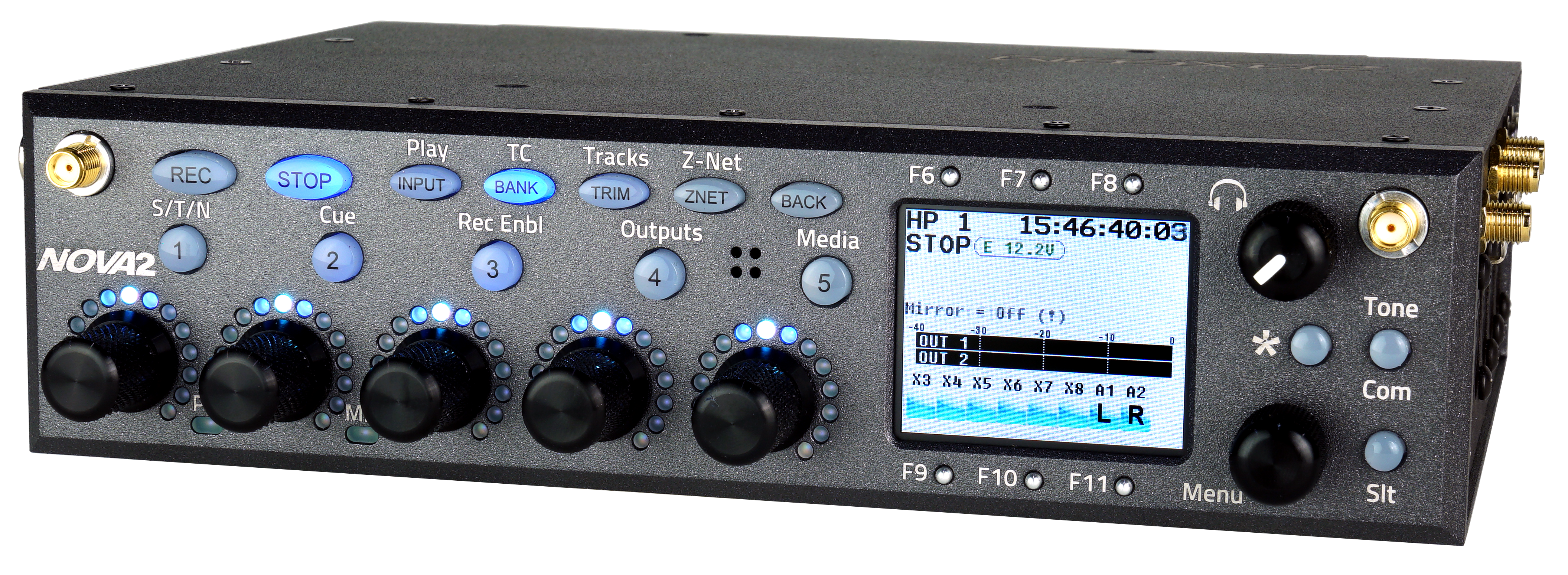
At the time I considered myself a pretty capable sound mixer. I thought making the switch would be easy. Just read the manual, watch a couple YouTube videos and I’ll be ready for showtime. I was wrong. My new Zaxcom machine was unlike anything I’d ever used before and I was completely lost on how to configure it. I was like a pilot who had only ever flown a bush plane now thrown into the seat of an f35 for the first time. Even with the manual and even with some slick YouTube videos, I couldn’t get it to do what I wanted. So I turned to the Facebook groups and forums I posted something like:
“Hey All, just got into Zaxcom. Does anyone know how to configure this for a basic LR mix?”
I barely got any responses on my post. Some of them were mean; “RTFM” they said — Read the fucking manual. I was completely out of my depth. Some tried to explain but I didn’t know what they were talking about. I was lost. My initial excitement for my new life as a Zaxcom mixer faded. I should have stayed on Sound Devices I thought. At least I understood Sound Devices. Just then, my phone rang. It was an unknown number. It was Martin.
Martin didn’t waste any time. He didn’t ask who I was and when I asked who he was, he just said to go get my machine. As we spoke that first time I was searching his name on the internet. Nothing. He wasn’t on the sound mixer forums or on Facebook or anything. I thought I was being scammed. I wondered when he was going to ask me to go buy a gift card. Nevertheless he told me we were going to walk through configuring the machine together. I asked if he wanted to switch to FaceTime or use video. He insisted that we do this over the phone. So for the next few hours he walked me through step by step on how to configure my new recorder for the first time. As he walked me through it, he recounted stories from his experiences on set, about crazy conversations he’d had with producers and directors on chaotic sets, about why he switched to Zaxcom (it was the superior system to anything else.) He was funny, he was witty, he spoke in analogies. I was enthralled by his stories and his seemingly endless lessons about the business of sound mixing.
This could just be the story about how a friendly sound mixer called me out of the blue one day to help me setup my machine. We had a conversation, he helped me, and that was that. But that’s not what happened. See, Martin called me the following day and we spent another few hours on the phone working through learning my new sound equipment. But then he kept calling me. Everyday he’d call me and we’d jump right back into working on learning my new system. Martin seemed to have no other obligations other than to talk on the phone with me for several hours a day and troubleshoot sound equipment with me. He didn’t seem to mind my endless questions. Then I started calling him.
Pretty soon we began to expect each other’s calls. He’d call me and we would just talk, sometimes up to four or five hours per day. We would mostly just talk about sound mixing, the movie business, freelancing. Sometimes we’d talk about whatever hot topic on the news was. This went on for the better part of two years. For two years, we spoke on the phone almost every day. Few people outside of my industry truly understand how strange our lifestyle is. Indeed, I’ve spent most of my working life trying to explain to my family why it is that I don’t work every day. Most film workers don’t work everyday. Sometimes we get on shows and work every day for a period of time but when that ends there’s nothing. We have a lot of time. We’re also all kind of lonely. We don’t see our coworkers outside of set. So when a fellow sound mixer calls you and wants to talk about sound mixing and the business and understands what you’re going through, you pick up and you talk. When no one else in my life understood what working in this business was like, I could always count on Martin to understand.
So who was Martin? For all that he talked he rarely divulged much about his personal life. Knowing that he values his privacy I’m keeping some things vague but what you need to know about Martin is this: He was in his late forties, or early fifties during the time I was talking to him. He was born and raised in the south. Never went to college. He was self-taught on a wide range of topics: Photography, Sound mixing, aviation, electrical engineering, battery building, car repairs, welding, cycling. He lived alone with his dogs in a rural area in the south. Politically he was of that particular southern strain of centrist that is enterprising, hard-working, and independent.
Inherent in Martin’s world view was a scrupulous, stubborn, need to understand how things worked and how to fix them and make them better. He made all his own audio cables instead of buying them from audio stores simply because he believed that the audio stores couldn’t ever possibly make a cable tailored to his specific needs. And his audio cables were something to behold. They were made with tough, industrial grade materials. They were ugly, yes but they were thoughtfully designed and made with a lot of consideration for their specific needs. Actually a lot of his modifications to his sound equipment were ugly. To an outsider you’d see a cobbled together, janky looking contraption, but they worked better than anything you could ever buy. His creations and innovations were tough, simple, and they just worked. Even if his designs violated every long held convention of sound mixing workflow, so long as it worked better he’d do it.
“If you’ve always done it that way it’s probably wrong.” This was a maxim he believed encapsulated his approach to life. He believed that in sound mixing, and indeed in so much of life there are things that are done a certain way and no one questions it because that’s how it’s always been done. Well, Martin always questioned it. It was this questioning of everything that was central to Martin’s world. To Martin, the world ran on conventions inherited from long ago followed by people too lazy to investigate whether they had outlived their usefulness. Conventions that had ossified into truth that no one dared to probe, for fear that they wouldn’t know what to do without them. Well Martin did and was unafraid to do so. Even if it made people angry, even if the truth was ugly, even if it meant losing friends. Like Socrates, Martin had been given the hemlock on multiple occasions and he was all but happy to drink it so long as he knew he was right.
Calling Martin became second nature. I’d call him before a job, I’d call him during the job to troubleshoot something, I’d call him after the job to debrief. On days when I didn’t work, I’d call in the morning and keep talking until the afternoon. Martins’ voice was like a podcast I could tune into on demand. Every day would be something different. Maybe he was working on his car and I’d learn something new about fixing cars. Maybe he was making battery packs and I’d learn about working with lithium ion batteries. As a naturally curious and argumentative, person it was endlessly entertaining to talk to Martin. I wanted to absorb as much as I could from him because ultimately I wanted to be like him. I liked the way he interrogated the world. I liked the way he never let anyone get over on him. I liked that he was a maverick in his ways and didn’t care. He was intelligent, technical, and incisive. He was logical, lethal, and all the while charming, funny, and unserious—full of anecdotes, idioms, and jokes. I didn’t have any of these qualities at the time. I constantly felt ill equipped to handle all the BS that sound mixers get from people who don’t know what they’re talking about. I couldn’t hold my own like Martin could because I didn’t know what I was talking about either. Perhaps the most valuable thing Martin taught me was how to think. He taught me to never take someone else’s word for anything until you’ve verified what they’re saying with your own testing. He taught me to identify the problem by asking questions and testing people’s answers. The truth of any matter existed out there, but it was your responsibility to find it. No one else was going to do that work for you.
However, Martin was unrelenting in this regard. I often found myself frustrated and exasperated talking to him because he habitually challenged anything I said. Any assumption, any theory or idea I had was fair game. The worst part was that he was almost always inevitably right. This was thing about Martin: No matter how much he angered you, he didn’t care because he knew he was rarely wrong. Whatever it was you were arguing about you could always count on Martin to have thought about it more than you. I can’t tell you how many times I swore off speaking to Martin because of his arguing. I would be worn out. But like a moth to a flame I’d always come back after I’d settled down, realizing that I was indeed wrong and he was right. I wanted to be right about things too.
In my search to prove to Martin that I could be right about things too I tried to figure out what he was doing to me that left me so dismantled. I tried to understand how it was that Martin was running circles around me all the time. Why was it sometimes that I felt like an incompetent baby when talking about something with Martin. Why couldn’t I ever pin him down like he did me I wondered. My inquiry into this matter brought me to Socrates. I became obsessed with the socratic method and I read Plato to understand how Socrates thought because whether he knew it or not this was exactly what Martin was doing to me. The thing about Socrates was that he rarely had an opinion himself. He didn’t go around the town square saying he was the expert on some subject. No, he went to the people that claimed to be the expert about a certain subject and he interrogated them. Socrates was unrelenting in his inquiry. When he got an answer to his question he would test their answers. People hated Socrates for this. They could never pin him down because all he was doing was asking questions. Often his questioning revealed that the so-called experts actually didn’t know what they were talking about. Whether he was aware of it or not, Martin thought like Socrates. He asked questions, he put things into analogies, he tested your answers. I never stood a chance. I was the blubbering statesman questioning whether I ever knew anything about justice at all. I hated Martin just as the Ancient Greek experts hated Socrates. Eventually they killed Socrates for this. They gave him a sham trial and sentenced him to die. Finally, they could maintain their authority on the truth. And just like the authorities in Ancient Greece I too had had enough of Martin.

I’m driving on the highway sometime in the afternoon talking to Martin after some job like I always did. Nothing filled the time on the road like talking to Martin. Somehow we had gotten to arguing about the proper way to carry a holstered Colt 1911. We’re going back and forth. Like we often did. It should be cocked and locked, I say. It should be cocked and unlocked, he says— that’s how they carried them in the Second World War. The argument is getting heated and a thought pops up into my head. Why do I care? Why am I arguing about this? I don’t own a 1911, it’s totally irrelevant to my life. I was in the midst of planning a wedding. I was working. I had so many other responsibilities other than being right about the proper way to carry a specific type of firearm. It was at that moment that I realized that being right was not worth it. I told him I was done and that we should go our separate ways. He admonished me one final time. Repeating a frequent complaint about me. That I didn’t listen, I was lazy, and cared more about being affirmed than being right. I didn’t disagree. It was all true. Nevertheless I was done. I thanked him for time he’d spent with me and we never spoke again.
Martin was right as he always was. I was cowering away from having to face the truth about myself; about having to face my shortcomings. It’s true that I don’t pay attention. It’s true that I say outrageous things to get a rise from people. It’s true that I make assumptions. I can be irrational and illogical. By cutting ties with him I was turning away from facing my various ineptitudes. What I realized in that moment was that I didn’t need Martin anymore to tell me these things. I could do that all by myself now. Before I met Martin I thought myself a competent and professional sound mixer. I thought I knew a lot of things. I thought I knew a thing or two about engineering. But now I know that I don’t know quite a lot actually. These days my default stance is that I don’t know a damn thing. I know that If I want to know something I’m going to have to work to find out the truth of it — I’m going to have to actually think, not just be “right”. I might even have to make some people angry. I might even lose some friends. I had to let Martin go because he’d finally achieved what he had set out to do: He’d shown me finally that I didn’t know anything.
At several points throughout our relationship I wanted to see Martin in person. I invited him to my wedding (he declined.) At one point I floated the idea of taking a road trip to go visit but it never panned out. Martin existed only as a voice on the other end of the phone. Actually I barely knew what he looked like. I think we both knew on some deeper level that meeting each other would reveal too much about who we were. We wouldn’t be able to talk to each other in person the way we did on the phone. Maybe he knew that one day we wouldn’t be friends anymore. I’d gotten the impression that he’d had other phone friends who had come and gone from his life. Maybe he knew I would one day get sick of him like so many before and that meeting in person would make the inevitable break all the more painful. Maybe he was right. Hanging up on Martin for the last time was a relief, but I grieved for some time after ward. I still do. I do miss him sometimes. Sometimes things happen that I wish I could tell Martin all about. I still ask myself what would Martin think of this situation. If I could tell Martin one last thing I’d say he was right about everything.