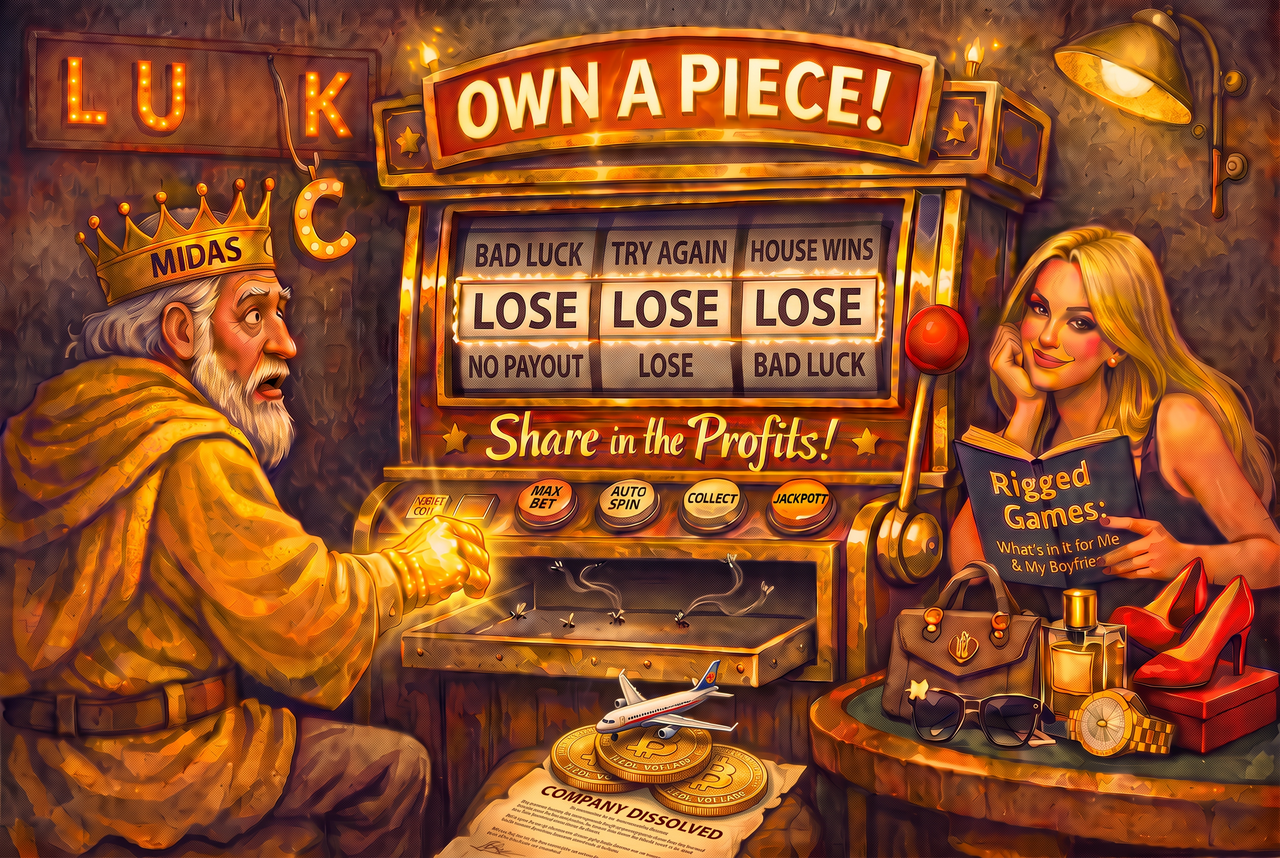
Marco Robinson has repeatedly promoted investment schemes promising ownership, equity and high returns, yet every documented venture has ended in total loss for investors. This investigation examines the Start Over share offer and the Naked Diablo Airlines pitch, two opportunities marketed as accessible investments but built on structures that could never deliver the ownership being sold.
See main article Marco Robinson — The Man, The Myth, The ‘Legacy of Lies’.
Click to expand Table of Contents (10 Sections)
- 1. Naked Restaurant Group Ltd: What the Liquidator Found
- 2. Naked Diablo Coffee: A Franchise Without a Business
- 3. The Legal Consequences of Selling Shares That Cannot Exist
- 4. The Naked Diablo Airlines Equity Pitch
- 5. What Investors Were Actually Being Offered
- 6. If You Paid Money, What Remedies Exist
- 7. Finale: The Cost of Belief
1. Naked Restaurant Group Ltd: What the Liquidator Found
For years, Robinson has presented the “Naked” brand as a kind of entrepreneurial universe — Naked Dollars, Naked CEO, Naked Restaurant, Naked Diablo Airlines — each one pitched as a thriving venture ready for global expansion. The restaurant in Kuala Lumpur was real enough, but the UK company he created in 2019, Naked Restaurant Group Ltd, was a paper company, not a restaurant. It never operated a restaurant, never franchised anything, never traded, and never generated revenue. Yet money moved through it.
On 8 May 2019, Robinson publicly announced a global franchise opportunity for the Naked Restaurant, complete with promises of “$2 million annual revenue,” property ownership, and cashflow from a $5,000 entry point. Forty‑nine days later, on 26 June 2019, a UK company called Naked Restaurant Group Ltd was incorporated. The timing is hard to ignore. The company never opened a restaurant, never franchised anything, and never produced the revenue he was publicly claiming. It existed on paper, and then it collapsed.
When the company finally collapsed and entered voluntary liquidation, the liquidator began the statutory investigation required under UK insolvency law. What they found cuts through years of marketing language and reveals something much simpler: the company had no assets, no operations, and a director who had withdrawn money that wasn’t his to take.
The liquidator’s report states plainly that Robinson had an overdrawn director’s loan account of £51,827.85. In other words, he had taken over fifty thousand pounds out of a company that had no trading activity and no legitimate means of lending money to its director. The liquidator pursued repayment. Robinson agreed to a settlement: £19,000 upfront, with the remaining £32,827.85 to be repaid in instalments.
He immediately defaulted.
The report notes that the missed payment rendered the full balance “immediately due and payable,” and that solicitors had been instructed to pursue recovery. It also confirms that the liquidator submitted a conduct report to the Secretary of State — something required only when a director’s behaviour raises concerns about their fitness to manage a company.
This is not investor testimony. It is not rumour. It is not interpretation. It is a formal insolvency finding, documented by an independent professional bound by statutory duties. And it sits in stark contrast to the public claims Robinson was making at the same time: Instagram posts promising a global franchise and a McDonald’s‑style expansion model available from “only $5,000.”
The UK company behind those claims had no restaurant, no franchise, no revenue, and no assets. What it did have was a director withdrawing money, a liquidation, and a defaulted repayment agreement.
Putting aside how hare‑brained the idea of franchising a single, local, one‑off premises in Kula Lumpar for $5,000 is, in the wider pattern of Robinson’s past ventures — Wealth Creation Ltd, The New Rich List, Naked Dollars, Oakglade House — Naked Restaurant Group Ltd is not an outlier. It is another branded entity created to front an idea that never materialised, leaving behind debts, unanswered questions, and a statutory paper trail that tells a very different story from the one presented publicly.
2. Naked Diablo Coffee: A Franchise Without a Business
If the Naked Restaurant franchise pitch was questionable, Naked Diablo Coffee is a franchise built out of nothing at all. It isn’t a restaurant repackaged, or a dissolved company revived, or a brand with a distant past. It’s a franchise built on nothing more than AI‑generated images and Instagram hype. There is no shop, no pilot site, no trading entity, no menu, no premises, and no business. The entire “brand” exists only as digital mock‑ups posted online.
On 10 April 2026, Robinson announced that he and Rob Fitzpatrick were “opening NAKED DIABLO COFFEE SHOPS,” inviting followers to comment “NAKED” to join a waitlist to buy a franchise. It was presented with the same confidence and theatricality as his other ventures — a global roll‑out, a ready‑to‑buy franchise, a business opportunity waiting for early adopters. But unlike the Kuala Lumpur restaurant, which at least existed in the real world, Naked Diablo Coffee has no physical presence at all.
This is where the legal reality becomes unavoidable. In the UK, franchising isn’t an unregulated free‑for‑all; it sits within the broader framework of misrepresentation law, consumer protection, and business‑opportunity regulation. The British Franchise Association’s own code — the standard the industry is expected to follow — requires a franchisor to operate a proven pilot site before recruiting franchisees. A franchise must be a functioning business with a track record, audited financials, and a disclosure document that sets out how it operates. Naked Diablo Coffee currently has none of this. It isn’t a start‑up café preparing to open its first location; it is a concept with no trading history, no premises, and no evidence of viability. Yet Robinson is publicly inviting people to join a waitlist to buy into it, stepping directly into the territory of misleading commercial practice under the Consumer Protection from Unfair Trading Regulations 2008.
The moment he invited people to “get on the waitlist to buy,” he also crossed into investment‑solicitation territory. In the UK, offering an investment — even informally, even on Instagram — brings you into the orbit of FCA regulation. You cannot solicit investment from the public unless you are authorised or fall within a narrow exemption. Naked Diablo Coffee is not authorised, does not qualify for an exemption, and does not exist as a business. The pitch was legally impossible.
The pitch also mirrored the pattern seen in other ventures. A brand name is created, imagery is produced, a global expansion is announced, and the public is invited to invest or buy in before any underlying business exists. The difference here is that Naked Diablo Coffee didn’t even have a shell company behind it. There is no UK entity to examine, no filings to review, no accounts to compare. It is pure promotion — a franchise offer without a franchise, a business opportunity without a business.
In the context of wider investigation, Naked Diablo Coffee is important not because of what it is, but because of what it isn’t. It shows the same behaviour as the Naked Restaurant Group timeline, but in an even more distilled form. A public pitch appears. A promise of a franchise follows. There is no underlying business. And yet the invitation to “get on the waitlist to buy” is made with complete confidence, as if the legal requirements of franchising simply don't apply.
3. The Start Over Equity Pitch
See — When # IPO Means “Imaginary Public Offering”.
The deeper problem with Robinson’s Start Over equity pitch is not simply that the companies behind the business were too small to justify a $2 million valuation. It is that they were structurally incapable of issuing shares to the public at all. A private limited company in the UK cannot make a public offer of shares. It cannot solicit investment from retail consumers. And it cannot describe itself as preparing for an IPO unless it is already operating within the regulatory framework that governs public listings. Online CEO Ltd, Brand Story Publishing Ltd, and Start Over Movement Holdings Ltd were all private companies with fixed share structures, no authorised share classes for external investors, and no legal mechanism through which followers could ever have become “shareholders.”
This matters because when a company is legally incapable of issuing the shares being sold, the shares do not exist. And when the shares do not exist, the corporate veil — the ring‑fence that normally protects directors from personal liability — does not apply. Any money taken under the pretence of an equity sale would not be a corporate transaction; it would be a personal misrepresentation by the individual making the offer. In such circumstances, the director becomes personally liable for the return of funds, because the transaction was never capable of being fulfilled by the company in the first place.
The law is explicit about this. Under the Financial Services and Markets Act 2000, an unauthorised person who makes a financial promotion — especially one involving the sale of securities that cannot legally be issued — exposes themselves to both civil and criminal consequences. If a hypothetical investor paid money for Start Over “equity,” they would not have received shares, because no shares existed to be issued. They would not have become a shareholder, because the corporate structure did not allow it. And they would not have been participating in a legitimate investment round, because no such round was legally possible. Their recourse would be through the very regulations designed to protect consumers from unauthorised investment schemes: the rules on unlawful financial promotions, the remedies available when a transaction is induced by a promise that could never be fulfilled, and the personal liability that arises when a director solicits funds for a security that does not exist.
The practical route for any hypothetical investor to recover their money is straightforward, and the specifics are set out in section “6. If You Paid Money, What Remedies Exist”. In short, the UK’s Money Claim Online system provides a simple way to pursue repayment when money has been taken for a financial instrument that could never legally exist.
The core point is simple: money paid for something that was impossible to issue is recoverable.
4. The Naked Diablo Airlines Equity Pitch
Naked Diablo Airlines follows the same pattern as Start Over, but with even clearer evidence of an unauthorised, unlawful public offer.
Naked Diablo Airlines is structured with 40% held by Marco Robinson, 40% by Rob Fitzpatrick and the remaining 20% by Wyatt’s X Aviation company. Its entire share capital is already issued. There are no unissued shares, no authorised share classes and no mechanism through which members of the public could ever acquire equity. The structure is closed. Despite this, both men publicly invited followers to “own a piece” of the airline.
The investment pitches appeared on 30 June 2026 across two platforms. In a YouTube interview, Fitzpatrick stated that if “10,000 people pay £1,000 each,” they would raise £10 million. This is a direct description of a mass‑market public fundraising effort aimed at retail investors. On the same day, Robinson posted an Instagram video — filmed beside Fitzpatrick — telling followers they could “own a piece” of the airline from £1,000. The two men were jointly promoting an equity raise to the public for a private company that had no equity available to sell.
This takes the pitch directly into POATR territory. Under the Public Offers and Admissions to Trading Regulations, any public offer above £5 million triggers the full regime unless a narrow exemption applies. Fitzpatrick’s £10 million target places the offer well beyond that threshold. A raise of that size cannot be marketed to retail investors without FCA approval, authorised disclosure and a compliant structure. Naked Diablo Airlines has none of these. The promotional activity therefore constitutes an unlawful public offer of securities.
The misrepresentation is clear and documented. Both the Instagram pitch and the YouTube interview were published on 30 June 2026. On Instagram, Robinson told viewers that he and Fitzpatrick had already invested £10 million into the airline — presenting the venture as funded, credible and de‑risked. In the YouTube interview released the same day, Fitzpatrick explained that the £10 million was actually a fundraising target, achievable only if “10,000 people pay £1,000 each.” The two statements directly contradict each other. One describes a fully funded airline; the other describes a public raise. POATR treats such contradictions as material because they shape investor perception. Presenting a raise as both completed and simultaneously open to the public is a classic inducement pattern, encouraging retail investors to commit money on the basis of inconsistent and misleading claims.
Robinson has publicly stated that Phil Wyatt is “onboard” with the airline. Wyatt is not merely an adviser; he is a 20% stakeholder through X Aviation, and his involvement is therefore part of the representation being made to potential investors. Private companies are not legally required to disclose past convictions, civil judgments or director bans, but information of that nature would plainly form part of a reasonable investor’s assessment of a public investment pitch if it were known. In that regard, it is a matter of public record that Marco Robinson has a criminal conviction for fraud in the UAE and a UK civil judgment for fraudulent misrepresentation; that Robert Fitzpatrick received an eleven‑year director ban after a High Court judge branded one of his ventures “a swindle on the public”; and that Phil Wyatt was described as “dishonest” by a High Court judge for his role in draining Goldtrail of funds, for which he received a £1.4 million fine. When individuals with this history present themselves as founders and stakeholders in a public investment pitch, omissions of such material facts can contribute to misleading impressions and inducement, particularly when the offer is directed at retail investors. And the use of a fabricated honorific such as “Sir” is not an omission at all; it is an affirmative misrepresentation that enhances the perceived credibility of the promoter and therefore forms part of the inducement itself.
The regulatory position is straightforward. Naked Diablo Airlines has no equity available for public sale. The promotional material invited retail investors to buy into a £10 million raise that the company was structurally incapable of delivering. And the contradictory statements about the £10 million — claimed as both already invested and simultaneously being sought from the public — form a clear pattern of misrepresentation and inducement within an unlawful public offer.
As with Start Over, anyone who paid money believing they were acquiring equity that did not exist would be entitled to seek a refund, and if the founders refuse, a simple claim through the Money Claim Online process provides a practical remedy (6. If You Paid Money, What Remedies Exist).
5. What Investors Were Actually Being Offered
Across both ventures — Start Over and Naked Diablo Airlines — followers were invited to own a share of a business. But once the underlying structures are examined, neither offer provided anything that could be owned, valued, transferred, or recognised as an investment in any meaningful sense.
5.1 Start Over
Start Over Movement Holdings Ltd has only one class of shares: 100 ordinary shares, all owned by Marco Robinson. No additional share classes exist, no authorised but unissued shares exist, and no filings were ever made to create any instrument capable of being allotted to followers.
Against that backdrop, the “share” offered to followers was not a share at all. It was not a security, not an asset, not something that could be sold or transferred, and not something that conferred any rights. It had no voting power, no dividend entitlement, no ownership interest and no contractual footing. Its real‑world value is simply the amount paid for it, because nothing was ever issued that could be owned or realised. The investor receives nothing except the representation that they were acquiring equity — a representation the company was structurally incapable of fulfilling.
5.2 Naked Diablo Airlines
Naked Diablo Airlines is similarly closed. Its entire share capital is already issued: 40% to Robinson, 40% to Fitzpatrick and 20% to Phil Wyatt’s X Aviation. No unissued shares exist. No secondary class exists. No mechanism exists through which new investors could acquire ownership.
Despite this, followers were told they could “own a piece” of the airline from £1,000. Fitzpatrick described a £10 million raise based on “10,000 people paying £1,000 each,” while Robinson, on the same day, claimed that £10 million had already been invested, while Fitzpatrick beside him, nodded in agreement. The pitch presented itself as an equity opportunity, but no equity existed to be sold, and no instrument was ever identified that could have been issued.
5.3 The Underlying Reality
In both cases, followers were invited to transfer money for an undefined ‘interest’ in companies that had no mechanism capable of creating ownership, and the promotions were not merely unauthorised, but unauthorisable. The structures behind the offers made it legally impossible for any share, loan note, revenue interest or contractual right to exist. What was being promoted was not an investment product but the idea of one, and UK law treats that distinction as material: an inducement to invest in a security that cannot legally be issued is an unlawful financial promotion from the moment it is communicated.
In addition the promotional material also omitted the basic risk warnings and investor‑categorisation statements that any reasonable retail investor would expect when being asked to commit money to a venture. Followers were being invited to pay into something described as an investment, but without any of the disclosures that allow an investor to understand what they are buying or what risks they are taking.
Across both ventures, the underlying reality is the same: investors were not being offered equity, rights or any definable security. They were being asked to contribute money to ventures that had no structure capable of issuing what they claimed to be selling. With no unissued equity, no investment instrument and no documentation describing any rights, investors were not receiving a share, a security or any ownership interest in any recognisable form.
In practical terms, the only thing they received was the act of having paid money.
6. If You Paid Money, What Remedies Exist
For anyone who paid money in the belief they were acquiring equity that did not exist, the remedy is straightforward. If the founders will not return the funds voluntarily or “buy back” the so‑called shares, a simple claim through Money Claim Online provides a practical route to recovery. The claim is based on having paid for something that was never capable of being issued, and the absence of any genuine investment product does not weaken that position; it strengthens it.
This is the quiet, unavoidable legal reality beneath the IPO performance. The offer was never capable of being honoured, and the law is explicit about what happens when an individual solicits investment for a security that cannot legally be issued. The liability does not sit with the company. It sits with the person who made the promise.
The route for such a hypothetical investor seeking remedy is surprisingly simple. Civil litigation does not require a high‑cost law firm or a complex commercial suit. The three film writers who pursued Robinson in earlier disputes demonstrated that county‑court action can be effective, and that the UK's Money Claim Online system (MCOL) allows individuals to file claims directly, without legal representation, at a fraction of the cost of traditional litigation. MCOL is designed for straightforward monetary claims: money paid, promise made, obligation breached. It does not require specialist knowledge, and it does not require the claimant to navigate the complexities of financial regulation. If someone hypothetically paid for Start Over “equity,” MCOL would be the natural venue for recovery, because the claim would be simple: the director offered a financial instrument he could not legally issue, took money for it, and failed to deliver something that never existed.
For an overseas investor, or even UK investor outside England or Wales, the route would be no different. MCOL allows claimants outside the UK to file civil actions against UK‑based defendants, provided they can supply a service address within England or Wales. That address does not need to belong to a solicitor or legal representative; it can be a friend’s address, an authorised agent, or even a rented PO Box that accepts legal correspondence. Once an appropriate UK service address within the correct UK jurisdiction is in place, MCOL allows the claimant to file and pursue a straightforward monetary claim remotely, without needing to appear in person or instruct a high‑cost law firm. Most MCOL claims settle or conclude on paper, but if a hearing is listed, the claimant can request that it be conducted by telephone or video link — a routine accommodation for overseas parties, and one that can be requested early to avoid any expectation of physical attendance. The system exists to make simple debt‑recovery actions accessible, and it is routinely used by individuals both inside and outside the UK. So, hypothetically, if someone overseas paid for Start Over or Naked Diablo Airlines “equity” that could never legally exist, MCOL would allow them to file a claim directly against Robinson at minimal cost.
A claimant doesn’t need to argue financial law or set out complex breaches. MCOL is designed for simple monetary claims and allows claims up to £100,000. The evidence is basic: proof of payment, proof of what was offered, and a short explanation that the promised “equity” or “shares” never existed and could not legally exist. That is enough to frame a straightforward claim for repayment — money taken for something that was impossible to issue.
Note that while MCOL accepts claims up to £100,000, claims above £10,000 may be allocated to tracks where the losing party can be ordered to pay the other side’s legal costs. Under £10,000, the Small Claims Track’s “no costs” rule usually applies.
MCOL works cleanly in an open‑and‑shut scenario like the “equity” pitch, where the product could not legally exist. Even so, anyone who believes they bought a “share” should still look at their own documents — contracts, emails, messages — to see what was actually promised. Robinson’s Instagram ads use the language of equity, shares, and profit‑participation, which would be false advertising if the underlying product wasn’t that. But in any dispute, the court looks at the actual documents because what matters is the formal promise, not the marketing language. Note: This is an explanation of how the system works, not legal advice.
Reporting the public share announcements to the UK’s financial regulator — the Financial Conduct Authority (FCA) — is still the correct way to ensure the unlawful offers are stopped, and this applies whether the person making the report is in the UK or overseas. The FCA can assist in recovering losses in regulated schemes, but not where the offer itself is unlawful and no investment product ever existed. In those circumstances, the regulator’s role is limited to addressing the unlawful promotion, not individual recovery. Unless the founders agree to return the money, civil action remains the only direct remedy available to an investor.
In some circumstances, unlawful public offers can lead to criminal proceedings, and criminal courts do have powers to order compensation. Whether that occurs depends entirely on the authorities and whether they consider the nature of the offer, and the money taken, serious enough to warrant prosecution. It is a possible route to recovery, but it is not one an investor can initiate themselves; it sits wholly at the discretion of the authorities.
7. Finale: The Cost of Belief
Across all of this, it is important to recognise that none of this is new territory for the men behind Naked Diablo Airlines.
Marco Robinson has previously promoted an unlawful investment scheme — Naked Dollars — in which every investor’s capital was wiped out and which ultimately led to his criminal conviction for fraud in the UAE. Wealth Creation Ltd, another of Robinson’s ventures, publicly claimed to have raised USD $100 million in crowdfunding, yet its filings showed no such assets, and investors again lost their money.
Robert Fitzpatrick has a long, documented history of misrepresentation and financial abuse through his involvement in multiple pyramid schemes, culminating in a High Court judge branding one of his ventures “a swindle on the public” and imposing an eleven‑year director ban.
And Phil Wyatt has already been found by the High Court to have “dishonestly assisted” the director of Goldtrail in draining company funds, resulting in a £1.4 million penalty and demonstrating a clear disregard for the interests of customers and shareholders.
These are the individuals now presenting themselves as the founders and stewards of Naked Diablo Airlines, inviting retail investors to trust them with fresh capital.
As the investment manuals put it, you can lose all your money, and when the product doesn’t exist, you’ll get exactly what you paid for.
DISCLAIMER: This material is an investigative analysis based on publicly available information. It is not legal advice, does not constitute professional guidance, and should not be relied upon as a basis for litigation or regulatory action. Any discussion of legal processes, remedies, or hypothetical investor recourse is illustrative only. Readers considering legal steps must seek advice from a qualified solicitor or regulated professional.
For more on Marco Robinson (and Robert Fitzpatrick) see Marco Robinson — The Man, The Myth, The ‘Legacy of Lies’
For more on Robert Fitzpatrick see Robert Fitzpatrick: From High Court “Swindle” to Billion‑Dollar Pretender
For more on Naked Diablo Airlines see Naked Diablo: How To Build An Airline Without Building An Airline
💬Have your say on Marco Robinson
To guarantee absolute reader privacy and protect this blog from takedown notices or external legal pressures, all community discussions are hosted entirely off-site.
Clicking the links below will open a new browser window to a fully end-to-end encrypted ledger hosted via CryptPad. Your entries are completely anonymous, cannot be tracked, and operate independently of this publishing platform.
* 📝 Click here to Leave an Anonymous Comment
* 👁️ Click here to View the Public Comment Board
All quoted text is reproduced under UK fair‑dealing exceptions for quotation and reporting. No copyrighted images have been republished, and all referenced material was publicly accessible at the time of writing.