I hate prequels. I hate them conceptually, which is to say I hate the idea of prequels as opposed to any particular prequel. there are good prequels, sure, but those are an accident, an exception to the fundamental rule that prequels are narrative poison. I’ll die on this hill. these worthless prequels… they took the Planet from you, didn’t they, Mother?
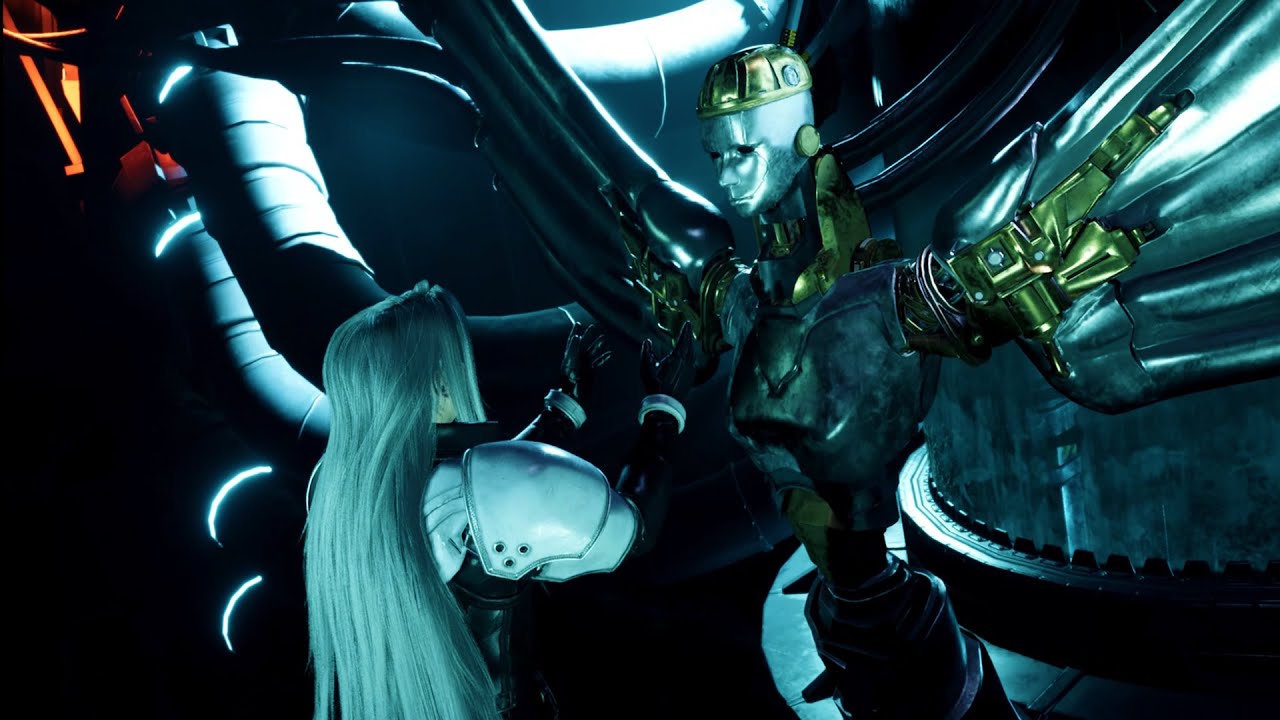
ahem.
the narrative problem with prequels is that stories are not universes. this is a bigger problem with the way we use the term “universe” in storytelling, as in the marvel cinematic universe or whatever — it implies a holism that is part of the illusion, not the reality, of stories. when the camera pans away from Captain America, he is not still around, eating a granola bar or catching up on his emails, because Captain America does not exist outside of the confines of a beginning and ending of a story being told about or including him. the answer to “when do they use the bathroom in 24” was always “this is fiction, what the fuck are you talking about jesse.”
this isn’t just semantics I’m getting at here. if stories aren’t universes, then a prequel is not simply “let’s turn the dial back to the past and see what these folks were up to” because the answer to “what were these folks up to” is “they didn’t exist.” a prequel is as much an arbitrary construction as any story is, except now its reason for existing isn’t because there’s a good story to be told but because a story was already told and some people who want money would like it to be told but longer this time, and some people who write fan wikis would like all their dots to connect.
a storyteller tells a story because the story has something interesting to say. done well, it’s not the arbitrary creation of new worlds or people — it’s theme and catharsis wrapped into narrative arcs and climaxes that reveal or emphasize or disrupt our understanding of the human condition. even the fun, silly stories do this if they’re done right; it’s what makes storytelling satisfying at a fundamental level.
prequels and cinematic universes and whatnot, made for their own sake, presuppose that the valuable parts of any given story are 1) the IP, and 2) the fan wikis. many prequels are tiresome dot-connecting exercises that only recognize the superficial iconography of their source material and none of their narrative heft; the worst ones actively undermine the original story by misunderstanding or failing to recognize the power in concision, in not saying everything, in keeping some things buried or carefully placed.
crisis core: final fantasy 7 is both tiresome and undermines its source material. great!
*
I’m biased here; final fantasy 7 hit me at exactly the right time for it to forever have a golden nostalgic glow. but also I’ve played the original game maybe a dozen times in my life and have a firm grasp on what it actually is as much as what it looks like when I remember playing it on my brand-new playstation as a 10 year old.
for a game of its era, and especially for such a shoddily translated game of its era, ff7 is remarkably good at subtext, theme, and metaphor. the entire game revolves around the perils of allowing others to define you; this is cloud’s character arc in a nutshell, but it’s also tifa’s, and barret’s, and cid’s, and red xiii’s, and so on and so on. but let’s focus on the dynamic of cloud, sephiroth, and zack for a moment, since that’s where crisis core decides to focus.
to be honest, choosing the day sephiroth went crazy as a place to expand and add context isn’t a terrible idea for an ff7 prequel, because it’s a space of tremendous thematic potential that the game uses sparingly enough to suggest there’s more to mine. there is also an aspect of telling the “true” story of what happened, since the primary way ff7 tells this history is through cloud’s false version of events, where he’s SOLDIER and zack doesn’t exist.
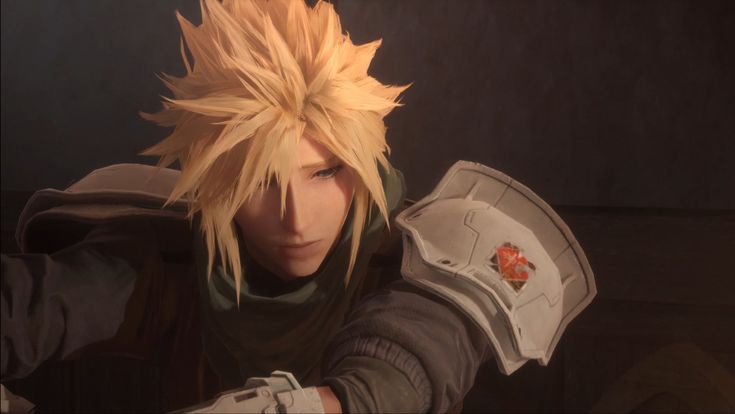
but let’s break this down in terms of how this story is told in OG FF7:
zack is a cipher. he is the man cloud wanted to be and eventually pretends to be, and thus a symbol of of cloud’s shame and fear. he is effortlessly cool, composed, and heroic because these are the qualities cloud desperately wants and believes himself to have failed to achieve. he’s a narrative device first in this context; you barely even see him unless you spend the time to unlock the hidden cutscenes that play out his ultimate fate.
sephiroth is a pathetic monster, self-absorbed and driven to madness by his refusal to accept the horror of his origins. he’s killed by cloud in a moment of miraculous selflessness and heroism on the latter’s part; the memory of this victory is, however, so caught up in cloud’s larger sense of inadequacy that he hides the details from himself. sephiroth himself, again, functions as a cipher or a lens, the dark mirror of the power cloud wishes he could possess.
both of these characters exist in the context of cloud. even the ways zack has more of an external life reflect back into cloud — zack’s relationship to aerith deeply complicates a player’s understanding of what aerith sees in cloud and how she understands him, and likewise reinforces the sadness and desperation in cloud’s attraction to her, his desire to be a version of himself that already had that relationship.
likewise sephiroth. oh, sephiroth. here’s the thing: in FF7’s “present day” storytelling, sephiroth is dead as fuck. the sephiroth that harangues cloud, manipulates him into surrendering the black materia, and confronts the gang in the Northern Cave — that’s jenova, wearing sephiroth’s face because she knows how much cloud fears him.
but sephiroth himself? his entire story is contained in the nibelheim flashbacks. he’s been led to believe his whole life that he’s a very special boy; he learns that instead he’s pretty much just the least gross of a series of science experiments; he rejects this and decides he’s god’s only son instead. this ends badly for him. again it’s meant to be a twisted mirror of cloud’s own choices and self-perception and anxieties; sephiroth’s entire psyche is built upon his self-conception as a certain hero, wanting the world to see him as above it, and when the world forcibly shatters that image, he shatters with it, going insane in order to maintain his sense of superiority. men will literally summon meteor instead of going to therapy.
incidentally, jenova/sephiroth gets the best bit of characterizing metaphor in the whole game, in the sequence of final boss battles.
first you fight jenova’s “ultimate” synthesis form, an “accurate” representation of the monster that crashed into the earth, an woman’s torso made eldritch and stuck onto a malformed meteorite. this is the literal monster.
then you fight “bizarro” sephiroth, an even more eldritch representation of jenova’s influence over her erstwhile progeny, a jumbled assemly of the beautiful and horrible with a version of sephiroth himself stapled onto his own head.
then there’s the seraphim, “safer” sephiroth. this is ego projection epitomized. jenova’s defining characteristic is believing itself to be the rightful god and heir of the planet; sephiroth’s defining characteristic is that he believes himself to be the chosen one and a god in his own right. thus their final form is, simply, god. a chorus sings for a being of angelic perfection. his most powerful attack is the destruction of the entire fuckin’ universe.
but it’s a lie! he can summon super nova multiple times! but also jenova is not a god, just an alien asshole with a god complex, whose self-projection can be overcome by those like cloud, who are now self-assured enough to see through it.
and then at the end of all things, cloud duels with sephiroth in a black void, and if there’s been another RPG battle that’s more obviously just a dude working some stuff out in his head, I haven’t played it. this shirtless babe is the spectre of sephiroth in cloud’s mind, the vestiges of his anxiety and self-doubt, and cloud defeats him in a final sequence of masterstrokes, and he simply disappears.
the key thing to take away here is that all of these characters exist (or don’t) in service of narrative build and payoff. even cloud, the most complex character in the story and the one against whom so many of these pieces refract and make meaning, only exists inside of this story. when the lifestream impacts meteor and the world goes white, cloud disappears just like everyone else; his “life” ends when the story does.
OK anyway with all this rambling in mind let’s take a look at what crisis core decides to do with these pieces:
remember how safer sephiroth’s whole “one winged angel” thing is just an extended riff/metaphor on jenova’s god complex? nah buddy, metaphors are for suckers: jenova cells give you literally one wing, like half a can of red bull. this overuse and mishandling of the “one winged angel” concept didn’t didn’t originate with crisis core, but it is definitely the dead horse this game wails on the most.
wouldn’t sephiroth’s “oh shit I’m a monster? no, it’s the children who are wrong” arc be better if two other characters do it before him but more confusingly and shoddily, so that by the time he “learns the truth” it feels like he’s just been stupid or deaf the rest of the game?
would you like cloud’s big sword to have an origin story? oh no, not that one, not the one it already had that made it a signifier of both his hidden failures and his hidden heroism; I mean a second, far less interesting origin story, where it was also some other other guy’s sword for a while?
ff7 has professor gast and professor hojo, two guys who did experiments on ancients and jenova with very different ideas of what they were doing and why. neither is a saint, but only one is a devil. oh also I guess there was a third guy also doing the same stuff just over there where we couldn’t see him
this isn’t even getting me started on how much the invented writing and story of crisis core sucks, sucks so badly that even when it isn’t directly polluting the ground for the story to come, it’s still stupid and bad, poorly written and poorly directed, so many cutscenes full of characters blankly standing still saying nonsense that means nothing, or else doing floaty advent children sword duels that are, don’t get me wrong, cool as hell but also the emptiest calories available.
the best narrative bits in crisis core are exclusively incidental and function only in the context of having played ff7 itself and thus already being in love with its characters. in that context, I suppose it’s compelling to see young cloud pre-mako-haze, insecure and feeling like a failure but still fundamentally decent and full of the potential to be a true hero. aerith’s presence is fascinating; she’s younger enough when we see her to be not as self-aware as she is when cloud meets her, but she’s full of the same melancholy and pre-acceptance of her fate.
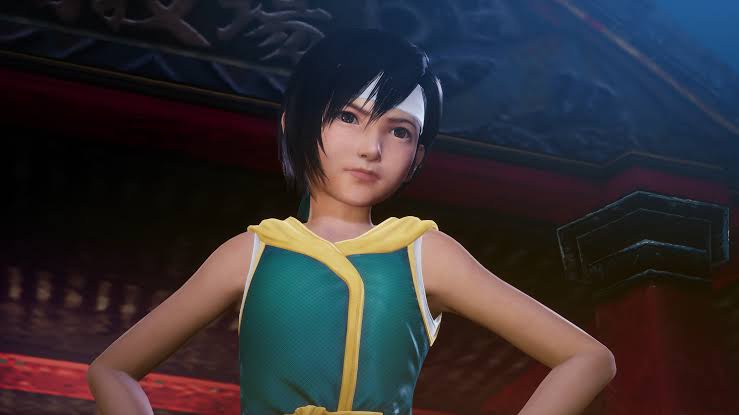
(baby yuffie is cute, too.)
but these aren’t stories, and they’re not telling us anything new that wasn’t already in the original story, except in the form of “X years ago, this character was over here” wiki details. and they’re not enough to make up for how crisis core fumbles, misunderstands, and kind of ruins its representation of the crucial moments from the original story.
zack himself I’m of multiple minds about. on the one hand he’s genuinely likable and compelling as the lead in crisis core. he has exactly the fundamental decency and heroism he should have, tracking well with his limited portrayal in the source material. on the other hand… so what? what does his story here amount to, that it didn’t already have before? do we learn anything about him that changes his status in the larger story as “the guy cloud wishes he was”? is there an arc here that justifies spending hours with him outside of that context?
maybe I’m just being a wet blanket here, I dunno. enjoy crisis core if you want. I didn’t hate my time with it — the combat loop is entertaining enough, the bite-sized mission structure makes my steam deck feel so much like an oversized PSP that I wanted to time travel and buy zack’s flip phone just to get back to that era — but it sucks as a narrative extension of final fantasy 7, because it exists as an expansion of intellectual property first, a “hey remember this” iconography game second, and a story that someone truly thought was worth telling in a distant last place.
oh well time to take a big sip of this coffee and play final fantasy vii rebirth, a game that’s sure not to have any similar negative effects on my psyche—