In June 2008 I flew from Ronneby in southeastern Sweden (the nearest airport to where I then lived) to Arlanda, north of Stockholm, for a rendezvous with a woman I’d never met before. I took with me an empty case of sorts. When I found her, she took something from a similar case that she had brought and transferred it in to mine. Did I hand over banknotes in an envelope, or had payment been made via bank transfer in advance? I can’t recall: but one way or another, money changed hands.
What I had purchased was a three-month-old kitten (Fig. 42), who, soon afterwards, my wife and I named Murphy (Fig. 43). It was all such an extravagance — I’d paid for two return tickets: one for me, one for him. Then again, the expense of a short internal flight seemed preferable over the gruelling prospect of an eleven-hour round trip by car. My wife had set her sights on getting a Birman cat, and the lady I met was one of only a couple of breeders in Sweden at that time from whom one could obtain them. On the way back to Ronneby the cat carrier rested on the seat beside mine, with tiny meows intermittently issuing from it.
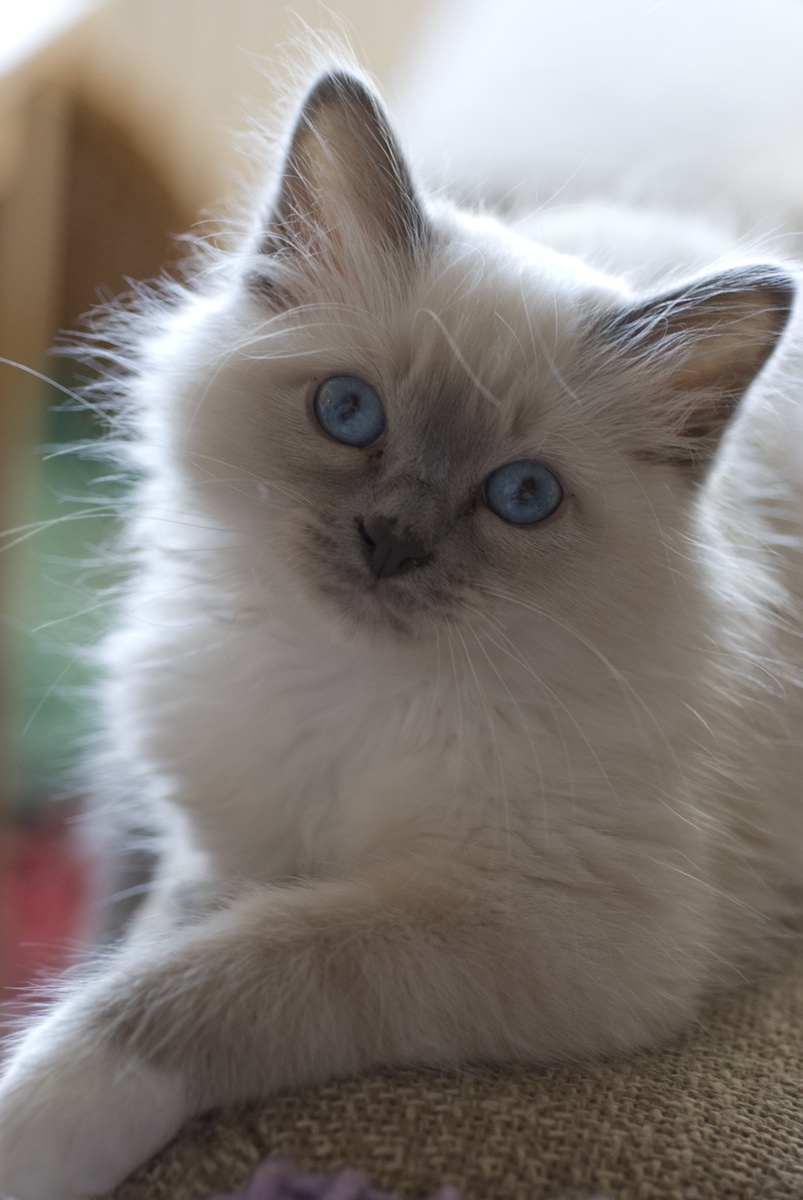
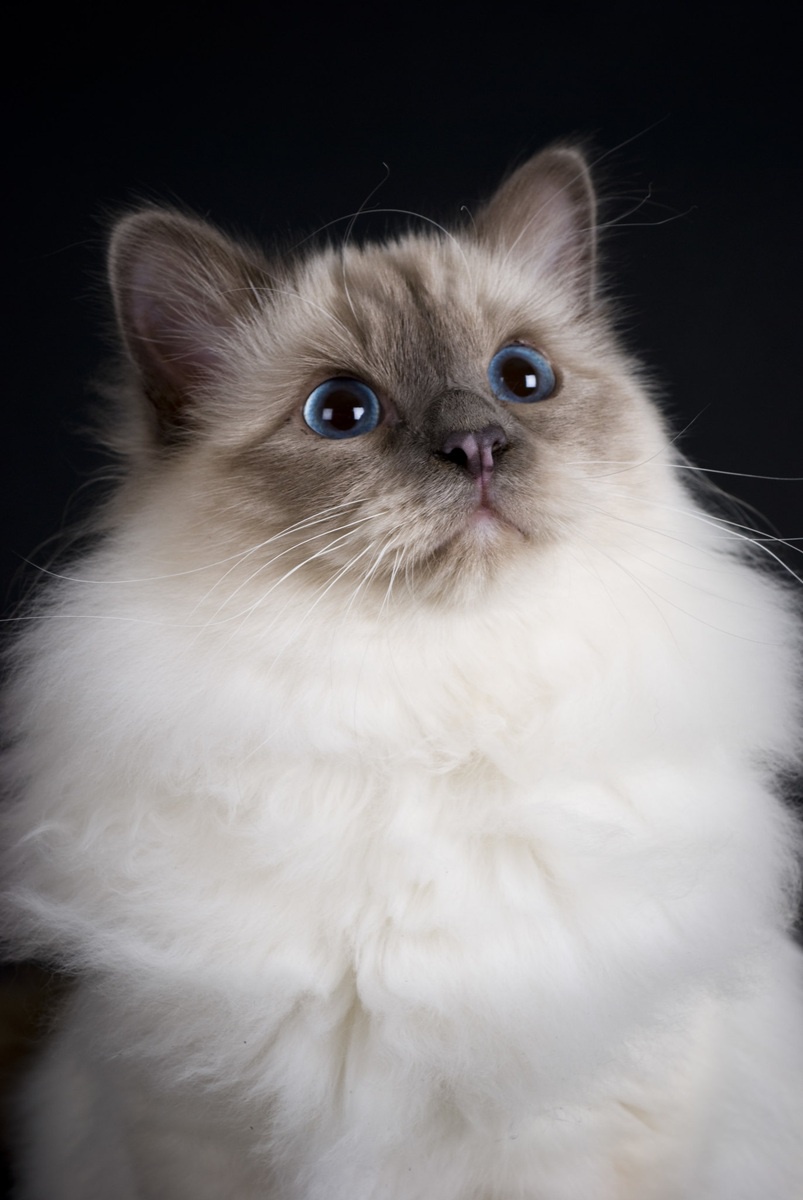
At noon on Saturday I manhandled Murphy into a cat carrier for the last time. He resisted weakly but did not complain. Had he not been in such a bad way there would have been a litany of angry mewling from the passenger seat as I drove to the vets. After a series of health issues a couple of years ago he’d been diagnosed with kidney disease. A change of diet brought a happier spell, though the passage of time was meanwhile taking its toll. A turn for the worse in mid-August was followed by a more alarming deterioration from Wednesday. After a grim few days I was persuaded this was a progressive decline rather than any temporary setback. The vet, when we got to Chepstow, agreed that euthanasia would be appropriate. She give me some time to say my goodbyes before the fatal drug was administered, whereupon the end came quickly and peacefully. R.I.P. my blue-eyed boy: 18/03/08 – 10/10/26.
There have been some new arrivals of classical music on CD. Further to my interest in the byways of the string quartet repertoire I’d acquired an album bringing together three of the many quartets by Gaetano Donizetti, much better known as an opera composer; and another including the two published quartets of Miklós Rózsa, much better known for his film scores. After a couple of listens I can’t say the Donizetti pieces have made a strong impression: for a master of the operatic, the drama in them seems subdued, though admittedly they are tuneful enough. They are played on the disc with accomplished suavity by the Quartetto Delfico. Rózsa’s quartets (in performances by the Tippett Quartet) are punchier. His first, finished in 1950, has a definite Bartókian flavour about it, albeit with some of the rough edges sanded down, which suits me as I tend to find Bartók a bit hard on the nerves. The second (1981) is a similarly-serious piece, if perhaps more austere, and, for me, less immediately appealing.
And, further to my interest in 17th-&-18th-century harpsichord music was a 2-CD set focussing on the 1759 suite of Pièces De Clavecin by the French keyboardist and composer Claude Balbastre, as performed by Marek Toporowski. It joins discs already on my shelf by François Couperin, Rameau, Duphly, Jacquet de la Guerre & Forqueray — just to name French harpsichordists. I enjoyed this album very much: hear, for example, ‘La Malesherbe’. Balbastre found himself at the end of a couple of eras. His career overlapped with the beginning of the ascendancy of the fortepiano over the harpsichord — a change he was doubtless capable of adapting to; but his fortunes (which had been bolstered by aristocratic patronage: among other things he was Queen Marie-Antoinette’s music teacher), declined after the revolution.