Finished on Sunday: Three Moments of an Explosion, a collection of short stories by China Miéville. I had found a hardback copy in a charity shop which cost me a pound. Given my literary tastes, Miéville's work should very much be my cup of tea — but it hasn’t worked out that way. I was put off by my first taste of his work, when I read Kraken about fifteen years ago (which, to this day, remains the only book I’ve read on a Kindle). I actively disliked it: there was something about his authorial voice that I couldn’t warm to. The inexpensiveness of this copy of Three Moments seemed like the ideal opportunity to give his writing a second chance.
While I got along better with it than with Kraken, reservations remain. The title story, for instance, is one of several very short pieces in the book, none of which impressed me. To my mind, the volume would have been better had they been omitted. Elsewhere, Miéville's ‘voice’, as it sat & ‘sounded’ in my mind again often had something about it I found off-putting. There were a some exceptions: the slick satire of ‘Dreaded Outcomes’ delighted me; and I relished the old-school style of ‘The Design’, the tale which closes the book. Of the other stories I enjoyed, a couple (‘The Dowager of Bees’ and ‘The Bastard Prompt’) could have been the basis for intriguing X-Files plot-lines. The horror stories in the collection generally failed to fully connect, with ‘The Rabbet’ the only one of them to properly get under my skin. Miéville’s imagination is undeniably fertile, though some of its productions teetered awkwardly past the furthest points to which I could suspend my disbelief. These were cases less fit for Mulder & Scully than perhaps for Professor Quatermass, or even Doctor Who.
Miéville’s new novel The Rouse was purportedly twenty years in the making and runs to 1,264 pages. I shan’t be rushing to buy it, but if a cheap copy should turn up in a charity shop in years to come, I may take a look.
My latest music acquisitions were likewise very inexpensive ones. Seeing a CD copy of Manu Chao’s Próxima Estación: Esperanza reminded me I used to like his song ‘Me Gustas Tu’. Picking up the disc, I saw the song was on there so decided to buy it. It’s a pretty good record — a warmly uplifting Bob Marley-influenced feel suffuses much of it — just perhaps a little too much of it for my taste: a tad more variation of mood would have suited me better.
On a neighbouring shelf to the Manu Chao album, an early ‘90s CD issue of Art Blakey’s Jazz Messengers With Thelonious Monk. The music here is wonderful; the recording and/or mastering, regrettably less so. The bass — played by the curiously-named Spanky DeBrest — is often all-but inaudible, undermining my enjoyment of the performances. The absent bass is apparently a known flaw in the original stereo recording, so I’ll have to try to get my hands on one of the more recent mono remasters. For an example track from the record (with audible bass) try ‘In Walked Bud’.
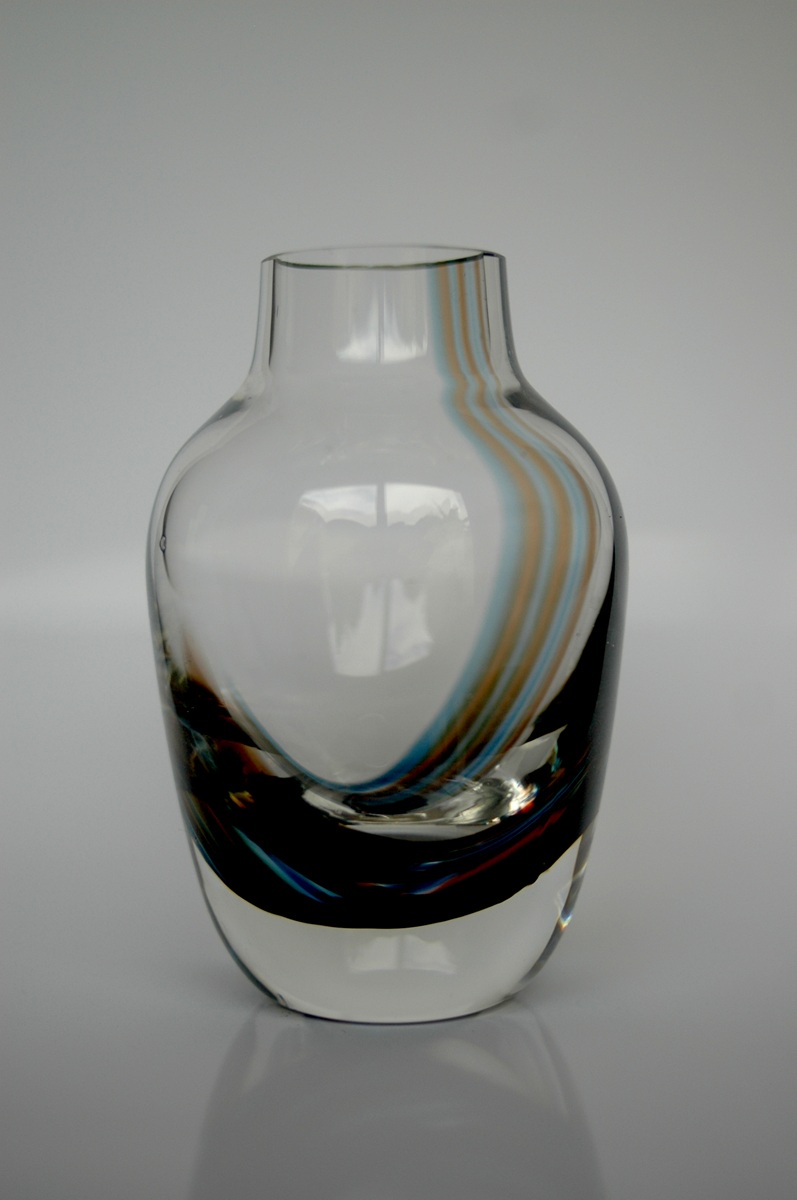
During the same visit to Chepstow when I bought the CDs (which were £1 each), I also found a dainty-looking ornamental glass vase (Fig. 40) which set me back another £4.
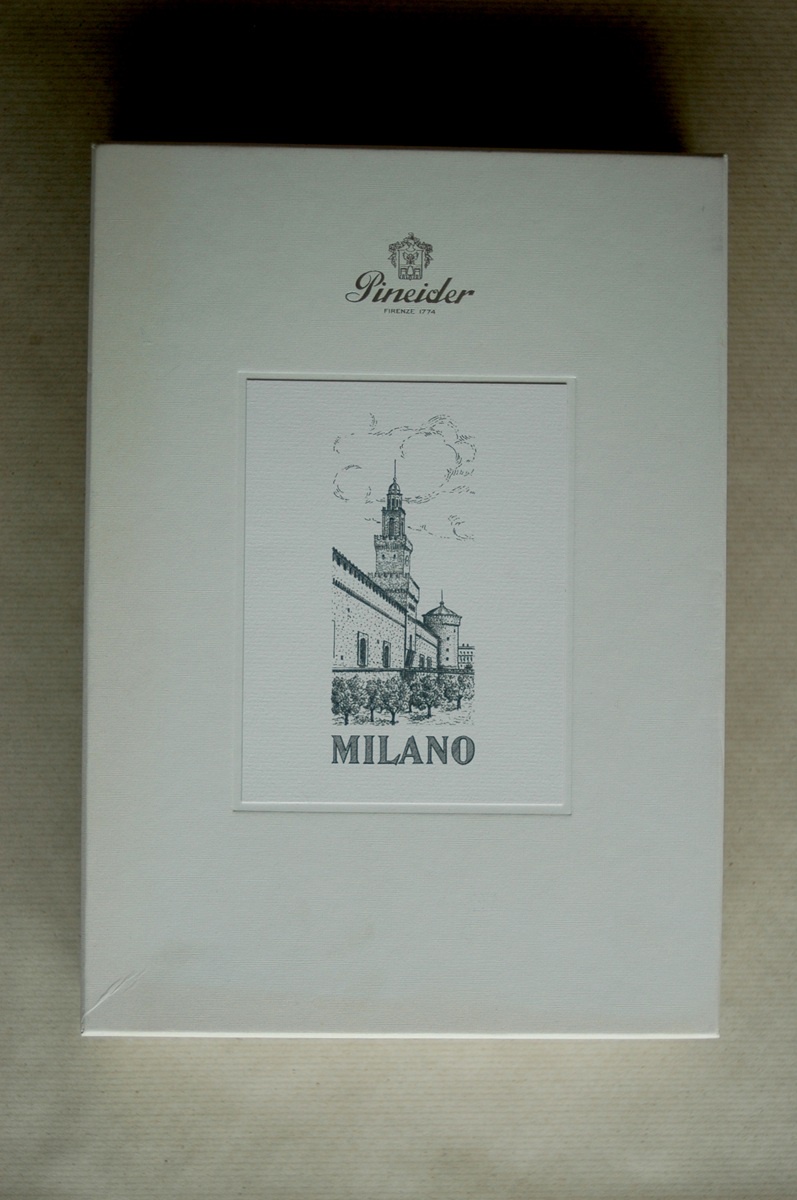
As if to offset these relatively thrifty acquisitions, I squandered (via ebay) a rather larger sum on yet another box of old stationery: some ‘Milano’ paper and matching envelopes from Pineider. The set is second-hand, but unused (Fig. 41). The Florentine retailer seem like an Italian equivalent to the likes of Smythson or Cassegrain, with a historic focus on providing personalised stationery to a wealthy clientele. The box contains only 24 sheets of A4 paper with as many envelopes. The paper is laid, watermarked and straight-cut; and the envelopes are lined with white tissue & discreetly embossed with a Pineider logo. There’s no claim of the paper being rag-based or hand-made: one might hope that, given the asking price, it might at least be one or the other, but who knows.
Cheese of the week: Bluemin White from Shepherds Purse Artisan Cheeses in Yorkshire. This mould-ripened offering is encased in blue-grey penicillium roqueforti rather than white p. camemberti, yet it isn’t a properly blue cheese, as the small truckles are left unpierced so that the mould can’t readily infiltrate the paste. The hint of blue provided by the rind does however add a certain extra tang to what is otherwise a subtly delicious brie-like number.