Another week, another of Jenny Erpenbeck’s books: Visitation, this time. I finished it yesterday. First published in 2008, it’s counted as her first novel, though at only 150 pages it could probably also be considered her third novella. While relatively brief, it does not lack heft and depth. It’s about a plot of land by a lake in countryside not far from Berlin, and the house built on it; and about the house’s various inhabitants and some of their near neighbours. Initially a weekend retreat for a successful architect in the early ‘30s, the place goes on to be buffeted by powerful historical crosswinds which leave practically no-one connected with it unscathed — though some suffer much worse fates than others. A connecting thread through the book is the figure of an unnamed gardener who tends the grounds and watches over the house for the majority of its existence, thereby neatly contrasting the disruptive dramas of history with the continuities of nature.
The writing is refined and artful, with the style often changing from chapter to chapter. One early section, for example, incorporates folklore; another, near the end, folds in a measure of legalese. In between, repetition is employed to a number of different ends: to foreshadow, to destabilise, to underscore, and so on. From the simple pleasures of leisurely country living to the terrible cruelties of mass murder, it’s a book that covers a lot of ground in its short span. Comparing it with her later novel Go Went Gone, I found it similarly powerful and affecting, albeit achieving its effects by very different means.
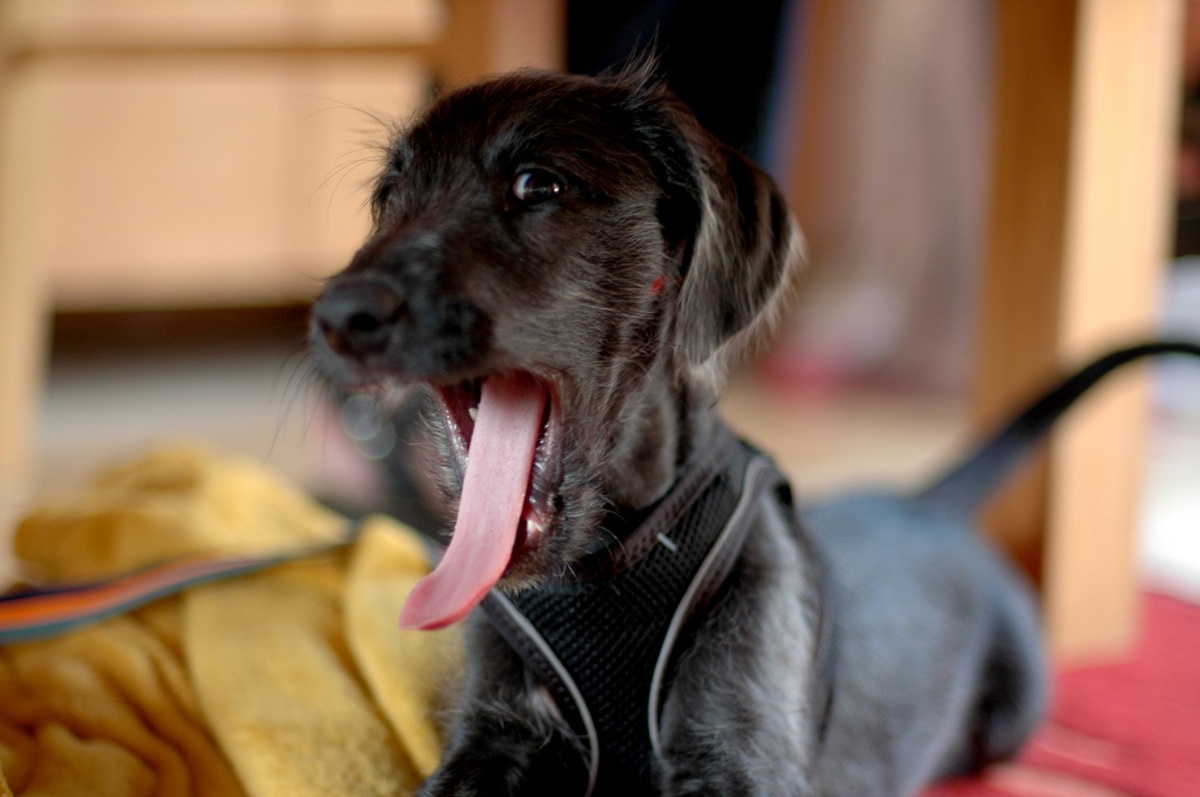
On Sunday I played host to my sister, her husband, and Bertie, their new puppy (Fig. 38). My cooking didn’t all quite go to plan: some mishaps meant that the main course came to table in two instalments rather than all at once. Flavour-wise at least it was successful enough. And the cheeseboard was well-received. Bertie, a Bedlington/Whippet cross (Fig. 39) mostly behaved himself, although his incomplete house-training wasn’t quite equal to the challenge of spending a few hours in an unfamiliar environment.

At Monmouth on Friday (I took last week off work) I picked up a couple of second-hand CDs with a Cuban connection. There was more Mongo Santamaria with a compilation disc called Skins combining two of his ‘60s albums for the Riverside label: Go, Mongo! (‘62) and Mongo Explodes (‘66). My preference is for the latter with its better-integrated blend of North American jazz and Afro-Cuban rhythms: for a flavour of it, try ‘Dirty Willie’.
And there was The Blessing (1991), by Cuban pianist Gonzalo Rubalcaba, more than ably assisted by Charlie Haden on bass and Jack DeJohnette on drums. I’d not previously heard of this remarkably impressive musician. The record begins with some agitated rapid-fire solo piano before the bass & drums come in. And there is plenty more steely virtuosity to follow, expertly blended with more tender & soulful playing, as in his take on ‘Besame Mucho’, for example.