On Thursday a vinyl copy of All Night Session! Vol. 1 by the Hampton Hawes Quartet arrived in the post. I’d happened to find copies of Vol. 3 and Vol. 2 about fifty yards and six months apart at different shops in Chepstow. A few years have elapsed since then, without any sighting of Vol. 1 in the wild, so I resorted to ordering a copy from a Discogs seller to complete my set. The All Night Session itself took place in Los Angeles on November 12th-13th 1956. It was an unconventional recording date for its time: a nocturnal affair with no second takes and with all tracks ultimately appearing on the records in the order in which they were recorded. Nearly two hours of music were captured and pressed on to three LPs, which were first issued in 1958.
Pianist Hampton Hawes led the proceedings, accompanied by Jim Hall on guitar, Red Mitchell on bass and Bruz Freeman on drums. It was clearly a relaxed and freewheeling affair, with all concerned sounding like they had a great time. Hawes was quoted in 1958 as saying:
It’s hard to put into words how good it feels to play jazz when it's really swinging... I’ve reached a point where the music fills you up so much emotionally that you feel like shouting hallelujah — like people do in church when they’re converted to God. That’s the way I was feeling the night we recorded All Night Session!
The material is a mix of be-bop numbers, ballads, and extended blues-based improvisations summoned out of thin air that night. ‘Hampton’s Pulpit’, for instance, which closes Vol. 1, is one of the best of the album's spontaneous compositions.
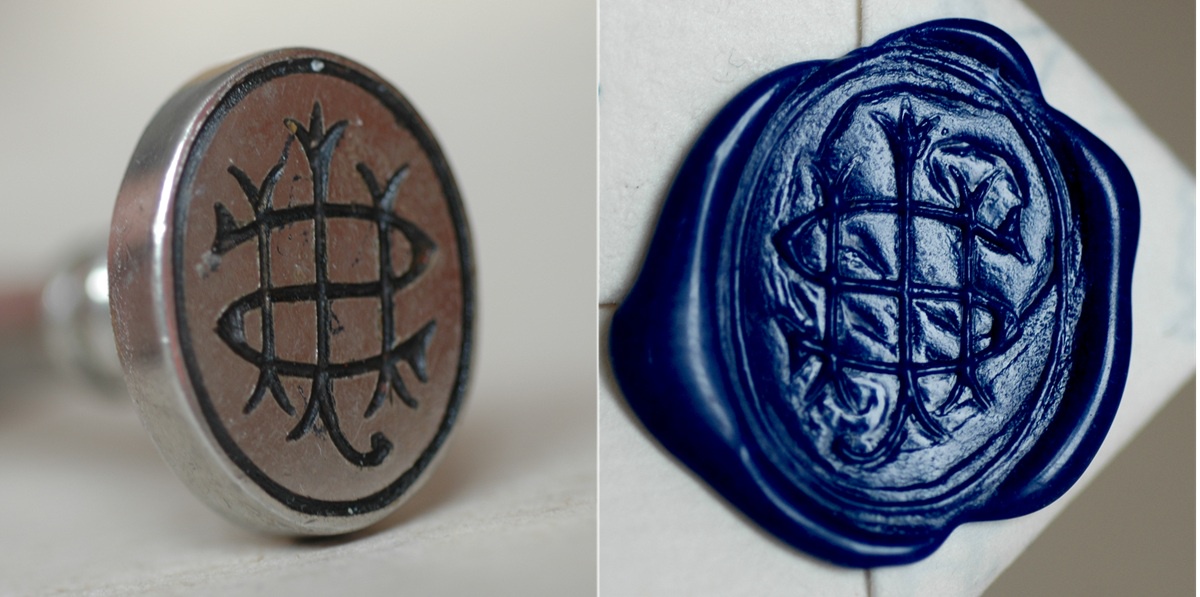
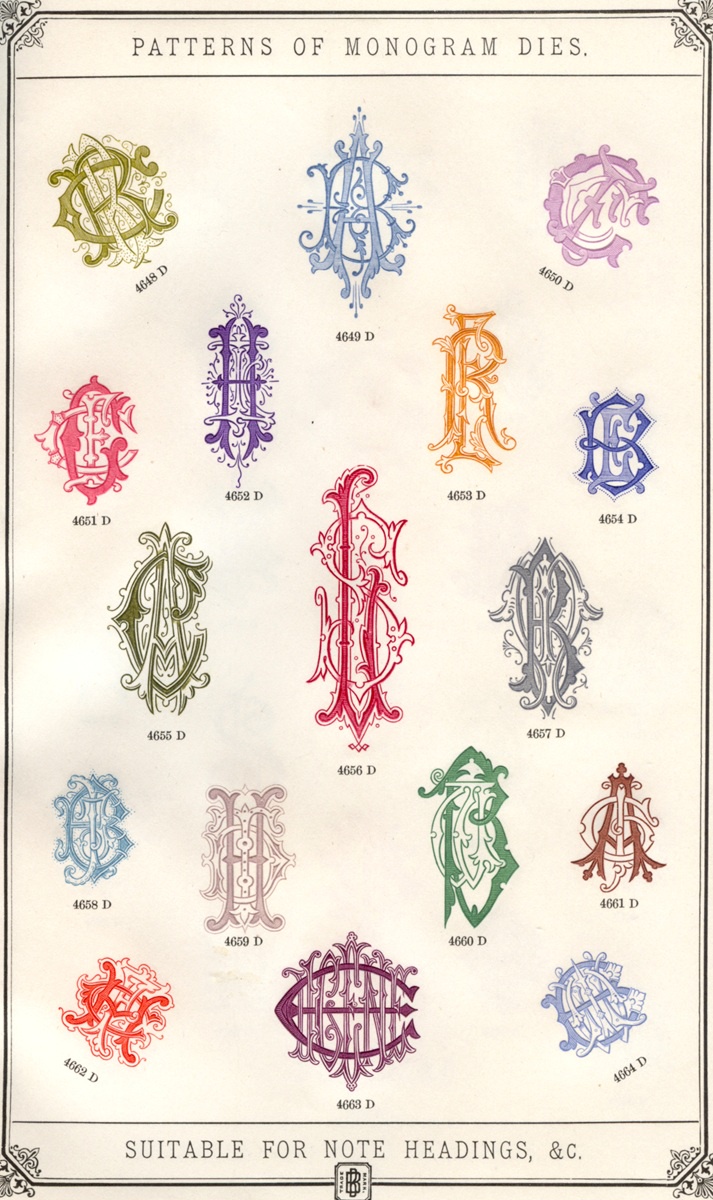
I had no plan to buy any more wax seal stamps, but then I saw (on ebay) a Victorian stamp with a monogram comprising my initials, which seemed too good an opportunity to let pass. Over the weekend I used it in earnest for the first time (Fig. 36). The letters in the monogram are stylized with elaborated serifs in a way I’d seen before in Victorian lettering. The ebay seller suggested that the stamp may date as far back as the 1860s, and associated its style with the Gothic Revival. Unconvinced as to its Gothic-ness, I did a bit of on-line searching & learned that Tuscan was the usual descriptor for typefaces with ornamental bifurcated (or trifurcated) serifs. I think an 1860s origin is still a possibility, but it could equally well be later. See for example a page (Fig. 37) of decidedly florid Tuscan monogram designs from an 1890s sample book in my possession.
On Wednesday I finished reading Makenna Goodman’s novel Helen of Nowhere. I could say it’s my favourite of the current batch of Booker Prize longlist nominees, but that would only mean I liked it better than M. John Harrison’s The End of Everything: I’ve not read any of the others. It’s a striking and unusual tale, somewhat in the shape of a play, with a list of personae up-front and then six ‘scenes’ largely comprising dialogue and/or internal monologue. I had to work to stay interested in the university office politics which set up the scenario of a disgraced academic seeking an off-grid life in the country. The stranger turn taken in the book’s second half intrigued me rather more. It didn’t quite score as a direct hit, but I enjoyed it overall: a favourable impression consolidated by an ending that struck me as both satisfying & amusing.